Use this houseplant pests guide to choose which pest to investigate, then open the detailed guide for identification and next steps. Leaf damage alone is not proof of an infestation. Look for the organism, its deposits or a repeated pattern before selecting a product.
Start with a close inspection
Separate an affected plant where practical, then inspect the undersides of leaves, leaf joints, stems and nearby plants. Photograph both the whole plant and the suspected pest. Note where it appears and whether it moves; these details help distinguish a pest from harmless residue.
NParks recommends an integrated approach: identify, monitor, prevent and use control appropriate to the situation. A healthy garden does not need to be free of every insect. Read NParks’ integrated pest management guidance.
Cottony clusters, bumps or sticky leaves
Cottony clusters: investigate mealybugs, especially in sheltered leaf joints.
Small bumps around veins and stems: compare scale insects with normal plant structures.
Clusters on soft new growth: investigate aphids. Sticky leaves and ants can accompany sap-feeding insects; use the ants and honeydew guide to look for the source. These signs are starting points, not a definitive diagnosis.
Webbing, silver marks or flying insects
Fine webbing with speckled damage: check the spider-mite guide.
Silver marks and distorted new leaves: investigate thrips and compare the lookalikes in the detailed guide.
Tiny pale insects beneath leaves: investigate whiteflies. Small dark flies around the growing medium need a different check: see fungus gnats. A flying insect near a pot is not automatically a fungus gnat.
Holes and trails in edible leaves
For missing sections of leaves, inspect for caterpillars and other chewing pests. Winding trails within a leaf suggest checking leaf miners. NParks’ plant-pest directory provides photographs and an overview of common groups.
Keep crop identity in your notes. A treatment suitable for an ornamental houseplant is not automatically suitable for basil or leafy vegetables that you intend to harvest.
Decide whether a product is needed
The appropriate next step may be observation, physical removal, isolation or a change in growing conditions. Follow the detailed guide for the identified issue; do not substitute a generic spray schedule for diagnosis.
Plant SHIELD is Sprout Lab’s pest-care option. Consider it only when its current labelled targets and plant uses match the problem. Follow the bottle’s method, repeat interval and any testing instructions. This guide does not establish that SHIELD controls every pest listed above.
GROW is fertiliser; BOOST is supplementary growth support; HEAL is recovery support after the underlying cause is addressed. None replaces management of an active pest. Compare their roles on the Plant Care page.
Houseplant pests: how to tell them apart
Houseplant pests fall into a few groups that are easier to tell apart by what you see than by name: sap-feeding insects that leave sticky or cottony deposits, mites and thrips that cause stippling or silvery marks, and chewing pests that leave holes. Matching the damage to the group narrows the search.
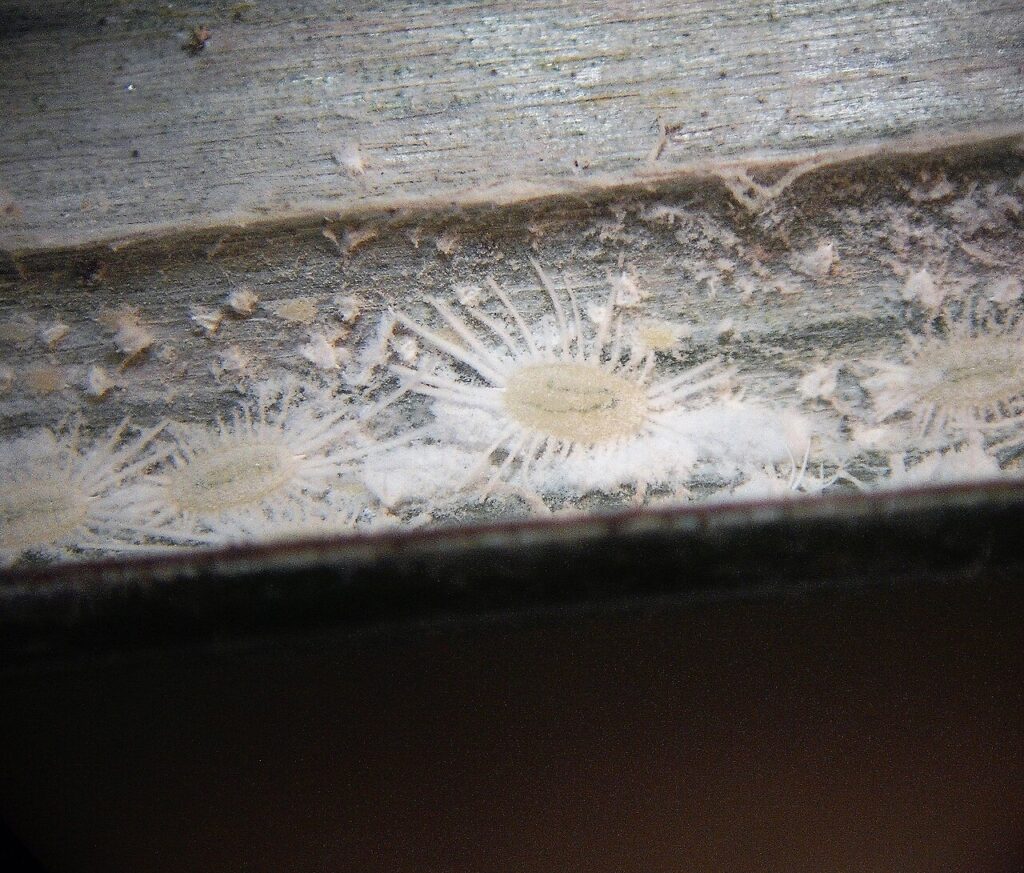
Do not rely on a single sign. Houseplant pests often share symptoms with watering, light and nutrient problems, so look for the pest itself, its deposits or a repeated pattern before concluding that houseplant pests are the cause.
A hand lens and good side lighting make identifying houseplant pests much easier. Photograph what you find, because a photo helps you compare with the detailed guides and lets the team help if you need advice.
Preventing houseplant pests
Preventing houseplant pests begins before a plant joins your collection. Inspect new plants, keep them apart for a couple of weeks if you can, and check the undersides of leaves. A single unnoticed pest can spread to its neighbours.
Healthy plants cope better with houseplant pests, so match light and watering to the plant. Overwatering can also encourage fungus gnats, and dust and clutter can hide pests.
Check your plants on a routine, such as when you water. Regular inspection turns houseplant pests into small problems you catch early.
Houseplant pests on a Singapore balcony or in the kitchen
In Singapore’s warm climate, houseplant pests can be active for much of the year. Balconies bring pests from neighbouring plants and open air, while kitchens and edible herbs need extra care with any product label.
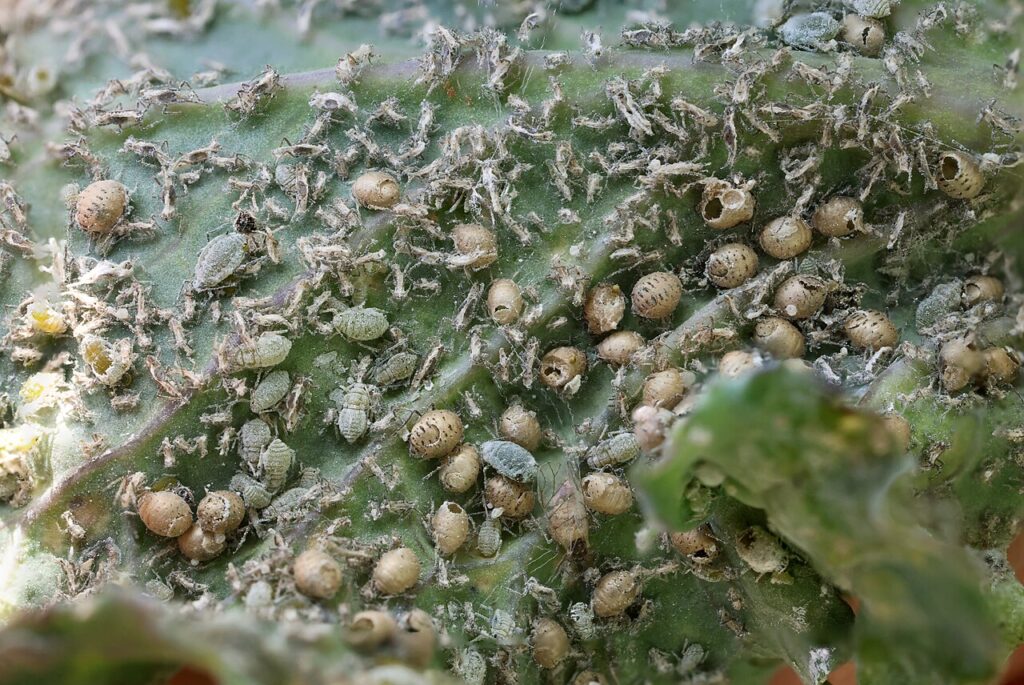
Edible plants are a special case: a treatment that suits an ornamental houseplant may not suit basil or leafy vegetables. Keep crop identity in your notes and check labels for edible use before treating houseplant pests on food plants.
For many houseplant pests the first response is physical: isolate the plant, wipe or rinse sturdy leaves and remove affected growth. Only then consider a product.
Houseplant pests: which guide to open next
Cottony deposits, bumps and sticky leaves point to our guides on mealybugs, scale insects and ants and honeydew.
Webbing, silvery marks and tiny flying insects point to spider mites, thrips, whiteflies and fungus gnats.
Holes and trails in leaves point to caterpillars and leaf miners. Whichever houseplant pests you suspect, confirm before treating, and read plant recovery after pests once the problem is under control.
Are houseplant pests harmful to people?
Most common houseplant pests are a nuisance to plants rather than a danger to people, but keep products and affected plant material away from children and pets and wash your hands after handling.
How do houseplant pests get indoors?
They can arrive on new plants, in potting mix, on cut herbs or through open windows and balconies, which is why inspecting new additions matters when you are trying to avoid houseplant pests.
Can I get rid of houseplant pests without sprays?
Often, for small problems: isolate the plant, wipe or rinse sturdy leaves, remove affected growth and recheck. A product is only worth considering when houseplant pests persist and the label matches your plant.
What to do first when you find a pest
Isolate the affected plant so a pest cannot move to its neighbours. A separate shelf or room is enough for a few days while you identify the problem.
Inspect leaf undersides, joints, stems and the pot rim with a hand lens, and photograph what you find. Look for the pest, its deposits or a repeated pattern of damage.
Clean sturdy leaves with a damp cloth or a gentle rinse, and remove affected growth that is easy to detach. Bag it rather than composting it.
Record the date and what you did, then recheck every few days. A record shows whether the problem is shrinking or spreading.
Pest checks by plant location
A balcony exposes plants to outside insects and rain, so check new growth and leaf undersides more often there. Rain can wash some pests off but does not clear a colony.
Indoor shelves near windows can host whiteflies and gnats, and plants near air-conditioning may dry out and attract mites. Check the position as well as the plant.
Kitchen herbs need extra care because you eat them. Choose physical removal first, and check any product label for edible use before applying it.
Plants that move between rooms can carry pests with them, so inspect them when they come back.
When to ask for help with an unknown pest
If you cannot identify what you see, send a clear close-up, a whole-plant photo and the plant name through Contact.
Include your watering notes and any product you have already used, because that changes the advice.
Do not stack several products at once. Several treatments can stress the plant and hide what is working.
Quick answers about pests
Is every white spot a pest? No. Mineral residue, spray marks and fungal growth can look similar, so confirm before treating.
Do pests prefer certain plants? Some favour particular plants, but many feed on a range of hosts, so inspect the plants nearby too.
Can I use household detergent? Do not substitute household detergent for a labelled plant treatment, because formulations vary and leaves can be damaged.
Will rain remove pests? Rain can wash off some pests but does not clear a colony, so keep checking.
How often should I inspect? Weekly is a sensible routine for most collections, and more often while a problem is active.
Should I throw away a badly infested plant? Sometimes, when the plant is of low value and the risk to others is high. Otherwise isolate it and treat carefully.
Keeping records when pests appear
Write down the date, the plant, where you saw the pest and what you did. A short record turns guesswork into a pattern.
Photograph the same leaves at each check so you can compare. Old damage does not heal, so judge progress by new growth.
Note any product you use, its label directions and when you applied it, so you can avoid repeating or stacking treatments.
Check whether your response is working
Keep dated photographs and a note of what was done. Inspect the same areas and new growth on subsequent checks, rather than judging success by old damaged leaves. If the problem continues, revisit identification before increasing an application rate.
For help, send the team a clear close-up, a whole-plant photo, the plant name if known and the product label you are using. For marks without visible pests, also compare white residue and leaf-spot lookalikes.