A plant can remain scarred after the pests causing damage are controlled. Silvery marks, distorted leaves and missing tissue do not disappear when insects die. University of Minnesota Extension recommends inspecting plants and isolating new arrivals for 1–2 weeks to help reveal problems, but that newcomer guidance is not a universal clearance period for an established infestation. Plant recovery needs its own decisions: confirm what remains active, maintain suitable care and avoid treating old damage as proof that the first response failed. Start with the pest identification overview if the organism was never reliably identified.
On this page
Are pests still active, or are you seeing old damage?
When can the plant return to the collection?
Which damaged leaves should you keep or remove during plant recovery?
How should watering change after substantial leaf loss?
What light and placement support plant recovery?
When should you resume feeding or consider recovery products?
Are pests still active, or are you seeing old damage?
Look for living pests and newly developing injury. Compare affected leaves with photographs taken before treatment. An old scar staying visible is different from fresh feeding marks on a leaf that was previously clean. Inspect new growth, undersides and sheltered joints, because a plant can look improved from a distance while a small population remains.
Use a consistent inspection route so hidden areas are not missed. Move from the growing tip down stems, then check leaf undersides, pot rim and nearby surfaces. A magnifier and good light are useful. For very small pests, the absence of movement during one quick glance does not establish eradication.
Keep treatment records, including the product, target pest, application date and label interval. If the label requires a follow-up, follow that direction rather than inventing a more aggressive schedule. If identification was wrong, repeating the same product may not help. Return to diagnosis when the evidence no longer fits.
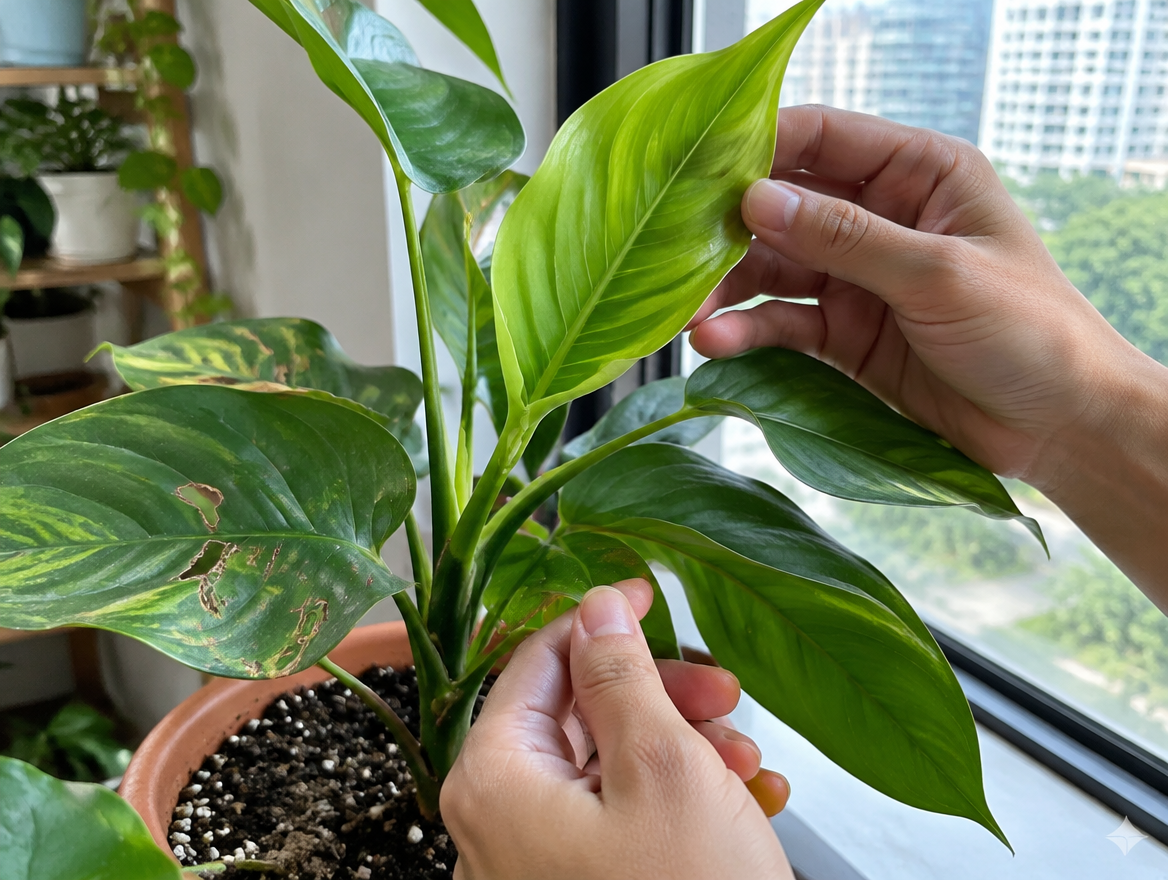
Photorealistic AI-generated guide image showing a post-treatment inspection routine.
When can the plant return to the collection?
Return it only after repeated appropriate checks show the active problem is controlled and any treatment requirements are complete. University of Minnesota Extension's 1–2 week isolation advice concerns newly acquired plants; an established infestation can require a different monitoring period. Pest biology, plant structure and the chosen management method all affect the decision.
Avoid allowing leaves to touch neighbouring plants while uncertainty remains. Keep tools, supports and trays organised so they do not move unnoticed between the affected plant and healthy specimens. Check nearby plants as well, especially those that shared a shelf or were in contact before the problem was discovered.
Do not judge clearance from a clean upper leaf alone. Some pests hide in tightly folded growth, stem joints or around the pot. If the plant is difficult to inspect, that limitation should make the return decision more cautious. A separate stable recovery space is useful because it allows both monitoring and consistent everyday care.
Which damaged leaves should you keep or remove during plant recovery?
Keep functioning foliage when possible and remove material that is dead, severely compromised or specifically needs removal for the identified problem. A marked leaf may still contribute to the plant. Removing every imperfect leaf can leave a weakened specimen with little useful foliage, while doing nothing about heavily infested tissue may also be inappropriate.
Make the decision leaf by leaf and consider the whole plant. Does the leaf remain mostly firm and green? Is it actively harbouring pests that cannot be managed otherwise? Is it rotting or merely scarred? Those questions are more useful than pruning to achieve an immediately tidy photograph.
Use clean tools and handle removed material away from the healthy collection. Do not drop cut leaves onto potting supplies or leave them on a shared shelf. If the plant has very little remaining foliage, focus on stable conditions rather than demanding rapid new growth through extra feeding.
How should watering change after substantial leaf loss?
Recheck the root zone instead of continuing the old routine automatically. A plant with reduced foliage or altered growing conditions may use water differently. Lift the pot, inspect moisture and confirm drainage. A recovery area with less light can also change drying behaviour even if the container and medium have not changed.
Do not keep the plant constantly wet because it looks weak. Equally, do not force prolonged drought in the hope that it prevents every pest from returning. Match watering to the plant and its root-zone condition. Empty cover pots and saucers after watering, and keep drainage accessible for inspection.
If the medium remains wet and the plant wilts, investigate roots using the root-health guide. If water bypasses a dry root ball, review uneven wetting and compaction. Pest recovery does not explain every later symptom, so avoid overlooking a new root-zone problem.
What light and placement support plant recovery?
Provide the plant's appropriate light in a stable location. Isolation in a dark unused corner may simplify separation but create another growing problem. Choose a space that permits inspection, watering and suitable exposure. Keep the recovering plant away from abrupt hot sun, strong drying airflow or other conditions it was not prepared for.
If the only available isolation position is dim, assess a suitable supplemental light rather than guessing. Use the grow-light guide to match coverage and output. More light is not always better, especially after leaf damage or a recent spray that has application restrictions involving sunlight.
Keep the position consistent enough to interpret new symptoms. Moving between a humid balcony and an air-conditioned bedroom each day introduces changing conditions. A practical recovery space should reduce that variability. Take a whole-plant photograph after moving it so later posture or leaf changes have a clear reference point.
When should you resume feeding or consider recovery products?
Resume nutrition when the plant's condition, active growth and current medium justify it, following the fertiliser label. Do not treat feeding as insect control. If pests remain active, fertiliser does not remove them. If roots are compromised, adding more nutrients may not produce the recovery response you expect.
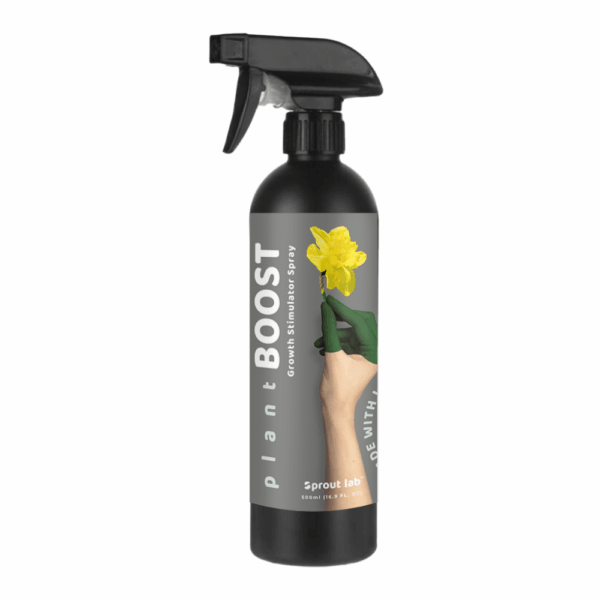
Plant HEAL and Plant BOOST are optional supportive products to assess against their current labels. This guide does not claim that they eradicate pests, cure leaf disease or guarantee faster recovery. Basic growing conditions and confirmed pest management remain the essential foundation.
If a label-covered pest is still present, Plant SHIELD may be considered only where the target, host and use match the label. Do not combine it with recovery sprays or fertilisers without compatibility guidance. For edible plants, verify crop and harvest permissions before any application.
Which plant recovery mistakes create another setback?
Avoid treating every old mark as a reason to spray again. University of Maryland Extension notes that plants already damaged by heavy insect or mite feeding may be injured by insecticidal sprays. Label limits and plant sensitivity matter. A stronger or more frequent treatment is not automatically a more effective one.
Do not combine major pruning, repotting, relocation and multiple products unless a specific urgent problem requires it. Each action can be justified separately, but stacking them obscures the plant's response. For a stable plant with suitable medium, repotting merely because pests were on the leaves may add unnecessary root disturbance.
Avoid declaring victory after the first improvement, then abandoning inspection. Recovery and monitoring can coexist without constant treatment. Maintain a simple routine and watch susceptible nearby plants. If a problem returns, review identification, application coverage, label-directed follow-up and possible sources of reinfestation rather than blaming the plant or buying random additional products.
How can you build a useful plant recovery record?
Create a short record with the pest identification, original damage photographs, treatments used, current location and root-zone observations. Add dated notes on live pests and new growth. This original decision framework separates pest control from cosmetic recovery and helps another adviser understand what happened without reconstructing the story from memory.
For example, a Monstera may retain silver scars while its new leaf develops without fresh feeding damage. That is a different outcome from a plant whose new leaf shows fresh marks and live insects. The first may need stable care; the second needs renewed pest assessment. Old and new tissue must be evaluated separately.
If the plant continues declining despite no evidence of active pests, investigate light, roots and treatment injury. Use the leaf-damage guide or the white-residue guide for relevant symptoms. Seek help for rapid decline, and share the record so the next recommendation solves the actual remaining problem.
Plant recovery: what to expect
Plant recovery is usually gradual. Damaged leaves rarely heal, so judge progress by whether new growth emerges clean rather than by how the old leaves look.
During plant recovery, keep care steady: consistent light, watering based on moisture below the surface, and no new products unless the plant needs them. Changing many things at once makes it harder to see what is helping.
Plant recovery is a good time to check the root zone and container. If roots or medium need attention, see our soil mixes page; otherwise leave the plant undisturbed.
Plant recovery checklist for the first month
A plant recovery checklist keeps you from overcorrecting. In the first week, hold steady with stable light, careful watering and regular checks for pests. Plant recovery rarely benefits from repotting, feeding and spraying all at once.
After the first week of plant recovery, look for clean new leaves, firmer stems and fewer signs of active pests. Record what you see so you can judge plant recovery by trends, not by a single day.
Plant recovery is slower for plants with extensive root or leaf loss. Be patient, and avoid products that promise a quick fix. Our guide to plants that survive neglect indoors covers forgiving species.
Once plant recovery is well under way, return the plant to its usual place gradually and resume normal care. If plant recovery stalls, review light, roots and watering before changing anything else.
Products to consider
HEAL and BOOST are optional supportive-care choices with no cure or eradication promise. SHIELD is reserved for a confirmed remaining pest covered by its current label. Suitable light, watering and monitoring may be sufficient without another purchase.
Common questions
How long does a plant take to recover after pests?
There is no single recovery time. Plant species, remaining healthy tissue, root condition, environmental suitability and whether pests are truly controlled all matter. Existing scars may remain permanently. Track new growth and overall stability instead of using a fixed deadline or expecting every damaged leaf to improve.
Can HEAL or BOOST replace pest treatment?
No. This guide treats them as optional supportive products, not proven pest-eradication treatments. Identify and manage the pest using an appropriate method and current label directions where a product is needed. Then decide whether any additional support addresses a real need during recovery.
Should I repot after every infestation?
No. The pest's biology and the root-zone condition should guide that decision. A leaf-feeding pest does not automatically make the potting mix unsuitable. Repot when the identified pest or a separate root, drainage or medium problem provides a reason, rather than adding disturbance as a routine final step.
How long does plant recovery take?
It depends on the plant, the damage and the conditions, so there is no fixed timeline. Look for clean new growth as the sign of progress.
Should I fertilise during plant recovery?
Wait until the plant shows steady new growth, then follow the label of any fertiliser you use. Feeding a stressed plant too early can cause another setback.