Fungus fungus gnat management starts with the pot and its moisture conditions, not with spraying every flying insect. UC IPM describes four life stages: egg, larva, pupa and adult. The insects near your face are therefore only one visible part of a problem associated with growing medium. First confirm where they are emerging, then review watering, drainage and accumulated organic debris. This guide is for Singapore homes with pots on indoor shelves, balconies or windowsills, where the same routine can leave one container much wetter than another. Compare uncertain insects with the plant pest guide before replacing products or medium. (Source: UC IPM, Fungus Gnats, 2013.)
On this page
Are the small flies really fungus gnats?
Why does adult trapping not solve the whole problem?
Audit watering without dehydrating the plant
When should you replace the potting mix?
A Singapore scenario: an indoor pot inside a ceramic cover
Should you use a pesticide or peroxide drench?
Are the small flies really fungus gnats?
Identify the insects and their source before treating pots. UC IPM describes common fungus gnat adults around 1/16 to 1/8 inch long. Size is only a clue; stronger evidence is repeated activity associated with particular growing media rather than food, a drain or another nearby resource.
Watch undisturbed pots before watering. Note where insects rest and whether they emerge when the medium is disturbed. Photograph one closely if possible. Flies near fruit, kitchen waste or a sink may need a different investigation. A plant standing nearby doesn't establish that its soil caused the problem.
If insects rise from leaves and look white, compare whiteflies instead. If tiny organisms jump on the surface, obtain a closer identification rather than assuming they are fungus gnat larvae. Many small organisms occur in growing media, and treating all of them as harmful creates unnecessary disturbance.
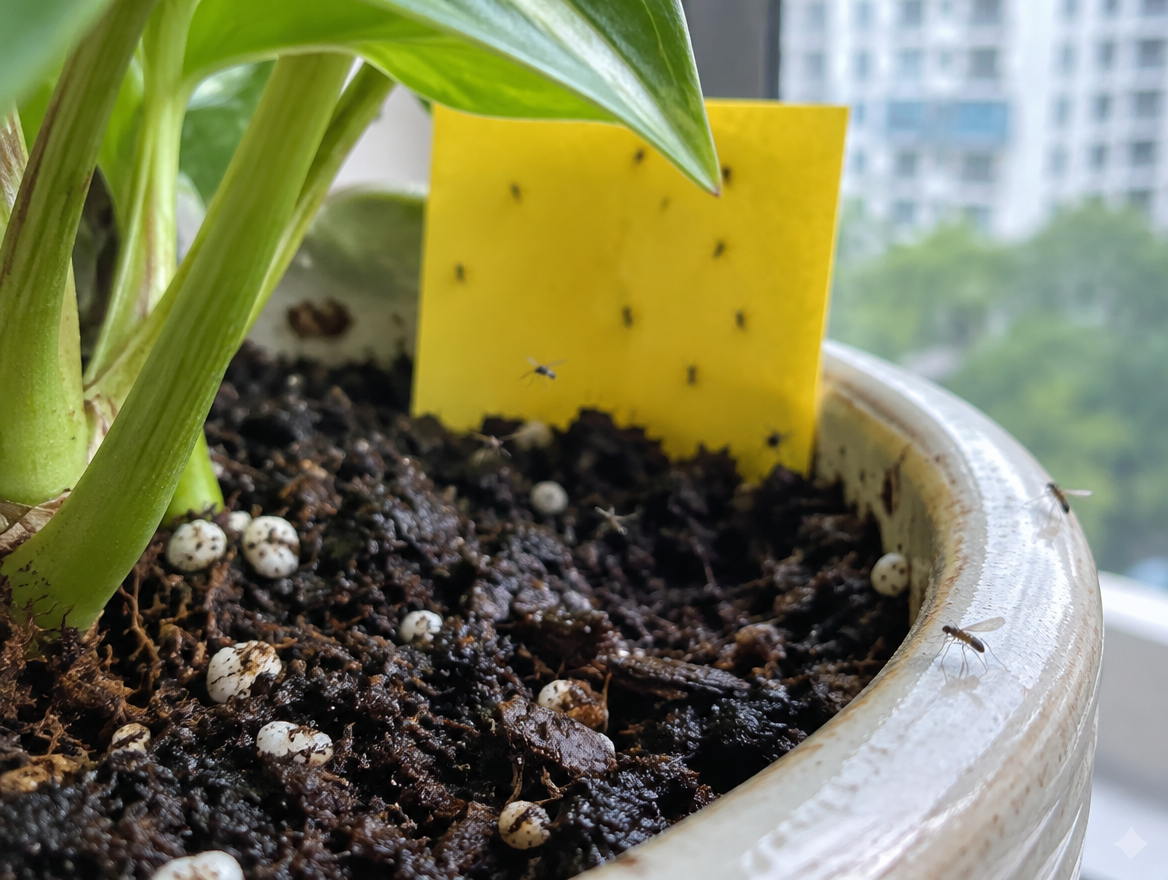
Photorealistic AI identification aid. Adult fungus gnats are usually only 2–3 mm long; confirm them with movement and a sticky trap.
Why does adult trapping not solve the whole problem?
Adult monitoring is useful, but management also needs to address the medium. A card catching insects can show activity while moisture conditions continue supporting the source. Record trap observations alongside the pot conditions so you can assess both the nuisance above the surface and the environment below it.
Use traps consistently if you choose them: similar positions, comparable observation periods and a note when cards are changed. Don't interpret a full card accumulated over a long period as a sudden outbreak. Keep adhesive away from leaves, people and pets, and avoid unnecessary trapping of useful insects outdoors.
Look for changes in actual emergence alongside trap observations. The key question is whether the source is improving. A pot can contain fewer visible adults immediately after cleaning but remain continually wet. Conversely, a few adults may persist while better moisture management begins to change the conditions below.
Audit watering without dehydrating the plant
Reduce unnecessary wetness while respecting the plant’s own moisture needs. Persistently moist organic media deserve a watering audit, not a universal instruction to leave every species dry for a fixed period. Examine the container and actual root-zone conditions before deciding which part of the routine should change.
Check the medium below the surface and lift the pot to learn how its weight changes. Review whether a fixed calendar is causing repeated watering before the root zone needs it. Empty water trapped in a decorative outer pot and inspect the actual drainage holes. A pot inside another pot can look tidy while hiding persistent saturation.
Treat seedlings and moisture-sensitive plants cautiously. They cannot be managed exactly like a mature drought-tolerant specimen. Adjust irrigation and ventilation in a way that preserves the crop. If a tray is staying wet because its drainage is blocked, fix that physical issue before trying to compensate with an extreme drying regime.
• Check the root zone, not just the dry-looking surface.
• Inspect outer pots and shared trays for retained water.
• Remove fallen leaves and unnecessary decomposing debris.
• Match changes to the plant rather than a generic timetable.
When should you replace the potting mix?
Repot when medium or container is genuinely unsuitable, not merely because an adult fungus gnat appeared. Assess whether roots need different conditions and whether watering habits would recreate the problem in fresh mix. A useful repot changes an identified limiting factor; it should not be a ritual performed after every sighting.
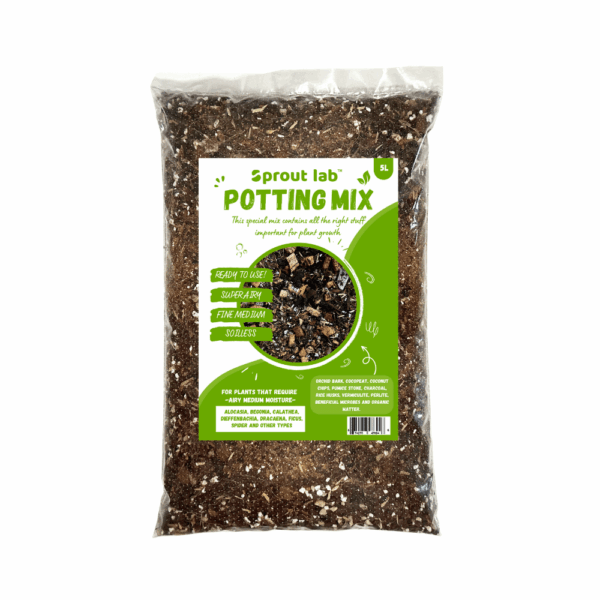
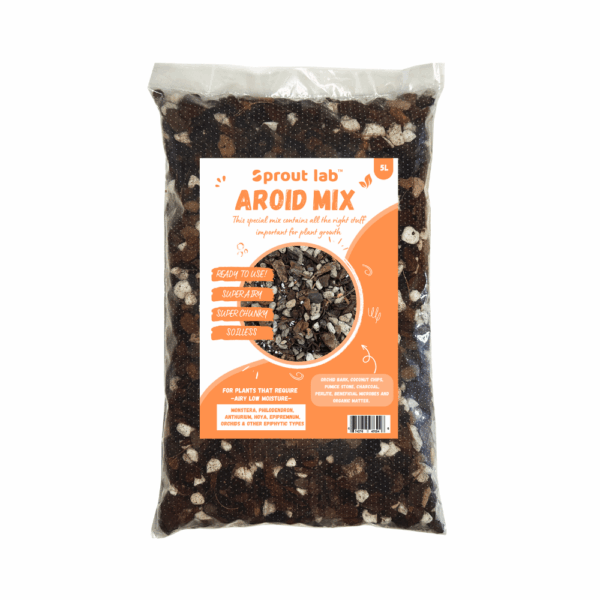
For a suitable general foliage plant, review Potting Mix. For a suitable monstera or philodendron, compare Aroid Mix. Choose based on root needs, container and growing position. No bag is represented here as permanently fungus gnat-proof, and a suitable mix can still be kept too wet.
Where a blend needs additional structure, Horticultural Perlite is an amendment to consider within a plant-appropriate recipe. It isn't a pesticide. Adding a thin decorative layer to the top doesn't resolve a blocked drain or saturated root ball beneath it. Assess the whole container before purchasing an amendment.
A Singapore scenario: an indoor pot inside a ceramic cover
Inspect the nursery pot and decorative cover separately. The unseen medium matters even when the only obvious nuisance is flying adults. Water retained inside an outer container is a practical issue you can check immediately, before purchasing another mix or adding a treatment that introduces still more liquid.
Lift the inner pot, inspect its base and empty any trapped water. Check whether roots or compacted debris obstruct drainage. Then compare the drying pattern with a similar plant on an open balcony. Don't assume the indoor pot needs the same frequency just because both contain the same mix and were bought together.
Keep a short record of watering and moisture before each application. If the pot remains wet repeatedly, review light, container size and medium suitability. More frequent misting, routine nutrient drenches or washing leaves can add water that wasn't counted in the schedule. Include those inputs when you assess the root-zone conditions.
Should you use a pesticide or peroxide drench?
Do not make an improvised drench the default response. UC IPM generally discourages household insecticide use for this problem and prioritises cultural management. A product must fit the intended target and application; an unrelated leaf spray or household recipe is not a substitute for a suitable label and diagnosis.
This guide does not recommend hydrogen peroxide rates or claim that a food-grade solution is automatically suitable for roots. Formulation, concentration, plant condition and label directions matter. Repeatedly adding an uncertain drench to a wet pot can distract from the growing conditions that need correction.
If monitoring and care corrections aren't sufficient, ask a qualified adviser about a locally appropriate, labelled option for the confirmed pest and growing system. Don't infer that a broad pest claim on Plant SHIELD authorises soil drenching. Any such use needs explicit directions; the primary recommendations here are moisture management and appropriate medium selection.
How can you protect a seedling batch?
Treat seedlings separately because their roots and moisture needs differ from established houseplants. Promptly assess the source, but do not allow a germinating tray to dry excessively merely to discourage adults. The response must preserve the crop while correcting the specific conditions that are unnecessarily wet or poorly drained.
Inspect tray drainage and remove dead seedlings or decomposing material. Avoid leaving a humidity cover in place purely by habit after the crop no longer requires that environment. Adjust ventilation according to the crop and its development, and keep clean propagation materials separate from a persistently affected tray.
Record where flies are emerging rather than treating all trays alike. A single poorly draining corner or container can behave differently from the rest of a shelf. When beginning another batch, clean reusable trays appropriately and store unused medium covered. Keep the solution practical: a repeatable propagation routine is more valuable than replacing every item after one sighting.
What does improvement look like?
Look for declining emergence alongside a healthier moisture pattern and stable growth. UC IPM reports a generation around 17 days at 75°F, but that is not a clearance deadline for a Singapore flat. Conditions differ, so use your observations instead of a promised cure date or an improvised treatment calendar.
Compare trap records over similar periods and note whether pots now drain and dry as expected for their plants. If insects persist, reassess other nearby sources such as moist debris or an overlooked tray. Don't assume a newly opened bag was the cause without observing where the insects actually emerge.
If the plant wilts, inspect root conditions instead of adding water automatically. Wilting has several possible causes, and a fungus gnat sighting doesn't prove larval root damage. For an independent repot, use the mix selection guide and choose a container that lets you monitor drainage clearly.
Fungus gnat monitoring and prevention
A yellow sticky card is a simple way to monitor adult fungus gnats. If the number of fungus gnats caught is falling over a few weeks, your moisture changes are probably working.
Fungus gnat larvae live in damp medium, so let the top layer dry between waterings and avoid leaving water in saucers. Keeping fungus gnats under control is mostly about moisture, drainage and not overpotting.
Check new potting mix and plants for fungus gnats before bringing them in, and keep a short record of when you see adults. A fungus gnat problem that returns usually points back to a pot that stays too wet.
Products to consider
Potting Mix or Aroid Mix only for an independently justified, plant-appropriate repot; perlite as a structural amendment, never a pesticide. No automatic SHIELD or peroxide drench.
Common questions
Do fungus gnats mean the soil is bad?
Not necessarily. Moisture, accumulated debris, the container and watering habits all deserve inspection. Confirm the source and improve unsuitable conditions before replacing otherwise appropriate medium. A fresh bag won't solve a blocked drain or repeated watering that keeps the root zone persistently wet.
Will perlite kill fungus gnats?
No. Perlite is a physical growing-medium amendment, not a pesticide. It can be considered where a plant-appropriate blend needs improved structure, but it doesn't replace source identification or watering management. A thin layer on top cannot correct the conditions of a saturated root ball underneath.
Can I dry every plant completely to remove fungus gnats?
No. Seedlings and moisture-sensitive plants can be harmed by excessive drying. Adjust irrigation to the species and growing stage while correcting drainage and unnecessary wetness. If the problem persists, obtain advice on a labelled option for the confirmed pest instead of imposing a universal drought treatment.
Read next
Common Houseplant Pests in Singapore (And How to Get Rid of Them)