Thrips can be difficult to spot because damage may appear before you find the insects. UC IPM describes two feeding immature stages followed by two nonfeeding stages, which helps explain why a single visual check is incomplete. Silvery marks, dark specks and distorted new foliage are reasons to inspect, not proof by themselves. A useful response starts with photographs, separation and a systematic search through folded growth. This guide focuses on indoor foliage plants and balcony ornamentals in Singapore. For edible plants, treatment also requires an explicit crop label and harvest directions. Compare uncertain signs with the common pest guide before choosing a spray. (Source: UC IPM, Thrips, accessed 2026.)
On this page
What evidence points towards thrips?
Why inspect buds and unfolding leaves?
First actions for a suspected thrips infestation
Which treatment information matters before buying?
A Singapore aroid-shelf scenario
Do you need new mix or recovery products?
What evidence points towards thrips?
Look for small elongated insects alongside fresh scarring, not just a silver patch. A hand lens or close photograph helps when the suspect organism is in a folded leaf or flower. Start with evidence that can be checked again, rather than assigning a pest name to every distorted new leaf.
Examine both sides of damaged leaves and the newest growing point. Hold pale paper below the plant and tap lightly to make small moving insects easier to observe. Photograph movement and body shape if possible. Avoid pulling apart tender leaves aggressively: the inspection itself can create tears that later resemble feeding injury.
Silvery areas can also come from abrasion, sun injury or another pest. Tiny dark specks support an investigation but aren't a species identification. If fine webbing and round moving dots dominate, compare the spider mite guide. A reliable diagnosis connects the organism, feeding site and pattern of new damage.
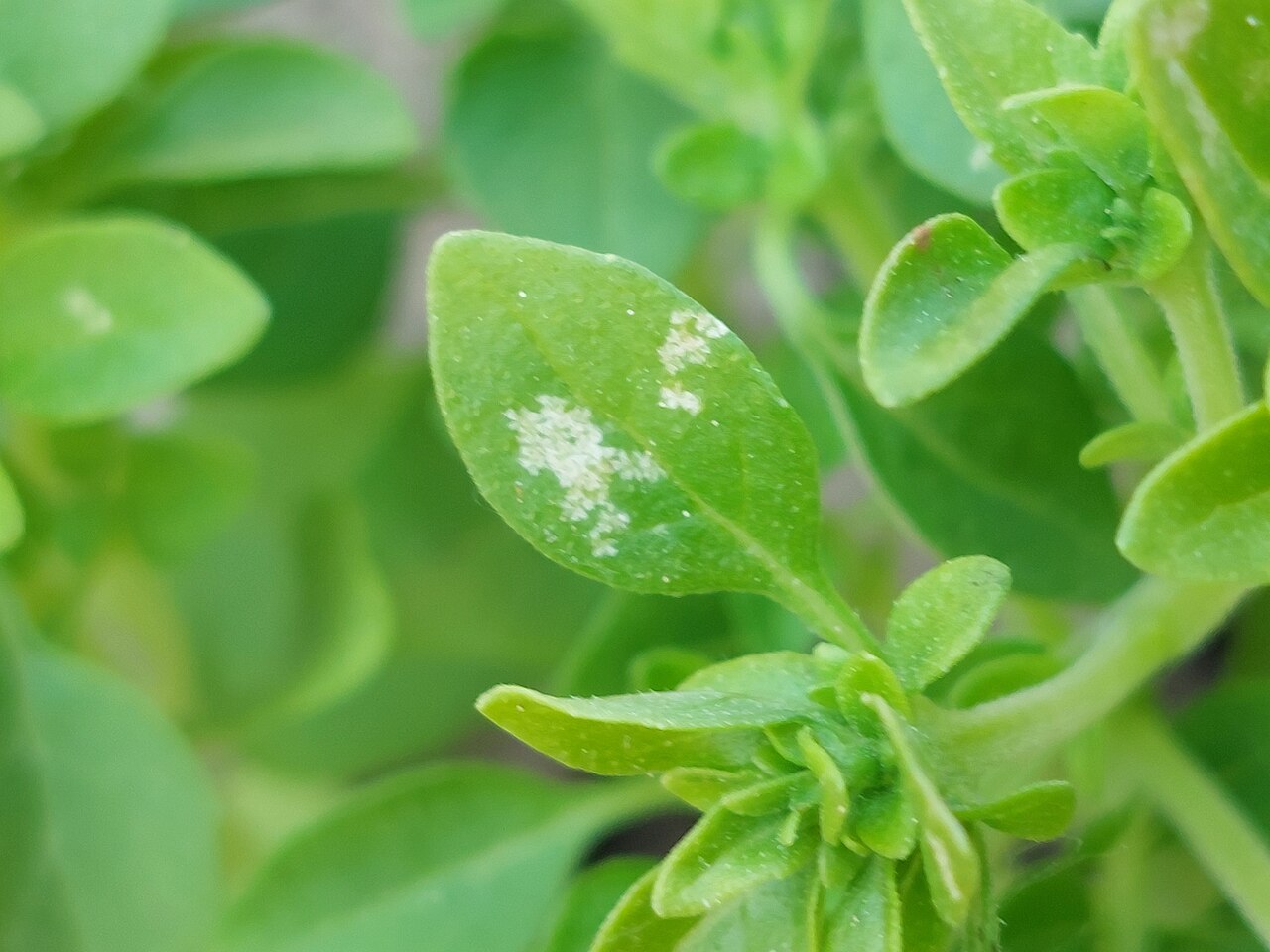
Real thrips damage reference photo. Photo: Schlaghecken Josef, CC BY-SA 4.0, via Wikimedia Commons.
Why inspect buds and unfolding leaves?
Inspect protected growth because a clean-looking mature leaf does not clear the plant. Follow the newest tissue and accessible hiding places during each check. The most damaged leaf may record an earlier event, while another part of the plant provides better evidence of what is happening now.
Check leaf sheaths, folds and accessible buds with a light touch. Remove loose dead material where it can be taken away without damaging living tissue. Don't cut through the growing point to search for an insect. If a plant's structure prevents a useful inspection, explain that limitation when requesting identification help.
On flowering ornamentals, inspect petals and the surrounding foliage separately. Damage in a flower doesn't prove that every leaf is affected, and an insect found in a flower isn't automatically a harmful species. Record exactly where the organism appeared. That detail helps distinguish a targeted problem from general deterioration.
First actions for a suspected thrips infestation
Separate the plant and establish evidence before treating the collection. Preserve photographs and inspect exposed neighbours individually. Avoid unnecessary rearrangement that carries foliage through clean specimens or obscures where the problem began. A written note of which plants actually carried insects will make the follow-up much more reliable.
Move the plant to a suitable observation position and keep its care stable. Inspect plants that touched it, recently acquired plants and cuttings shared between pots. Mark the affected specimens rather than relying on memory. Clean dropped leaves and spent flowers from the shelf so inspection is easier and debris doesn't accumulate.
Remove severely compromised tissue only where the plant can tolerate the loss. Support broad leaves during gentle cleaning. Don't scrub delicate velvet foliage or force water into unfurling growth. If physical removal is impractical, the next step is selecting an appropriate labelled approach, not increasing force until the plant is damaged.
Which treatment information matters before buying?
Check pest coverage, host compatibility and repeat directions before buying. Assumptions about one application reaching every hidden insect are unreliable. A useful label explains the intended use and its limits; a broad marketing list cannot replace that information or establish suitability for your particular growing situation.
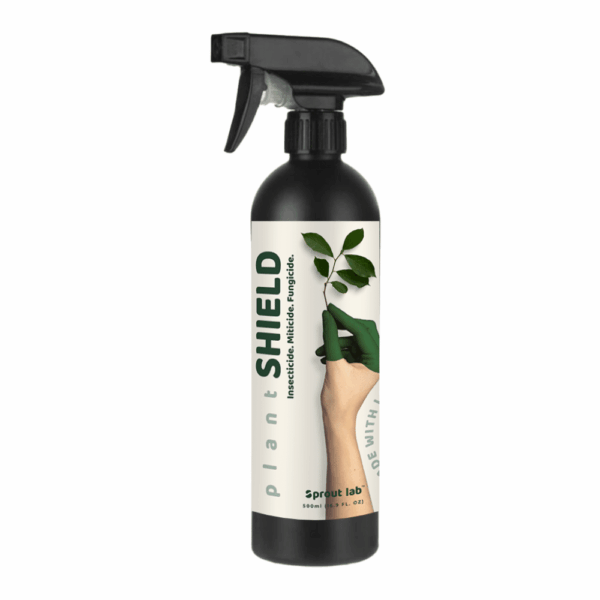
Review Plant SHIELD as a conditional option only if the supplied label includes thrips on your type of plant and intended location. Confirm dilution, coverage and plant-sensitivity instructions. No product is recommended here as a guaranteed cure for every thrips species, protected stage or associated plant disease.
Keep the application plan simple enough to follow and record. Don't alternate unrelated household mixtures based on social-media recipes. If the label doesn't answer an important compatibility question, ask the supplier before proceeding. For edible plants, add crop approval and harvest restrictions to that decision before any application occurs.
A Singapore aroid-shelf scenario
Trace contact between leaves and shared supports when several aroids stand together. Make each plant inspectable without dismantling the whole shelf. A dense display can hide both fresh injury and simple mechanical rubbing, so preserving access is valuable whether the eventual diagnosis is thrips or something else.
Imagine a philodendron leaf opening between a monstera petiole and a grow pole. A scar on the leaf might reflect mechanical contact, insect feeding or both. Photograph the opening leaf, check the contact point and inspect the underside. Separating foliage improves the next inspection even before you choose any treatment.
Don't move the whole display into strong direct sun in the hope of eliminating pests. A sudden change can injure leaves and cloud the diagnosis. Preserve suitable light, root moisture and airflow during isolation. If space is limited, prioritise separating confirmed affected plants and monitoring the exposed neighbours instead of pretending that a tiny gap guarantees containment.
Do you need new mix or recovery products?
Buy growing medium only for a separate root-zone need, and treat nutrition as a separate decision. The complexity of an insect lifecycle does not establish that repotting or fertiliser will control it. Choose each intervention for a clear purpose and leave enough consistency in the routine to evaluate the result.
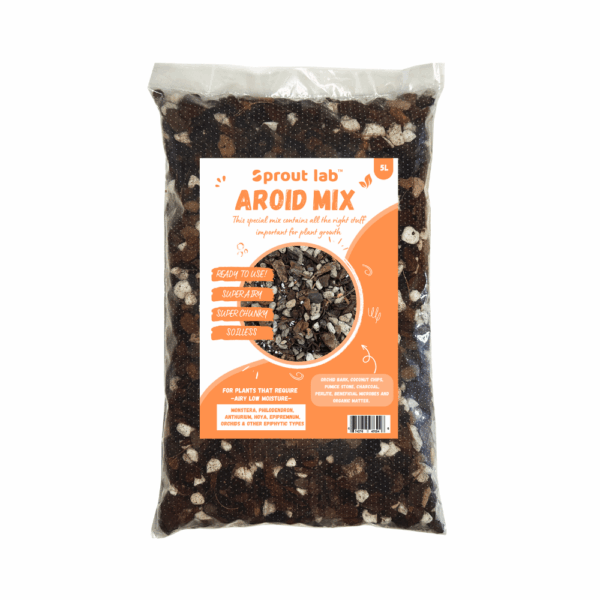
If a suitable aroid already needs repotting, compare Aroid Mix. The reason to choose it is plant and container suitability, not a promise to kill thrips. Avoid changing pot size, medium, lighting and several sprays simultaneously unless each change is clearly justified.
For recovery, preserve productive foliage and stabilise care before pushing new growth. Review Plant GROW only when normal feeding is appropriate and its directions fit the plant. Fertiliser does not reverse a scar, remove hidden insects or cure a virus that a pest may have transmitted.
What should you record after treatment?
Record new damage separately from old damage, and note whether live insects remain. An injured leaf may continue opening after management begins, revealing earlier damage rather than proving immediate failure. Mark the growth present at the start so later observations have a meaningful reference point instead of relying on memory.
Tag the newest leaf that was visible when you started and photograph it as it expands. Note which later leaves develop. Keep an application log with the product and date, and inspect untreated neighbouring plants. If new damage appears only on sprayed surfaces, include that pattern in the reassessment rather than automatically blaming more insects.
A useful record can be brief: plant name, inspected tissue, live insects seen, action taken and next observation. Consistency matters more than elaborate scoring. It lets you answer whether the problem is spreading and whether the treatment created another problem, instead of relying on a general feeling that the plant still looks unhappy.
When is a different diagnosis needed?
Seek a closer diagnosis when live insects cannot be confirmed or fresh injury continues despite correct management. Uncertainty calls for better evidence, not a stronger mixture. Include the plant history and images of both surfaces of affected leaves so an adviser can assess alternative causes as well as suspected pests.
Provide images of the whole plant, new growth, leaf undersides and any captured insect. Include recent changes in sun exposure, watering and products. If the plant has unusual mottling, persistent deformation or serious decline, ask for assessment rather than assuming that insect removal will cure all accompanying symptoms.
For an expendable plant with a persistent confirmed infestation, removal can be a practical containment decision. Bag affected material and clean the empty position. For valuable specimens, discuss the diagnosis and realistic management options with a qualified horticultural adviser. Follow the scale guide only if the evidence instead shows stationary bumps.
Thrips checks after treatment
Keep checking for thrips after you act. Thrips are small and hide in new growth and flower buds, so inspect the newest leaves first and photograph any silvery marks to see whether thrips damage is still spreading.
If new leaves emerge clean, the thrips problem may be easing; old marks will not disappear. Keep neighbouring plants under observation, since thrips can move between pots on a shelf or balcony.
Products to consider
SHIELD requires confirmed thrips and matching label; Aroid Mix supports independently needed aroid repotting; GROW supports appropriate later feeding, not pest or virus treatment.
Common questions
Does every silver mark mean thrips?
No. Abrasion, other pests and environmental injury can produce pale or silver-looking marks. Confirm an organism and inspect where fresh damage develops. Photograph both leaf surfaces and new growth. If you cannot find evidence after careful checks, reassess the diagnosis before using a pest product.
Should I replace all the soil for thrips?
Routine soil replacement isn't a complete answer and may add stress. Thrips can involve protected stages and aboveground tissue. Base management on correct identification and labelled directions. Repot only when a separate root or medium problem justifies it, and continue checking leaves and neighbouring plants.
Why does the next leaf still look damaged?
An unfolding leaf may have been injured before treatment began. Mark the growth stage when you start and monitor later leaves as well as live insects. Old injury becoming visible is different from a new confirmed infestation. Don't exceed label directions because a previously affected leaf keeps its scars.
Read next
Common Houseplant Pests in Singapore (And How to Get Rid of Them)
Spider mites on indoor plants: identify the cause before spraying