Chilli flowers dropping does not automatically mean the plant is short of flowering fertiliser. Light, temperature, root-zone moisture, nutrition and pollination all influence whether flowers become fruit. University of Maryland Extension notes that pepper flowers can drop when daytime temperatures exceed 95°F, about 35°C, while cautioning that several growing problems can produce poor fruit set. That threshold is useful context, not a precise diagnosis for every chilli variety. Start by examining the growing position and the pattern of flower loss. This guide complements the home edible-growing guide with a focused troubleshooting process for established chilli plants.
On this page
What does the flower-loss pattern tell you?
Is the chilli plant receiving useful light?
Could heat be behind chilli flowers dropping?
How does inconsistent watering lead to chilli flowers dropping?
Should you change fertiliser or try a flowering booster?
How should you investigate pollination and pests?
What is a useful troubleshooting sequence for chilli flowers dropping on a Singapore balcony?
What does the flower-loss pattern tell you?
Separate a plant that produces few flowers from one that flowers freely but repeatedly drops them. Also distinguish flowers that never set fruit from tiny fruits that form and later fall. These observations narrow the problem without requiring a product immediately. Photograph the plant and label the date of major changes.
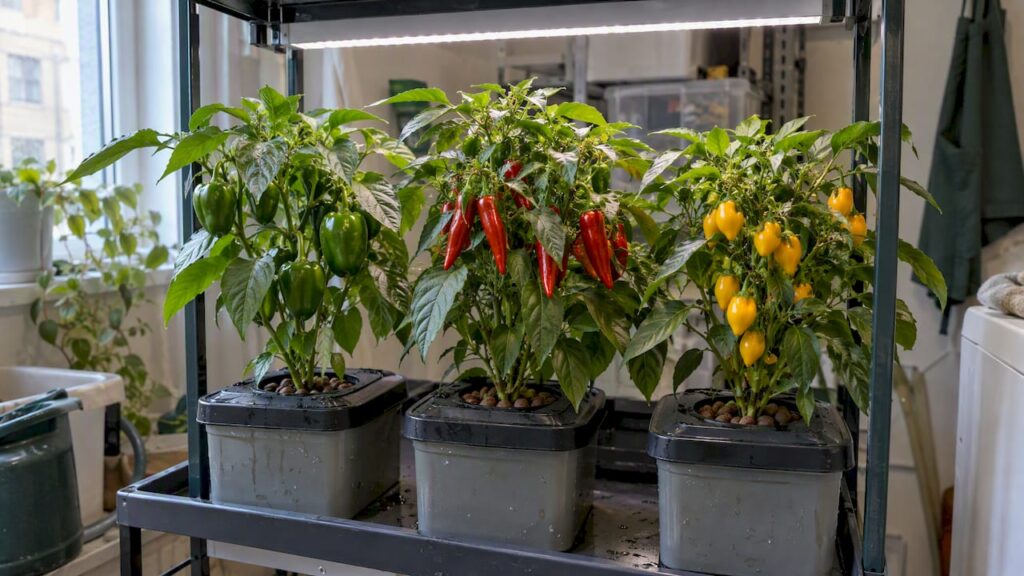
Inspect leaves, shoots and roots as well as flowers. A vigorously leafy plant in deep shade tells a different story from a wilted plant in a small hot pot. Distorted flowers or scarred new leaves deserve a pest inspection. Declining roots can disrupt fruiting even when the canopy still looks substantial.
Some flower loss does not prove crop failure. Concentrate on a persistent pattern and whether new flowers improve after a specific correction. Counting retained developing fruits alongside fallen flowers gives a more useful picture than focusing only on the petals on the floor. Do not assume every flower must produce a mature chilli.
Is the chilli plant receiving useful light?
Measure the actual exposure at the plant. NParks' corridor-gardening guidance places fruiting vegetables in positions receiving roughly 4–6 hours of direct sunlight daily. A bright room or shaded corridor can look sunny to a person without delivering that exposure to the leaves. Nearby buildings, railings and roof edges can alter the pattern substantially.
Record where sunlight falls in the morning, middle of the day and afternoon. Do this from the plant's position rather than the window entrance. A pot moved backwards to avoid rain may lose a large part of its direct light. Dense neighbouring foliage can also shade a chilli after both plants have grown.
If the position is inadequate, consider a more suitable site before increasing fertiliser. Supplemental lighting may be an option indoors, but coverage and intensity must fit a fruiting crop. Read the grow-light guide before assuming that any small decorative lamp can support reliable fruit production.
Could heat be behind chilli flowers dropping?
Heat is a plausible contributor when flower loss coincides with a hot exposed position. University of Maryland Extension gives daytime temperatures above 95°F, about 35°C, as one potential cause of pepper flower drop. Varieties and other conditions differ, so use a thermometer and observations rather than treating that number as a universal cut-off.
A balcony with reflected afternoon sun may be hotter around the plant than a general weather report suggests. The container can also heat up separately from the leaves. Check the growing position directly and note whether the plant wilts during that exposure. Repeatedly moving it between full shade and intense sun can add further instability.
If the position is excessively harsh, test a sensible reduction in the most intense exposure while preserving adequate useful light. Keep the root zone appropriately watered and draining. Do not spray fertiliser or improvised mixtures onto hot foliage to force a response. Improvement should be judged on subsequent flowers, because already lost flowers cannot recover.
How does inconsistent watering lead to chilli flowers dropping?
Both prolonged dryness and prolonged wetness can interfere with fruit set, according to University of Maryland Extension. Check the root zone before watering and observe whether water penetrates it evenly. A dry compact plug can remain thirsty even when water flows quickly from the drainage holes around its edges.
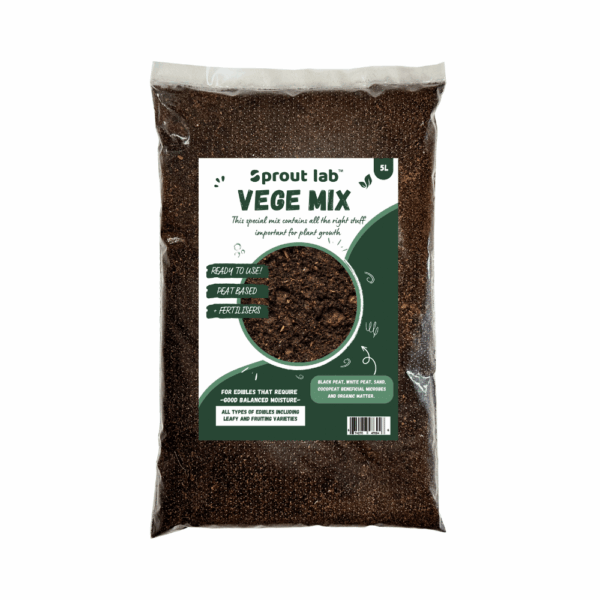
A small crowded pot can move from wet to dry quickly, especially in wind. A large under-rooted container can create the opposite problem. Inspect root occupancy before changing pot size. If the medium has deteriorated, Vege Mix is a relevant replacement option for container edibles, but it does not control heat or guarantee pollination.
Keep runoff and saucers manageable. Balcony rain can interrupt a planned watering routine, so reassess after storms. Avoid adding water because it is the usual time if the root zone is already wet. Read the drainage guide when wetting is uneven or water stands on the surface.
Should you change fertiliser or try a flowering booster?
Review the existing feeding history before adding anything. University of Maryland Extension includes excessive nitrogen among possible contributors to poor blossom and fruit set. A large green canopy is not proof that the plant needs more feed. Check what is already present in the potting medium and whether multiple products overlap.
Use a fertiliser only when its current label supports the crop and intended application. Follow the concentration and frequency stated for that use. Do not combine a general fertiliser, flowering spray and booster on the assumption that more categories of product produce more fruit. Changes become difficult to interpret and may add avoidable stress.
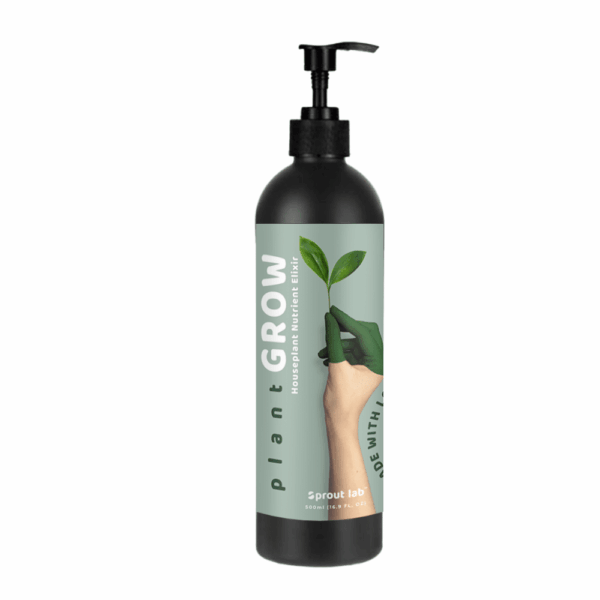
The catalogue's Plant BLOOM is described for ornamental flowering plants, so this guide does not recommend it for edible chillies without verified crop permission. Plant GROW is a product to assess against its current label when nutrition is the demonstrated gap. Feeding cannot overcome an unsuitable growing position.
How should you investigate pollination and pests?
Look at flower condition and access before deciding that pollination is the sole problem. A sheltered enclosed position differs from an open balcony visited by insects. However, pollen performance can also be affected by heat and plant stress. An apparently intact flower does not establish that all conditions for successful fruiting are present.
Inspect developing buds and leaf undersides with magnification. Thrips and other small pests can be difficult to see, and damaged flowers alone do not identify the species. Use the pest identification overview to organise observations, while remembering that edible-crop treatment decisions need a suitable label.
Avoid spraying open flowers routinely with an unidentified insecticide or household soap mix. You may affect beneficial insects or injure plant tissue without addressing the cause. If intervention is needed, select it after identification and follow edible-crop, pollinator and harvest restrictions. A nutrition product is not a pest-control substitute.
What is a useful troubleshooting sequence for chilli flowers dropping on a Singapore balcony?
Start with a site and care record: actual sun, hottest exposure, watering pattern, recent rainfall, pot dimensions and products already applied. This is an original decision checklist, not a claim of a field trial. It makes it easier to choose the next meaningful change and avoid reacting to every fallen flower.
For a shaded but otherwise healthy plant, address light first. For a hot, repeatedly wilting plant, stabilise exposure and root-zone moisture. For a wet, declining plant, investigate drainage and roots. For distorted buds with visible pests, identify the pest. These routes can overlap, but each is more useful than automatically buying a flowering booster.
Keep one representative branch in photographs so you can compare the next developing flowers and fruits. Record interventions clearly. If you change the medium, move the plant and switch fertiliser simultaneously, improvement will not tell you which correction mattered. A manageable sequence produces knowledge you can use on the next chilli plant.
When is it time to seek more specific advice?
Seek identification help when flower loss accompanies unusual distortion, spreading lesions, severe wilt or unexplained decline. Share the variety if known, photographs of flowers and both leaf surfaces, and the growing record. A specialist can make better use of those details than a close-up of one fallen flower alone.
If the plant is otherwise stable, allow the next flowers to show whether the environmental correction helped. Do not promise yourself a fixed harvest date based on a fertiliser purchase. Fruit set depends on the plant and conditions, and a recovering specimen may first need to produce healthy vegetative growth.
Review whether the variety suits your available site. A compact edible garden succeeds by matching crops to conditions, not by forcing every crop into the same corner. For weak young replacements, use the seedling guide. For wilt in neighbouring herbs, compare the basil diagnostic guide.
Chilli flowers dropping: what to record
To work out why chilli flowers are dropping, keep a short log for two weeks: note the date, weather, how wet the medium was and how many flowers fell. Patterns such as drops after hot afternoons or after a missed watering are more useful than any single day.
Chilli flowers dropping once, after hot weather or a missed watering, can happen without a lasting problem. Chilli flowers dropping week after week is a stronger sign that light, heat, watering or pests need attention.
Before you buy a booster, change one thing at a time and give the plant a week or two to respond. The Vege Mix and Plant GROW pages describe what each product is, but neither is a guaranteed fix for chilli flowers dropping.
Chilli flowers dropping in hot weather
Chilli flowers dropping often coincides with hot spells, and Singapore balconies can be hot for much of the year. Shade cloth or a spot that avoids the harshest afternoon sun may reduce chilli flowers dropping, but test one change at a time.
Chilli flowers dropping can also follow a sudden change in watering. Keep moisture steady and check that the pot drains, because both drought and waterlogging can contribute to chilli flowers dropping.
Pollination matters too. If chilli flowers dropping happens indoors or on a sheltered balcony, gently tapping the plant may help; the guide above explains how to judge whether pollination is the issue.
Chilli flowers dropping: when to ask for help
If chilli flowers dropping continues for several weeks despite steady care, photograph the plant and note what you changed. Chilli flowers dropping alongside curled leaves or sticky residue can point to pests, so inspect leaf undersides.
Chilli flowers dropping is rarely fixed by one purchase. Treat the plant as a system of light, heat, water and pests, and review each in turn. For identification help, see our aphid guide.
Keep expectations realistic: chilli flowers dropping early in the season does not always mean the whole season is lost, so keep recording flowers and fruit set over several weeks.
Products to consider
Vege Mix is relevant to a demonstrated medium problem. Plant GROW is conditional on a nutritional need and current label suitability for chillies. Ornamental flowering sprays are intentionally excluded without edible-crop verification.
Common questions
Does every chilli flower need hand pollination?
No. First assess the variety, growing position, flower condition and environmental stress. Poor fruit set is not automatically a pollination failure. Heat, unsuitable light and inconsistent moisture can also matter. Avoid handling or spraying every flower without a reason, and judge changes by later fruit development.
Can I use an ornamental flowering spray on chillies?
Only if the current label explicitly permits that edible crop and use. An ornamental recommendation does not establish suitability for food plants. This guide therefore does not recommend Plant BLOOM for chillies on the information available. Follow harvest restrictions and ask the supplier when label scope is unclear.
Should I repot when flowers start falling?
Only if root crowding, failed drainage or unsuitable medium provides a clear reason. Flower drop alone does not justify disturbing the roots. Inspect light, heat and watering first. A repot can be useful for a demonstrated container problem, but it may add stress if the growing setup was already suitable.
Is it normal for chilli flowers to keep dropping?
Occasional flower loss can happen, but chilli flowers dropping repeatedly deserves a closer look at light, heat, watering and pests, as described in this guide.
Will a flowering booster stop chilli flowers dropping?
Not by itself. Boosters do not correct heat, light, watering or pollination problems, so check those first.
What causes chilli flowers dropping in Singapore?
Heat, inconsistent watering, low light, poor pollination and pests can all cause chilli flowers dropping, so check them one at a time.
Will shade stop chilli flowers dropping?
Light shade in the hottest part of the day may reduce chilli flowers dropping in some setups, but it does not guarantee a fix, so watch the plant after any change.