Choose a grow light for the plant, the area of foliage and the way the fixture can be positioned. A room that looks bright to you may not provide enough usable light at leaf level. Start with the growing space before choosing a model.
Measure the setup before shopping
Write down the shelf or growing-area dimensions, the tallest plant and the space available above or beside it. Note nearby sockets, watering points and whether a stand or shelf mounting is practical. A photo with measurements is more useful for choosing a fixture than the description “a dark corner”.
Decide whether the lamp will supplement a window or supply most of the light. Also decide what you want to grow: maintaining an ornamental plant and supporting a fruiting crop are different objectives.
Understand the specifications
Lumens describe brightness to human vision. PPFD describes how much light in the photosynthetically active range reaches a surface, so its measurement distance and coverage area matter. Compare measurements taken in equivalent conditions rather than treating wattage or the phrase “full spectrum” as a complete performance rating. NParks explains grow-light terminology.
Before buying, check the actual fixture’s dimensions, power requirement, mounting instructions and measured output information if available. If a specification is missing, ask us about the exact model; do not borrow a figure from another T5 or T8 product.
Compare the current Sprout Lab options
T5 NANO Grow Light is positioned for compact setups such as a single pot or propagation area. Check that its physical size and mounting arrangement suit your space.
T8 Grow Light with 360° Rotation Stand combines a full-spectrum light with an adjustable stand. The rotating stand helps you aim the fixture as the layout changes; it is not proof that every shelf or crop will receive sufficient light.
The separate Grow Light Stand is an accessory. Confirm fixture compatibility and what is included before ordering. Browse the grow-light range for current prices and availability.
Position the fixture and observe the plant
Follow the manufacturer’s clearance and mounting instructions. Keep hot surfaces away from foliage, keep connections dry and support the fixture securely. Adjust position as plants grow; leaves at the edge of a shelf may receive a different amount of light from those below its centre.
Use a consistent schedule suited to the plant and setup, with a dark period rather than assuming continuous light is better. Make one adjustment at a time and observe new growth. University of Minnesota Extension discusses artificial lighting.
Estimate running cost using your own figures
Daily electricity use in kWh = actual input watts ÷ 1,000 × operating hours. Multiply by days and your own electricity rate to estimate cost. Include any additional equipment if you want the complete setup cost.
Illustration only: a 20W fixture running 12 hours daily uses 0.24kWh per day, or 7.2kWh over 30 days. This is a calculation example, not a specification for either Sprout Lab model. Timers and actual usage can change the total.
How a grow light works for indoor plants
A fixture supplies light in the range plants use for photosynthesis, which is useful when a window does not provide enough. A fixture can supplement daylight or provide most of the light, depending on the setup.
Plants differ in how much light they need, so a fixture that suits a leafy houseplant may not suit a fruiting crop. Before buying a fixture, note the plant, the area and how long you plan to run the light.
Distance matters too. A fixture that is too far away delivers little light at leaf level, while one that is too close can stress leaves or run hot. Follow the manufacturer’s clearance instructions for any fixture you use.
Types of grow light you will see
Common types of grow light include LED panels, tube lights and compact bulbs. LED options are widely used for home setups, but check the specifications of the exact grow light model you are considering rather than assuming.
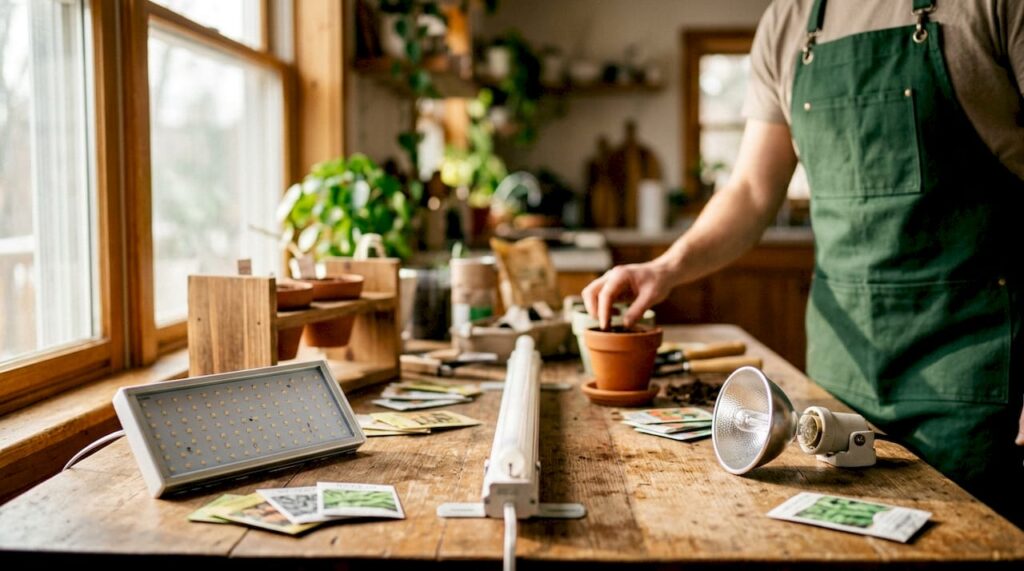
Full-spectrum white grow light products look natural to the eye, while some fixtures use coloured light that makes plants look pink or purple. Colour can affect how easy it is to judge your plants, which is worth considering for a fixture in a living area.
Size and shape matter: a long tube grow light suits a shelf, while a small stand-mounted grow light suits a single pot. Compare the physical dimensions of the fixture with your space.
Grow light schedule and placement
Run a fixture on a consistent schedule with a dark period each day. Plants generally need rest from light, so continuous operation is not better. A timer keeps the grow light schedule steady.
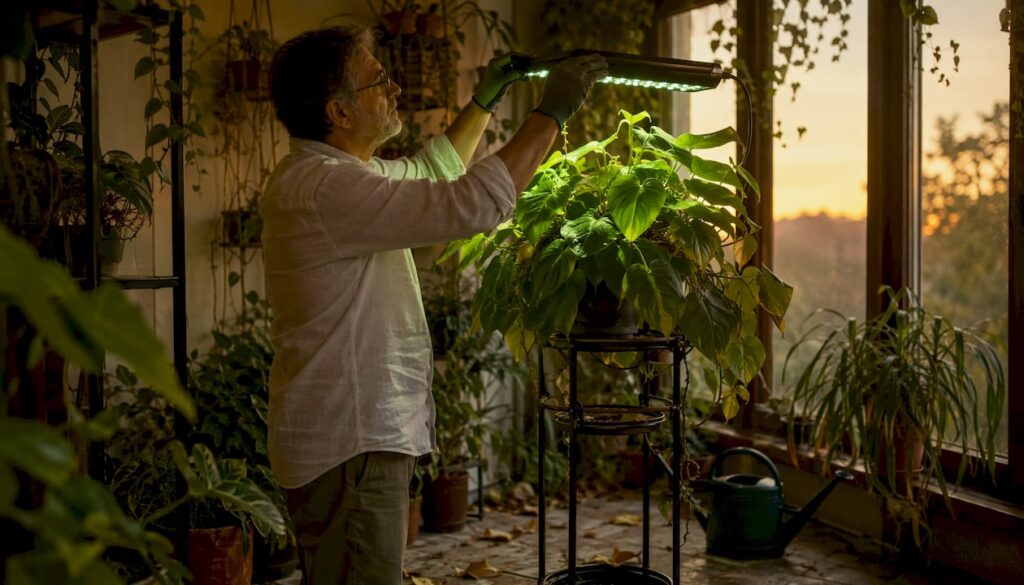
Place the grow light above the plants and adjust it as they grow. Keep cables and connections dry and away from water, and follow the instructions for the grow light fixture.
Observe the plants after changing any grow light setting. Compact, healthy new growth suggests the grow light is working, while leggy growth suggests the plant needs more light.
Do I need a grow light if I have a bright window?
A bright window may be enough for some plants but not others, and light drops quickly with distance from the glass. A grow light can fill the gap for plants that stretch or slow down, so watch how your plant responds before buying.
How many hours should a grow light run?
It depends on the plant and the fixture. Follow the plant’s needs and the product directions, include a dark period and adjust one thing at a time. Our guide to grow light electricity cost helps you estimate what a grow light will cost to run.
Is a more powerful grow light always better?
No. Matching the grow light to the plant, the area and the distance matters more than raw power, and a very strong grow light can stress plants or waste electricity.
Questions to ask before you buy
Ask what the light is meant to do: keep a leafy houseplant healthy, help seedlings, or support fruiting plants. Different goals need different coverage and intensity.
Ask how much area the fixture covers at the distance you plan to use it. A small panel may cover only a single pot, while a longer tube can cover a shelf.
Ask what is included, such as a stand, clamp, cable length and compatibility with a timer. Missing accessories add to the total cost.
Ask for the specifications of the exact model and check them against your space before ordering.
Electricity, safety and timers
Running costs are small for a compact fixture but vary with wattage and hours, so use the formula above with your own electricity rate.
Use a timer to keep the schedule consistent and avoid leaving lights on day and night. Check that the timer is rated for the fixture’s power draw.
Keep water away from electrical connections, and place fixtures where they cannot fall into planters or sinks. Do not cover a hot fixture.
Unplug the fixture before adjusting it, and follow the manufacturer’s safety instructions.
Matching light to common plants
Leafy houseplants such as pothos and monstera generally need less intense light than fruiting herbs and vegetables. Check what your plant needs before choosing a fixture.
Seedlings and microgreens need steady light close to the plants. See our leggy seedlings guide for how light and spacing interact.
Succulents and cacti usually want strong light. Our succulent care guide explains what to look for.
If you are unsure, send the plant list, the area dimensions and a photo through Contact.
Quick answers about indoor lamps
Can a lamp replace sunlight completely? Some setups do, but it depends on the plant and the fixture. Check the plant’s needs and observe growth.
How far should the fixture be from the plant? Follow the manufacturer’s clearance and adjust as plants grow. Too close can burn leaves, and too far gives weak light.
Does the colour of light matter? Many plants grow under white full-spectrum light. Coloured light can make plants look odd, so consider how you want to view them.
Can I leave the lamp on overnight? Plants generally benefit from a dark period, so use a timer rather than continuous light.
What if leaves look scorched under the lamp? Raise the fixture, shorten the schedule and watch new growth.
Can I use a lamp in a bathroom? Only with care. Humidity and splashing water call for strict electrical safety, so keep fixtures away from water.
Reading a lamp specification sheet
Wattage is the power the fixture draws, not the amount of light it gives out. Use it to estimate running cost, but do not treat it as a measure of how well plants will grow.
PPFD tells you how much usable light reaches a surface, so look for the distance at which it was measured. A figure taken very close to the lamp may not apply at your shelf height.
Coverage area is usually stated at a particular height. Check that the area matches the space your plants occupy, and remember that light is weaker toward the edges.
Some specification sheets list efficacy, which relates light output to power. If the figure is missing for your model, ask us rather than assuming one from another product.
When light is not the only problem
Stretching seedlings may need a light assessment, but also check spacing and other conditions in the leggy-seedling guide. Yellow leaves need a wider check of water, roots and pests. A stronger lamp is not a treatment for every symptom.
For herbs and small edible projects, read Growing Herbs and Microgreens. If you need help choosing a fixture, send the plant list, area dimensions and a photo through Contact.