Leggy seedlings, meaning long, thin seedlings, usually need a better growing setup before they need fertiliser. University of Minnesota Extension recommends 12–16 hours of light daily for indoor seed starting and identifies inadequate light as a major cause of elongated stems. The hours are a starting point, not a guarantee: a weak lamp used longer may still provide inadequate light, and fixture distance depends on the equipment. This guide helps distinguish stretched living seedlings from seedlings collapsing because of disease or physical damage. For the broader choice of fixtures, use the grow-light buying guide rather than buying solely on colour or advertised wattage.
On this page
Are these leggy seedlings or are they damping off?
Why can a bright Singapore window still produce weak growth?
How should you set a lighting schedule?
How do crowding and a humidity dome change the picture?
What should watering and feeding look like at this stage?
Are these leggy seedlings or are they damping off?
Leggy seedlings typically have elongated, weak stems and may lean towards a light source. Damping-off is different: tissue around the stem base or roots deteriorates and the seedling collapses. University of Minnesota Extension notes that damping-off organisms can move through shared media and irrigation water. Treat a collapsing tray as a hygiene issue, not simply a lighting adjustment.
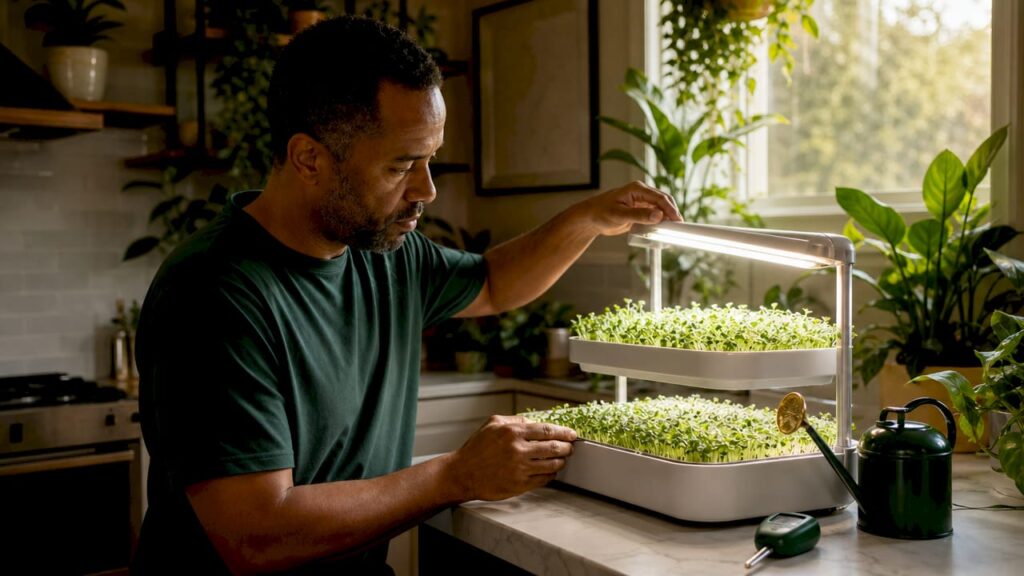
Look closely at the point where each stem meets the medium. Is it intact and stretched, or narrowed, discoloured and soft? Compare the pattern across the tray. Seedlings all leaning one direction suggest a light-placement problem; patches collapsing in wet medium require a different investigation. Neither pattern alone replaces close inspection.
Handle seedlings by their leaves where practical rather than squeezing delicate stems. Take photographs before rearranging the tray. If disease is suspected, keep it apart from other propagation containers and avoid sharing runoff. Adding fertiliser to a collapsing seedling does not repair damaged tissue or prevent spread through a wet tray.
Why can a bright Singapore window still produce weak growth?
Human perception of a bright room is not a reliable measure of seedling light. A roof overhang, tinted glass, nearby building or deep windowsill can reduce the light reaching the tray. Seedlings at the back may receive much less than those at the front, even though the whole shelf looks evenly illuminated.
Track the actual light at leaf level and note leaning. Turning a tray can make stems point in different directions, but it does not solve a fundamentally weak source. A small bright patch on one edge is also different from useful coverage across all cells. Seedlings need an arrangement that supports the whole growing area.
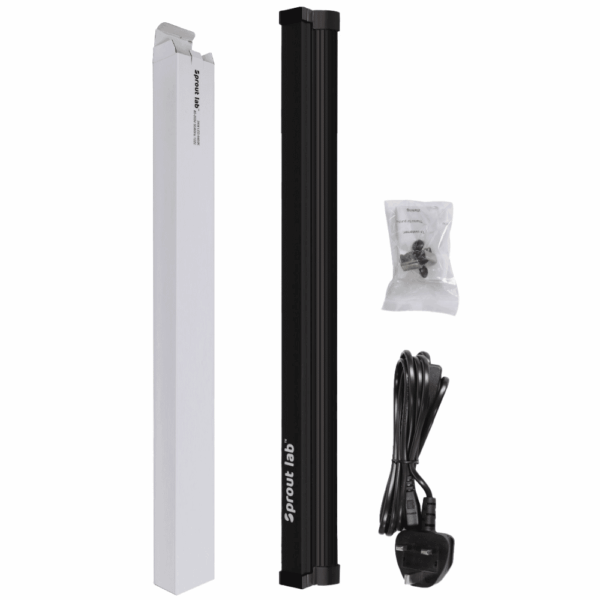
If you use a T5 grow light, check the product's recommended coverage and position. A fixture intended for a narrow shelf may not cover a broad tray. Keep electrical connections protected from watering, and make adjustments with the equipment safely installed rather than balancing lamps on containers.
How should you set a lighting schedule?
University of Minnesota Extension's 12–16 hour indoor seedling guidance provides a sensible reference for planning a light period. Preserve a daily dark period rather than leaving the lamp on continuously. Species and fixture output matter, so combine a schedule with observations of new growth instead of treating hours as the only variable.
Use a timer where appropriate and keep the schedule consistent. Record any natural light that also reaches the tray. If the lamp is moved, check every part of the tray for coverage. A tall seedling may sit much closer to the fixture than a newly emerged neighbour, so separate markedly different growth stages when possible.
Do not copy old fluorescent-lamp distance advice directly to an unfamiliar LED. The source, output and heat differ. Follow manufacturer guidance, then inspect for bleaching, curling or excessive warmth as well as stretching. The aim is balanced compact growth, not positioning the fixture as close as physically possible.
How do crowding and a humidity dome change the picture?
Crowded seedlings compete for space and make even lighting harder. University of Minnesota Extension recommends retaining the healthiest seedling in a cell once true leaves develop, cutting unwanted seedlings rather than pulling them through neighbouring roots. Follow the crop's needs and avoid turning a germination tray into a tightly packed permanent planter.
A dome is a germination tool, not a requirement to keep emerged seedlings sealed indefinitely. Check the seed packet and ventilate or remove the cover as appropriate after emergence. Constant condensation can hide overly wet medium and obstruct inspection. Different seeds emerge at different times, so mixed trays may require more attention.
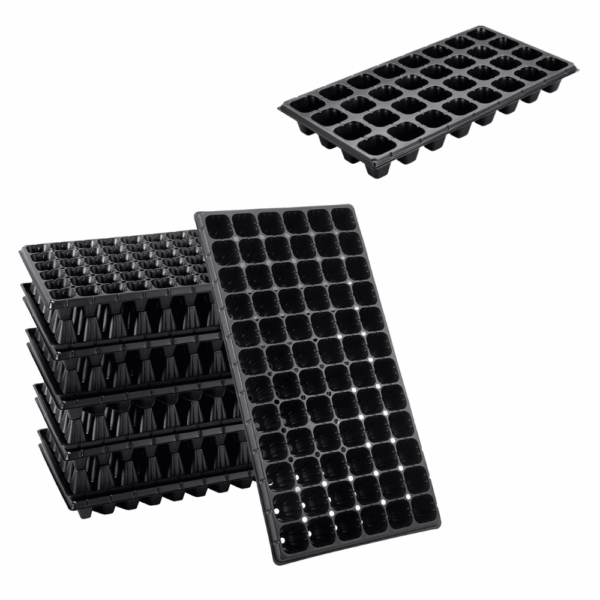
Use a tray size that you can inspect and water evenly. The 32- or 72-cell trays and 12-cell germination set are equipment options, not cures. Select cells around the crop and transplant plan instead of assuming more cells always make the setup more efficient.
Can leggy seedlings recover?
Some stretched seedlings can produce sturdier new growth once light and spacing improve, but the existing stem will not simply shorten. Assess whether the stem remains healthy and whether the seedling can support itself. Severely collapsed or diseased seedlings may be less practical to rescue than restarting under corrected conditions.
Do not bury every species deeply to hide the stretched stem. Crops differ in their ability to tolerate deeper planting. Follow crop-specific transplant guidance and keep healthy growing points above the medium. A method appropriate for one vegetable is not automatically safe for basil, ornamentals or every leafy green.
Provide gentle support if needed while correcting the actual cause. Avoid snapping stems while separating crowded roots. If you restart, retain notes about sowing density, light position and moisture so the next tray does not repeat the same pattern. Fresh seed alone cannot compensate for an unchanged dark, crowded propagation shelf.
What should watering and feeding look like at this stage?
Keep the germination and seedling medium appropriately moist without leaving cells continuously waterlogged. Small cells can dry unevenly, so inspect edge and centre cells separately. Shared trays should not remain filled indefinitely after watering. A glossy wet surface or persistent standing water deserves attention even when leaves are still green.
Use a suitable seed-starting medium and the crop instructions. Large bark pieces or a very rich established-plant mix may not be appropriate for tiny seeds and roots. This guide does not prescribe a universal home blend because seed size, tray depth and watering method vary. Clean equipment matters when starting another batch after collapse.
Do not try to thicken a stretched stem by increasing fertiliser. Correct light first and introduce nutrition according to the crop, medium and product label when needed. Check whether the growing medium already includes nutrients. Too many changes at once can make it difficult to distinguish improved conditions from a new source of stress.
How do you move leggy seedlings into a balcony position?
A protected indoor seedling needs a gradual transition to stronger outdoor exposure. Do not move a weak tray directly into intense afternoon sun because it finally looks bright enough. The stem and leaves developed under different conditions, and abrupt exposure can add scorch or rapid drying before the roots establish.
Choose a manageable transition location with appropriate shelter and observe the plants closely. Account for wind, rain and the heat of the container surface. A tray on a high exposed ledge behaves differently from a planter beside a sheltered window. Keep all containers secure and avoid runoff into shared walkways.
When transplanting, handle the root plug carefully and use suitable medium for the next growing stage. Vege Mix is a relevant option for established edible transplants, subject to the crop and product instructions. Do not treat the transplant as an opportunity to bury an unhealthy stem or conceal unresolved damping-off.
What records make the next tray more successful?
Record the seed variety, sowing date, medium, cell size, lamp model, lamp position and light schedule. Add a photograph showing the entire tray from above and one from the side. This original comparison method helps distinguish stretched growth from simple differences in germination timing without pretending to be a controlled research trial.
Measure improvement in new growth and survival rather than the tallest seedling. A tall seedling is not necessarily the strongest one. Note whether leaves are developing evenly across the tray and whether plants lean towards an edge. If only one area struggles, investigate coverage or watering distribution before replacing all equipment.
For herbs that establish successfully but later wilt, continue with the basil wilt guide. For chillies that grow well but fail to set fruit, use the flower-drop guide. Seedling care is the first stage of the growing system, and later problems need their own diagnosis.
Leggy seedlings: a quick prevention checklist
Preventing leggy seedlings starts at sowing. Give each tray steady light from the first day of germination, keep the light close enough to the seedlings for your equipment, and avoid crowding so that neighbours do not shade each other.
Leggy seedlings of some crops, such as tomatoes, can be planted deeper at transplanting, but this does not suit every species, so check the crop before burying stems.
If leggy seedlings keep appearing under a lamp, the lamp may simply be too weak or too far away. Our guide to choosing a grow light explains what to compare.
Why leggy seedlings happen
Leggy seedlings stretch toward light, so the stem grows long and thin while the leaves stay small. Leggy seedlings are most common when light is weak, too far away or on for too few hours.
Warm temperatures can add to leggy seedlings, because seedlings grow quickly in the heat. In Singapore, a warm shelf with weak light is a common setup for leggy seedlings.
Crowding contributes to leggy seedlings too, since neighbours shade each other and each plant stretches to reach the light. Thin or space the tray early to reduce leggy seedlings.
Preventing leggy seedlings next time
To prevent leggy seedlings, set up your light before sowing, keep it close enough for your equipment and give the tray steady daily light. Record the setup so you can repeat what works against leggy seedlings.
Rotate trays if the light is uneven, because leggy seedlings can lean toward one side. Good airflow and sensible watering also help keep seedlings sturdy.
If leggy seedlings still appear, compare your setup with our grow light guide and adjust one factor at a time. Leggy seedlings are a signal about your setup rather than a failure.
Products to consider
The T5 light is relevant to inadequate or uneven seedling light, with fixture-specific setup. Cell trays support organised propagation. Vege Mix is linked for the later edible-transplant stage, not as a universal fine-seed germination medium.
Common questions
Should grow lights stay on all night?
Not continuously. University of Minnesota Extension suggests 12–16 hours of daily light for indoor seedlings and a dark period. Use that as a starting reference alongside the crop and fixture guidance. Extending the hours cannot fully compensate for weak output or poor coverage.
Can fertiliser stop seedlings being leggy?
It does not correct inadequate light. First improve the light setup, spacing and appropriate moisture. Add nutrition only when the crop and medium require it, using label directions. Increasing feed while leaving seedlings in the same dim position can create more problems rather than stronger stems.
Should I reuse a tray after damping-off?
Clean and appropriately disinfect reusable equipment before another sowing, following the disinfectant's instructions. Discard affected seedlings and suspect medium rather than transferring them into healthy trays. Correct wet conditions and shared-runoff problems too, because equipment cleaning alone does not address an unsuitable propagation environment.
Why are my seedlings leggy even under a grow light?
The light may be too weak, too far away or on for too few hours. Equipment varies, so adjust one factor at a time and watch the next sowing.
Can leggy seedlings be saved?
Often they can be supported and moved into better light, but very thin stems may not fully straighten. Judge progress by the new growth rather than the old stems.
Do leggy seedlings need fertiliser?
Usually leggy seedlings need better light first. Fertiliser does not fix leggy seedlings caused by weak light or crowding.
How close should a light be to avoid leggy seedlings?
It depends on the equipment, so follow the product instructions and observe the seedlings. Leggy seedlings that stretch toward the light suggest it is too weak or too far away.