Succulent care starts with the plant: most desert-type succulents need strong light, a fast-draining root zone and time to dry between waterings. In Singapore, a pot that stays wet in a dim room is a common mismatch. Start by identifying the plant: an Echeveria, Haworthia and tropical holiday cactus do not all want identical conditions.
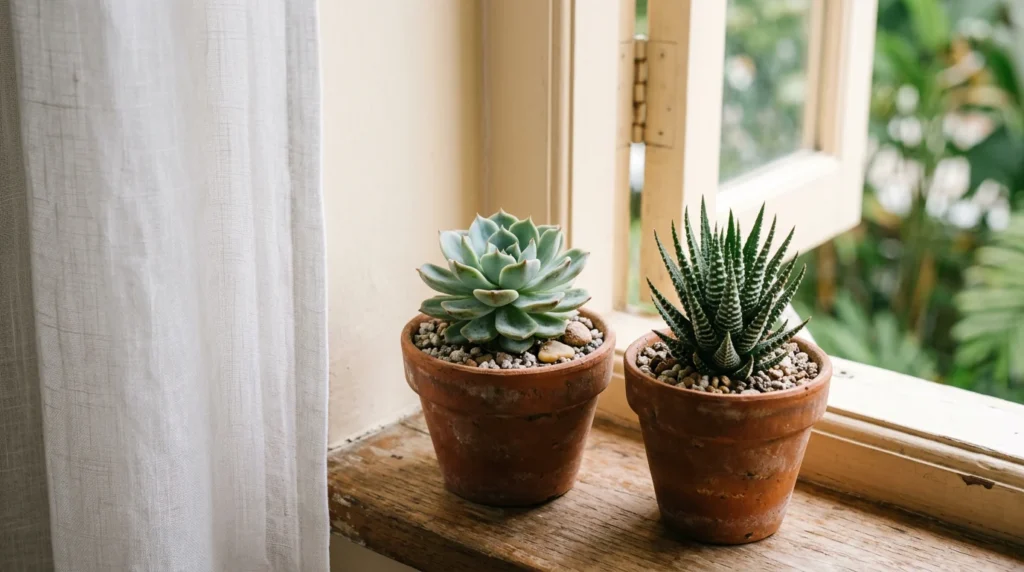
AI-generated plant image for this guide. Actual plants and growing conditions vary.
At a glance
• Match the light to the succulent; introduce direct sun gradually.
• Check dryness through the pot before watering again.
• Soft translucent leaves and a wet root zone need a different response from dry wrinkles.
Which plants does this succulent care advice cover?
This guide mainly covers fleshy-leaved plants such as Echeveria, Haworthia and similar dry-adapted succulents. The word NParks guidance for Echeveria, not one uniform habitat. Many tropical epiphytic cacti prefer different moisture and light conditions from desert plants.
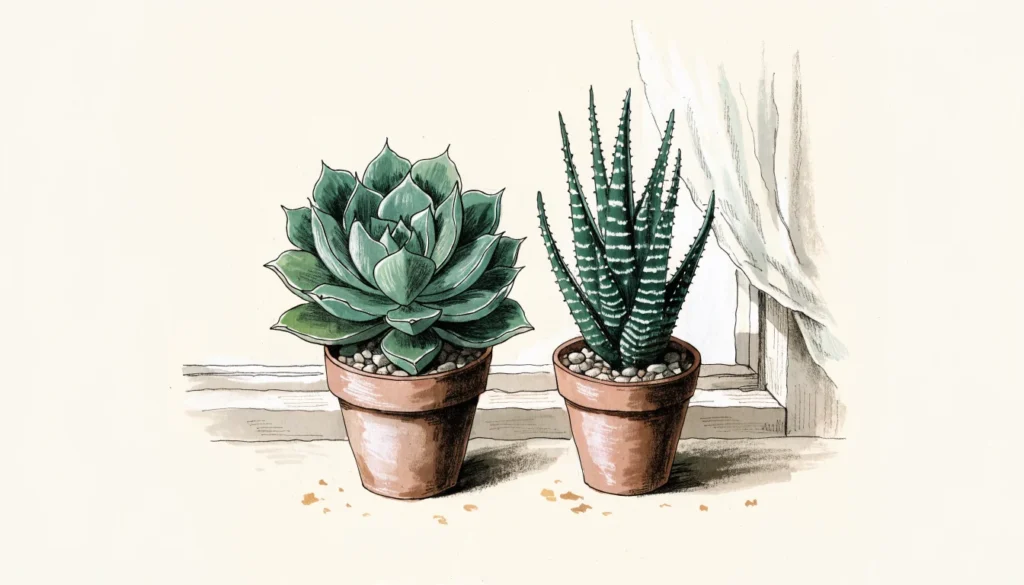
Find the plant's name before making a major change. A compact rosette on a shop shelf may need much more light than it received during display. A Haworthia often suits bright filtered light better than an abruptly exposed, hot balcony ledge. For Crassula ovata, use the separate jade plant guide.
Succulent care: why is a succulent stretching or leaning?
Long gaps between leaves, a leaning stem or an opening rosette can indicate insufficient light. Start with the newest growth. Is it leaning towards the window? Rotating the pot can balance its shape, but it does not increase the total light available to the plant. Move it towards a brighter position in stages. Sudden exposure to strong afternoon sun can scorch leaves that developed indoors. Check the surface temperature of the growing spot and watch the plant after each move. If the only available position is dim, a properly positioned grow light may be more useful than extra fertiliser.
Existing stretched growth will not shrink back into a compact rosette. Watch what grows next. Do not keep changing watering, fertiliser and location every day; that makes it difficult to identify which condition was causing the problem. Our grow-light guide explains what to check before buying equipment.
Succulent care and soft leaves: too much or too little water?
Read the leaves together with the root zone.
Soft, translucent or collapsing leaves in wet medium can indicate excess moisture and decay. Wrinkled leaves in a thoroughly dry pot may indicate a need for water. A plant with rotten roots can also look dehydrated because those roots no longer function well.
Lift the pot, inspect drainage and check below the surface. If it is dry and the plant otherwise looks sound, water the medium thoroughly and drain it. If it remains wet and the stem is soft, stop watering and assess the roots. The root-rot guide helps separate prevention from attempted recovery.
Avoid routine misting as a substitute for watering the roots. Keep water from collecting in tight leaf rosettes where possible, especially in still, shaded conditions. Empty the saucer after watering rather than leaving the pot to sit in it.
How does succulent care change with Singapore rain and potting mix?
For Echeveria, NParks recommends protection from rain and a bright growing position. Wind-driven rain can soak a balcony pot even under a roof. After a wet spell, check how long the medium stays damp instead of continuing the same watering routine.
Use a draining pot and a medium with suitable mineral components. Perlite or pumice can help create air spaces when mixed throughout a fresh blend. There is no universal percentage that suits every species, pot and balcony. A dense water-retentive blend does not become free-draining merely because pebbles cover its surface.
If you need to rebuild the root zone, consider perlite or pumice as amendments, and follow the repotting guide. Do not put a gravel layer beneath the mix as a substitute for drainage holes.
What should you check in succulent care before applying a product?
Inspect crevices between leaves for cottony mealybugs, especially when buying a new plant. Separate an affected plant from the collection and identify the pest before treating it. Some sprays can mark delicate leaf coatings; check the product label and test a small area when the label permits.
Feed only a healthy plant at an appropriate labelled rate. Fertiliser cannot correct a dim position or reverse a rotten stem. Photograph the growing point and track whether new growth is firm and compact. A few dried old leaves near the base are different from rapidly spreading collapse.
Succulent care and light in a Singapore flat
Succulent care depends heavily on light. Most desert-type succulents want as much bright light as you can give, so a sunny window or a bright covered balcony usually suits them better than a dim shelf.
In low light, succulents stretch and lose their compact shape, and no change to succulent care elsewhere fully makes up for it. Introduce stronger sun gradually to avoid scorched leaves.
Rotate pots occasionally so that every side receives light, and note how the plant responds. Good succulent care is mostly observation.
Succulent care: watering and drainage
Water succulents thoroughly and then let the mix dry before watering again. Succulent care fails most often through frequent small waterings that keep the roots damp.
Use a pot with drainage holes and a gritty, free-draining mix. Our soil mixes page compares Sprout Lab’s blends, and the soil and garden mixes category lists the range for succulent care.
Terracotta dries faster than glazed or plastic pots, so succulent care in terracotta may need more frequent checks. Judge by the mix, not the calendar.
Succulent care for propagation and repotting
Many succulents can be propagated from leaves or offsets, which makes succulent care rewarding. Let cuttings callus before placing them on a dry, gritty mix.
Repot succulents when roots fill the pot or the mix has broken down, using fresh draining medium. Succulent care after repotting often means waiting a few days before watering.
See our repotting guide for the general steps, and adjust them for succulent care by keeping the medium very free-draining.
Succulent care in a rainy week
Rain exposure changes succulent care on a balcony. A pot left in heavy rain can stay wet for days, so move succulents under cover during wet spells.
Check that pots drain freely and that saucers do not collect water. Succulent care in the rainy season is mostly about keeping the roots from sitting wet.
If a succulent turns soft or translucent after rain, remove it from wet medium and let it dry. See our root rot guide for what to check.
Remember that succulent care varies by plant: an Echeveria, a Haworthia and a holiday cactus want different conditions, so look up your species.
Succulent care and pot choice
Terracotta suits succulent care well because it dries faster, but check the pot more often on a hot, breezy balcony.
Use a pot with drainage holes and a size that fits the plant. A very large pot keeps the mix wet for longer and works against succulent care.
Shallow, wide pots suit rosette succulents, while deeper pots suit plants with long roots.
Empty any saucer after watering so the roots are not left standing in water.
Products to consider
Perlite and pumice are useful when making a suitable, airy medium. Choose them for a drainage problem during repotting, rather than adding products to an already failing plant without checking its roots.
Common questions
Can succulents live in an air-conditioned office?
Some can if they receive suitable light and are watered according to actual drying. Air conditioning alone does not make an office a good location. A desk far from daylight may be too dim, even if the room looks bright under ceiling lights.
Should I spray the leaves every day?
Routine leaf misting does not replace watering the root zone. For the dry-adapted plants covered here, let the medium dry appropriately, then water and drain. Constantly damp rosettes in a poorly ventilated position can create additional problems.
Can a stretched succulent become compact again?
The elongated stem will not shorten. Improved light can help subsequent growth develop more compactly. Any pruning or propagation should be appropriate to the species and done only after you understand why the plant stretched in the first place.
What is the simplest succulent care routine?
Give bright light, a gritty draining mix and a pot with holes, and water only when the mix has dried. That covers most succulent care.
Do succulents need fertiliser?
Only a little, and only during active growth. Follow the label, and remember that fertiliser cannot fix low light, which is the main limit in succulent care indoors.
Can succulent care include misting?
Daily misting rarely suits desert-type succulents, because it wets the leaves without watering the roots. Succulent care usually means thorough watering of the mix, then letting it dry.
Quick answers about succulents
Why are my succulent’s leaves wrinkled? Wrinkled leaves can mean the plant is short of water, but they can also reflect root damage that stops water uptake. Check the roots and the mix before watering more.
Can succulents live indoors without a window? Rarely. Most need strong light, so a windowless room is a poor choice unless you use a suitable light and keep the setup consistent.
How do I fix a stretched succulent? Move it to brighter light and give it time. Stretched growth does not shrink back, but new growth will be more compact.
What mix is best for succulents? A gritty, free-draining mix in a pot with drainage holes. Our soil mixes page compares Sprout Lab’s blends.
Read next
Jade plant care: falling leaves, wrinkles and soft stems
Root Rot in Houseplants: A Singapore Recovery Guide
Mealybugs on houseplants: a practical Singapore treatment plan
Sources and further reading
NParks highlights the extra care Echeveria needs in tropical humidity. Editorial method: this guide draws on the horticultural references below and adapts their care principles to Singapore homes. It does not report a Sprout Lab product trial. Product suggestions are optional and should follow their labels. Learn about Sprout Lab or contact us with photos and growing conditions for help choosing a next step.
NParks: Mexican Hen and Chicks — accessed 10 October 2026.
NC State Extension: Crassula ovata — accessed 10 October 2026.
Prepared by the Sprout Lab editorial team using the horticultural references above. Local examples adapt general guidance to Singapore homes; they are not results of product trials. Product suggestions use current Sprout Lab descriptions. Follow the label for application instructions.