A drooping plant does not always need water. Roots that stay wet can lose the ability to supply the leaves, producing the same wilt that appears during drought. The University of Maryland Extension advises checking root firmness and colour before choosing treatment. This guide turns that distinction into a practical decision process for Singapore flats, where a shaded room, a decorative outer pot and frequent watering can combine unnoticed. Start with the root zone rather than a bottle of treatment. If yellow leaves are your only symptom, first compare the wider causes in the yellow Monstera leaf guide.
On this page
What should you check before calling it root rot?
Why does root rot develop in a Singapore flat?
What should you do when you find damaged roots?
Which growing medium fits the recovering plant?
How should you water during recovery?
What does root rot recovery look like before new leaves appear?
What should you check before calling it root rot?
Check the growing medium, drainage and roots together. University of Maryland Extension identifies dark, soft roots as a warning sign and contrasts them with firm, healthy roots. Root colour alone is not decisive because bark, fertiliser and plant species can affect appearance. A brown root that stays firm is different from one whose outer layer slides away.
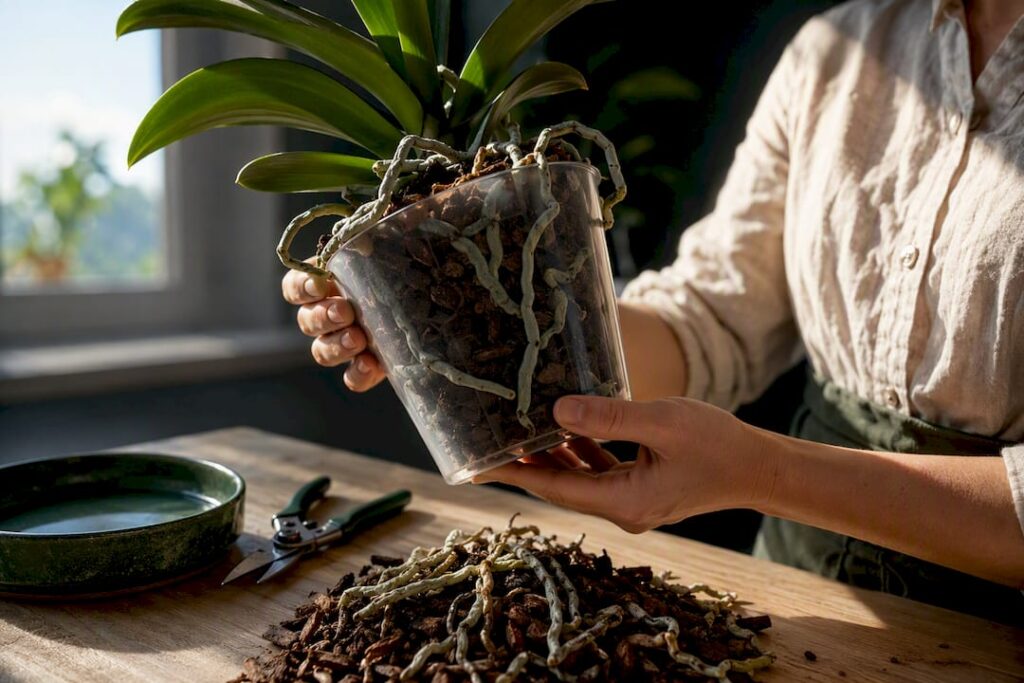
Lift the nursery pot out of its cover and look for retained water. Then test moisture below the surface, near the original root ball. A dry surface can conceal a wet centre, especially when a small nursery plug sits inside a larger container. Note whether the stem base is firm and whether the pot smells unusually sour.
Only unpot when the combined evidence justifies disturbance: persistent wetness, worsening wilt, soft stem tissue, or roots visibly deteriorating through a clear container. Support the root ball as you remove it. Pulling on leaf stalks can damage the plant and create a second problem before the first is understood.
• Wet medium plus soft roots: investigate root loss.
• Dry root ball plus firm roots: investigate missed or uneven watering.
• Firm roots plus yellow leaves: review light, nutrients, pests and natural leaf ageing.
Why does root rot develop in a Singapore flat?
A container needs an exit for excess water. NParks identifies poor drainage as a common cause of root problems in container gardens. A mix that works on a breezy balcony may remain wet much longer in a dim living room. Singapore's warmth does not guarantee that every indoor pot dries quickly.
Consider the complete system: plant size, root volume, container, growing medium, light and your watering method. A large decorative pot may hide a much smaller plant. Watering the whole container repeatedly can keep unused medium wet while the limited roots struggle. More water cannot compensate for insufficient light or damaged roots.
An air-conditioned bedroom creates a different environment from a sheltered corridor. Likewise, rain entering a balcony can reset the watering cycle without your involvement. Label the last watering or rainfall event on a calendar. This simple record helps reveal whether the problem began after relocation, prolonged rain, repotting or a change in household routine.
What should you do when you find damaged roots?
Preserve firm tissue and remove clearly decayed material with clean cutting tools. University of Maryland Extension recommends removing rotten portions and replanting the healthy remainder. This is a salvage attempt, not a guaranteed cure. A plant with extensive stem-base collapse may not have enough healthy tissue left to recover.
Prepare a washable work surface, a clean container and appropriate fresh medium before starting. Remove loose, saturated material gently so that roots can be assessed. Avoid aggressively scrubbing every root clean. Handle fine roots with care and keep the plant shaded while working. Clean tools between plants and after cutting suspicious tissue.
Choose the next pot around the surviving root system, not the original canopy. A smaller root ball may need a smaller container. Keep the previous planting depth unless species-specific guidance says otherwise. Finish by clearing discarded roots and used medium away from other plants. Do not distribute suspect material among healthy pots.
Which growing medium fits the recovering plant?
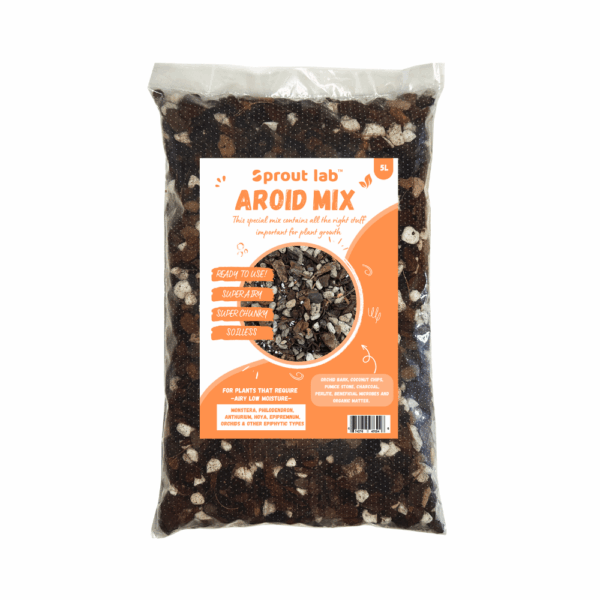
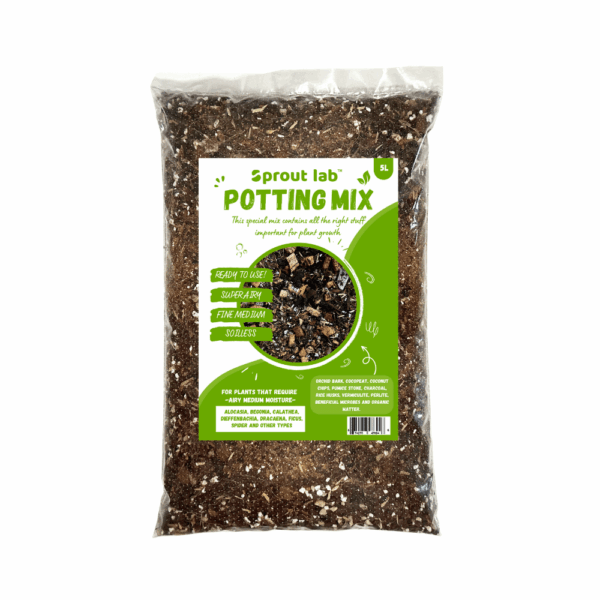
Match the medium to the plant and its new location. A climbing Monstera or Philodendron can suit Aroid Mix; other soil-grown foliage plants may suit Potting Mix. Neither product removes the need for drainage or sensible watering, and neither is a diagnosis or disease treatment.
A coarse ingredient can improve structure when blended appropriately through suitable medium, but sprinkling perlite on top will not repair a saturated centre. Avoid improvising a heavily amended blend while simultaneously changing pot size, light and watering. Start with a suitable ready-to-use medium and learn its moisture behaviour in the actual growing position.
Do not use a gravel or LECA layer as a substitute for drainage holes. University of Maryland Extension explicitly advises against filling the pot base with gravel. If the decorative container has no holes, keep the plant in a draining inner pot and empty the outer vessel after watering. Check that the inner pot is not sitting in trapped water.
How should you water during recovery?
Use the condition of the root zone rather than a fixed weekly promise. After root loss, the plant may use water differently from before. Feel the medium, lift the container and observe the leaves together. A moisture meter reading by itself cannot tell you whether roots are healthy or whether a compact nursery plug remains wet.
When watering is needed, wet the relevant root zone evenly and let excess water leave the container. Do not keep topping up small amounts because the surface looks pale. Equally, do not leave a recovering tropical plant completely dry for a long period as punishment for earlier overwatering. Both extremes can complicate recovery.
Place the pot where you can inspect drainage without carrying it past every other plant. Use its own tray and empty it promptly. A written note describing pot weight after draining becomes a useful personal reference. Compare future checks with that baseline instead of copying the watering frequency used for a different species.
What does root rot recovery look like before new leaves appear?
Stability comes before vigorous growth. Useful signs include a firm stem base, fewer newly declining leaves and a root zone that behaves predictably between watering events. Existing yellow or dead tissue will not turn healthy again. Judge the plant by changes after intervention, rather than expecting damaged leaves to reverse their appearance.
Take a photograph from the same angle and record which leaves were already affected. Keep the plant in suitable bright indirect light and avoid repeated relocation. Sudden exposure to harsh afternoon sun can add scorch to a root problem. A recovering specimen also should not sit directly in a strong air-conditioning stream.
If deterioration continues, reassess the original diagnosis. Check for active pests, an overlooked water-filled cover pot or softness spreading into the stem. Propagating a genuinely healthy section may be an option for some species, but that requires sound tissue and species-appropriate technique. Do not keep cutting into an increasingly collapsed plant without a clear plan.
Which shortcuts are most likely to make root rot worse?
Avoid stacking treatments. Repotting, root pruning, fertilising and repeated spraying together make it hard to identify what helps or harms. A product described as a recovery aid does not establish that it controls the organism involved in a particular case. This guide does not recommend peroxide drenches or unverified home disinfectant recipes.
Do not feed simply because leaves are pale. Reduced roots may be unable to use added nutrients effectively, while excess salts introduce another stress. Wait for evidence of renewed growth and follow the chosen fertiliser's current label. Check whether the fresh mix already contains nutrients before adding more products to the same pot.
Do not repot repeatedly to inspect progress. Frequent root disturbance can undo the stable conditions you are trying to create. Look through drainage holes or a clear pot when possible. If you need outside help, share clear photographs of the whole plant, stem base, pot arrangement and roots rather than only the worst leaf.
A practical recovery plan for a sheltered balcony
Imagine an aroid moved from a sunny balcony edge to a shaded corner during heavy rain. Its owner continues the previous watering routine, then notices wilt. This is an illustrative decision example, not a reported trial: begin by checking whether rainwater accumulates in the cover pot and whether the root ball remains wet.
If roots remain firm, correct drainage and reconsider watering before buying treatment. If roots are soft, perform a careful salvage repot and choose a container matched to the remaining roots. Move the plant to a stable, protected position with appropriate light. The goal is predictable conditions, not maximum dryness or maximum sunshine.
Keep a short log of watering, rainfall exposure, new damage and new growth. Decide in advance what would trigger further help: spreading stem collapse, rapidly worsening wilt or a plant that cannot support itself. For the next repot, use the mix comparison guide to match the plant's needs rather than choosing by leaf colour.
Root rot: a quick triage
Root rot is easiest to catch early. If a plant droops while the medium is still wet, lift it out and look at the roots: firm, light-coloured roots are generally healthy, while mushy, dark or foul-smelling roots point to root rot.
Root rot treatment starts with removing the plant from the wet medium, trimming clearly damaged roots with clean tools and repotting into a container with drainage. Avoid adding water just because the leaves droop.
Once root rot has been dealt with, choose a medium that suits the plant’s roots. Compare our soil mixes and the Which Mix finder, and see aroid potting mix mistakes for mixes that hold too much water.
Root rot warning signs to check early
Early root rot is easier to manage than advanced root rot. Watch for a plant that droops despite wet medium, yellowing lower leaves, a sour smell from the pot or a base that feels soft, and check the roots if you notice any of these signs of root rot.
A plant with root rot often sits in a pot that stays heavy for days. Lift the pot after watering and again a few days later to compare how quickly it dries; a pot that stays heavy suggests the medium is holding more water than the plant can use, which favours root rot.
Healthy roots are usually firm and pale, while roots affected by root rot are soft, dark and may slip apart when touched. Not every dark root means root rot, so look at the whole root system before cutting anything away.
Preventing root rot in a Singapore flat
Preventing root rot starts with matching watering to the plant and the pot. A shaded room, a decorative outer pot and frequent watering are common contributors to root rot, so check moisture below the surface and empty any water that collects.
Choose a free-draining medium for plants prone to root rot and avoid pots much larger than the root ball, which hold extra wet medium. If you have had root rot before, repot into fresh medium rather than reusing the old mix.
Keep a simple care log so you can spot root rot patterns, such as drooping after every heavy watering. Our guide to compacted potting soil explains drainage problems that can lead to root rot.
Products to consider
Aroid Mix or Potting Mix is relevant when damaged, compacted or unsuitable medium needs replacement. Choose by plant type; both require a draining container. No product is presented as a root-rot cure.
Common questions
Can a plant recover if most roots are rotten?
Sometimes, if enough firm roots or healthy propagatable stem tissue remain. Recovery cannot be predicted from the leaf canopy alone. Inspect the stem base as well as the roots. Extensive softening may make disposal more sensible than repeated treatment, especially when other plants are at risk.
Should I buy a recovery spray first?
First establish whether the root zone is wet, blocked or decayed. A spray cannot create drainage holes, reduce an oversized pot or restore dead roots. Treat recovery products as optional label-directed support, not a substitute for diagnosis or a proven cure for every root disease.
Can I reuse the old soil?
Keep suspect medium away from healthy container plants. Fresh appropriate medium makes the recovery setup easier to assess. Clean the container and tools before reuse, following suitable product instructions where disinfection is needed. Avoid blending discarded rotten roots and wet medium into your normal potting supplies.
Can a plant recover from root rot?
Sometimes, if enough healthy roots remain and the cause is corrected. Severe root rot may be too advanced, so judge by the firm roots left and by new growth.
How do I prevent root rot?
Water according to moisture below the surface, use a container with drainage and a medium suited to the plant, and empty any outer pot that collects water.
Is root rot contagious to other plants?
Root rot is driven by conditions around the roots rather than spreading like a cold, but tools and used medium can carry organisms between pots, so use clean tools and fresh mix when dealing with root rot.
How long does root rot recovery take?
It varies with the plant and how much healthy root remains. Judge root rot recovery by new growth and firm roots rather than by a calendar.