Good jade plant care means good light and a root zone that dries between waterings. Falling leaves can follow water stress in either direction, so check the pot before reacting. This jade plant care guide covers Crassula ovata, the fleshy-leaved jade plant, rather than a Pachira money tree or trailing pothos.
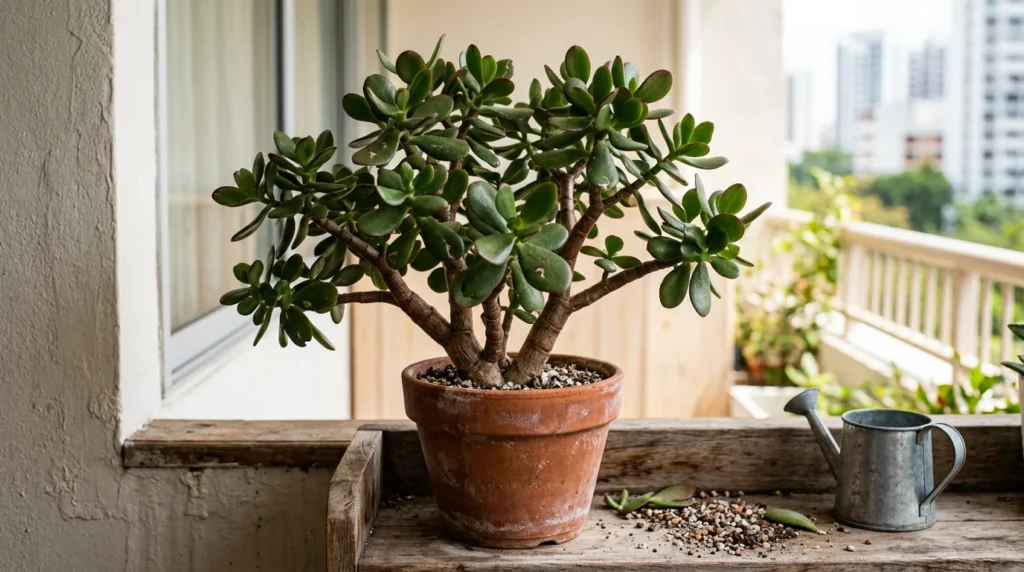
AI-generated plant image for this guide. Actual plants and growing conditions vary.
At a glance
• Pair leaf symptoms with a moisture check before watering — the first rule of jade plant care.
• Introduce stronger sun gradually to avoid scorching existing leaves.
• Choose a stable draining pot rather than an oversized wet container.
Is your plant really Crassula ovata?
Jade plant care starts with correct identification: a jade plant has fleshy oval leaves, typically in opposite pairs, on stems that become woody with age. Other plants may be sold under overlapping common names. Portulacaria afra, often called dwarf jade, is a different plant, and Pachira has a very different leaf structure.
Good jade plant care starts with correct ID: use the nursery label or a clear whole-plant photo if you are unsure. Identifying the plant helps avoid copying instructions written for another species. The broader succulent guide explains why water-storing plants do not all require identical treatment.
A fourth look-alike worth ruling out is Crassula arborescens, silver jade plant, which has a visible grey-blue cast to its leaves rather than the glossy mid-green of Crassula ovata. The distinction matters mainly for matching care notes to the right species online, since the two are grown in similar conditions but are sometimes mislabelled at nurseries.
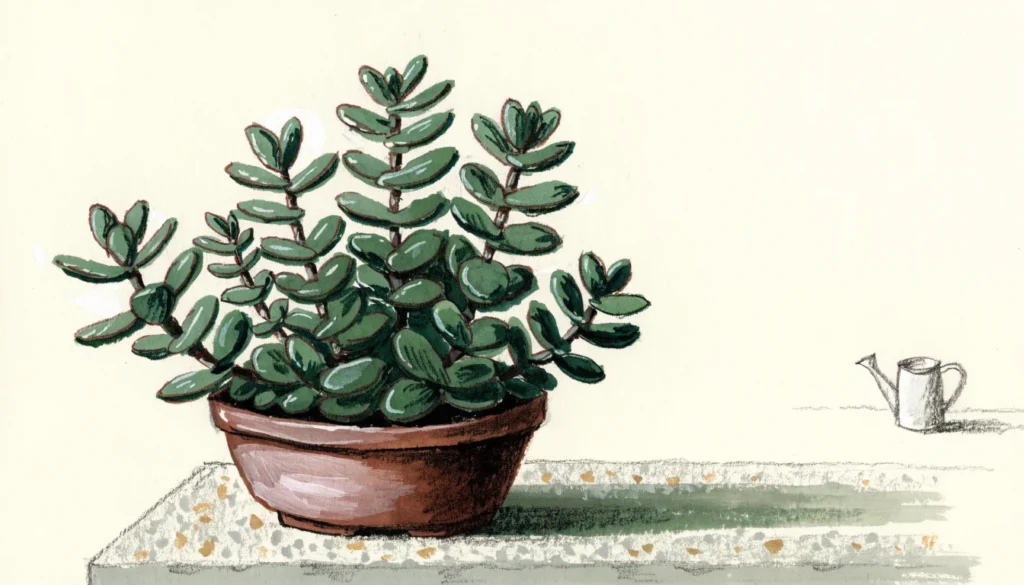
Illustration for this jade plant care guide. Actual plants and growing conditions vary.
Jade Plant Care: Where Should It Grow in Singapore?
Jade plant care means choosing a bright position and building up exposure to stronger sun gradually. A sheltered balcony or bright window can be suitable, depending on actual light and rain exposure. Do not move a plant straight from a dim indoor display into intense afternoon sun and expect its older leaves to adapt immediately.
Long, weak growth can indicate that the plant needs more light. Turning the pot may balance its shape but will not fix a fundamentally dark location. Check the newest growth after improving conditions; existing stretched stems will not become shorter. A jade plant adjusting to brighter light may show a reddish tinge at the leaf margins before settling into compact, well-spaced new growth over several weeks, which is a normal acclimation response rather than a problem to correct.
A plant moved between a shaded corridor and an exposed balcony will often show both stress responses at once, stretched older growth from its time indoors and scorch marks on the newest leaves from its time outdoors. Reading the two symptoms as a single timeline, rather than two unrelated problems, usually points to the actual cause faster.
Keep rain-sensitive containers where you can manage moisture. Singapore humidity does not mean the plant needs no water, but regular rain can keep a poorly draining pot wet. A pot under an overhang may still receive wind-driven rain, so inspect it after storms.
Jade Plant Care: Why Are Leaves Wrinkled, Soft or Falling?
Wrinkled leaves in a dry, light pot may indicate water shortage. Soft translucent leaves in wet medium suggest a different problem, including root stress. If roots are damaged, leaves may look dehydrated even though the pot contains plenty of water. Gently easing the plant free of its pot to check root colour and firmness is more reliable than judging from the leaves alone, since healthy jade plant care depends on catching root problems before the foliage shows obvious symptoms.
Check moisture deeper in the container, inspect drainage and feel whether the stem base is firm.
Good jade plant care means: when a healthy plant is genuinely dry, water its root zone thoroughly and let it drain. When the pot is wet and the base is soft, stop adding water and investigate before feeding.
A few old leaves falling is different from sudden widespread leaf loss. Review recent moves, heat exposure and watering changes. If the stem or roots are decaying, follow the root-rot guide. Neither extra fertiliser nor a layer of decorative stones will restore rotten tissue.
Consistency across checks matters more than any single inspection. Looking at the same few leaves and the same section of stem every time makes small changes, a slightly duller color, a leaf sitting at a new angle, far easier to catch early.
Jade Plant Care: Which Pot and Medium Help Prevent Problems?
Good jade plant care starts with a stable pot with drainage holes and a suitably free-draining medium. A top-heavy jade may need a heavier container, but that does not mean it needs a huge volume of wet mix. Balance stability with the size of the healthy root system. Mineral amendments such as pumice or perlite can help when preparing a suitable blend.
Mix amendments through the medium during repotting; sprinkling them on the surface does not fix a dense, wet root ball underneath. In Singapore's humid, high-rainfall climate, erring toward a slightly more free-draining mix than a temperate-climate guide might suggest is a reasonable adjustment, since ambient humidity alone does not reduce how long a dense mix stays waterlogged after rain or watering.
Jade plant care avoids a universal recipe without considering the base material, pot and growing position. The finished medium should suit both the plant and how you water. Repot only when there is a clear need, using the general repotting guide and succulent-specific aftercare.
Jade plant care also depends on the growing season. Growth is most active during Singapore's warmer, brighter months, which is when watering intervals should shorten slightly and feeding, if any, matters most. During cooler, cloudier stretches the same schedule can leave the medium wet for far longer than the plant actually needs.
Jade Plant Care: Pests, Feeding and Propagation
Ongoing jade plant care means inspecting leaf joints and new growth for cottony mealybugs or attached scale. Isolate a plant with confirmed pests and follow the relevant identification guide. Before applying a spray, check that the label permits its use and whether a small test area is advised; fleshy leaves can be marked by unsuitable treatment. Re-check isolated plants every few days rather than once, since a single treatment often needs a repeat application to catch pests that hatch after the first round.
Feed healthy growth only at the labelled rate. Rapidly declining foliage is a reason to investigate roots and conditions, not to increase fertiliser strength. Give changes time to show in new growth and keep a photo record of whether damage is spreading.
Propagation is part of jade plant care: jade can be propagated from suitable leaves or stems, but a cutting needs appropriate preparation and a draining rooting setup. Let cut surfaces dry and callus before planting. Avoid keeping unrooted cuttings continuously wet, and use clean tools when removing material from the parent plant.
A dusty leaf surface is worth checking too. Dust buildup on fleshy jade leaves can reduce how much light reaches the plant over time, so an occasional gentle wipe with a damp cloth is a reasonable part of routine jade plant care, separate from any pest or watering issue.
Products to consider
Pumice and perlite are relevant to jade plant care for improving the structure of a fresh, suitable succulent medium. They are amendments, not treatments for an already soft or decaying stem.
Common questions
Does a wrinkled leaf always mean more water?
No. Jade plant care means checking the medium and roots first. A dry healthy plant may need watering, while a wet plant with failing roots can also look dehydrated. Adding water without making that distinction can prolong the wrong conditions.
Can a jade plant stay on a dark desk?
It is unlikely to produce strong compact growth there. Good light matters even when the plant tolerates dry conditions. Consider a brighter position or suitable lighting before trying to compensate with fertiliser or a different watering schedule.
Is a larger pot always better for a heavy jade plant?
No. A heavier, stable container can help without greatly increasing the volume of medium. Too much extra mix around a small root system may stay wet. Choose the container around healthy root size as well as physical stability.
How quickly a jade plant responds to a correction varies with the season and the size of the plant. A small cutting in active growth can show a visible change within one to two weeks, while an older, more established plant recovering from a bigger root problem may take a full growing season before new growth looks normal again.
Read next
Succulent care in Singapore: stretching, rot and watering
Mealybugs on houseplants: a practical Singapore treatment plan
Sources and further reading
Keeping last year's observations somewhere, even a few phone photos with dates, makes it easier to tell a seasonal slowdown from a genuine new problem the next time something looks different.
NC State and RHS recommend good light, drainage and drying intervals for jade plants. Editorial method: this guide draws on the horticultural references below and adapts their care principles to Singapore homes. It does not report a Sprout Lab product trial. Product suggestions are optional and should follow their labels. Learn about Sprout Lab or contact us with photos and growing conditions for help choosing a next step.
NC State Extension: Crassula ovata — accessed 10 October 2026.
RHS: Crassula ovata plant profile — accessed 10 October 2026.
Prepared by the Sprout Lab editorial team using the horticultural references above. Local examples adapt general guidance to Singapore homes; they are not results of product trials. Product suggestions use current Sprout Lab descriptions. Follow the label for application instructions.