Good zz plant care starts with knowing that a ZZ plant stores water in fleshy underground rhizomes, so it needs a drying interval between waterings. Give it bright indirect light and a draining pot. Slow growth is not automatically a fertiliser shortage, and yellow stems in wet medium should prompt a root check before another drink.
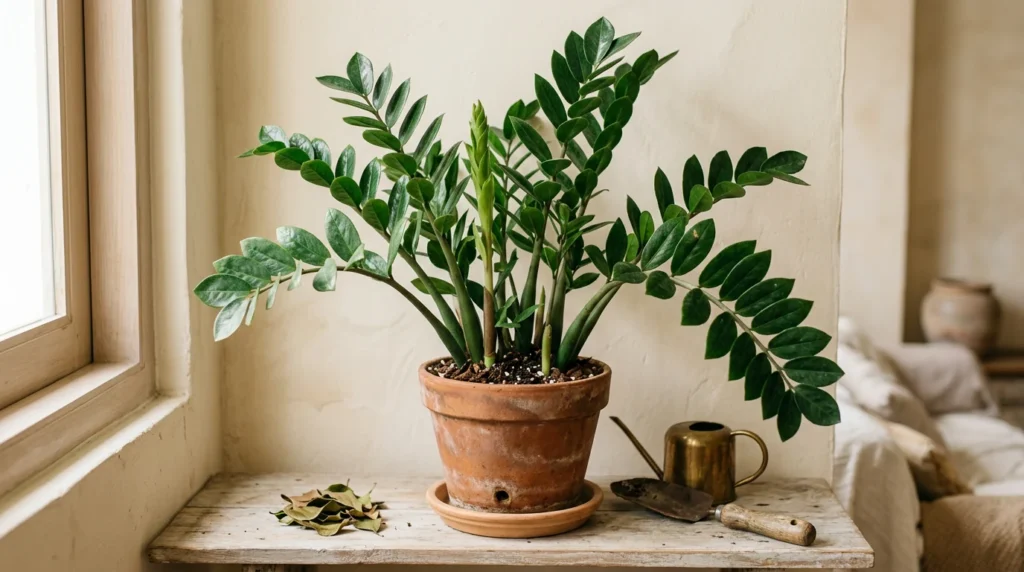
AI-generated plant image for this zz plant care guide. Actual plants and growing conditions vary.
At a glance
• For zz plant care, let the medium dry rather than watering on a weekly schedule.
• Firm potato-like rhizomes are normal storage structures.
• Low-light tolerance does not mean the plant can grow without light.
What are the lumps under a ZZ plant?
Zamioculcas zamiifolia grows from fleshy rhizomes that store water. Firm, potato-like structures beneath the surface are normal. They are not insect eggs or a reason to spray the roots. Check their texture and the surrounding medium if the foliage is declining.
Good zz plant care depends on the distinction between firm storage tissue and soft, decaying tissue. If the pot smells sour and the base collapses, investigate drainage and possible rot. Do not remove healthy rhizomes simply because they look unfamiliar. A leaf photograph cannot tell you whether a hidden rhizome is firm or decaying. Inspect the actual plant before deciding.
A firm rhizome usually feels dense and smooth when pressed gently, while a decaying one feels soft, hollow or mushy and often comes with a sour smell from the pot. If you need to check, ease the plant out of its container, look at the rhizomes and roots, and repot promptly in fresh, free-draining medium. Handle the plant gently to avoid bruising healthy tissue.
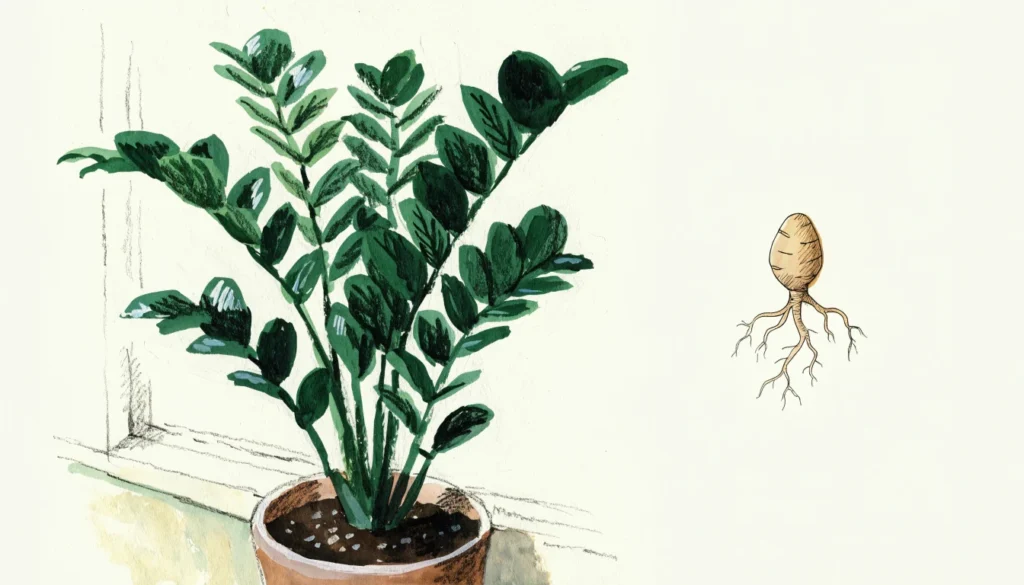
Illustration for this zz plant care guide, showing the plant and a separate view of its rhizome. Actual plants and growing conditions vary.
ZZ plant care: where should it sit in a Singapore flat?
In zz plant care, bright indirect light supports stronger growth than a dim corner. A ZZ plant can tolerate lower light, but it will generally grow more slowly and use water more slowly there. Avoid treating its reputation as an easy plant as permission to put it in a windowless room.
Choose a position away from harsh sun and direct air-conditioner drafts. If moving it towards a much brighter window, make the change gradually. Check whether new stems are developing normally and whether the medium's drying time changes. Those observations are more useful than moving it repeatedly between rooms.
Dust on leaves can reduce the light the plant receives, so wipe glossy leaflets with a soft, damp cloth every so often. This is an easy part of zz plant care that also lets you inspect the undersides for pests before they spread. Keep the plant out of cold air-conditioner drafts, which can dry the foliage.
Rotate the pot occasionally if stems lean towards the window. Turning it a quarter at a time keeps growth upright without stressing the plant, and it gives you a regular reason to check whether the medium is drying more slowly than before.
ZZ plant care: how do you water without soaking the rhizomes constantly?
Check moisture below the surface and lift the pot if it is manageable.
Water after the medium has dried, then let surplus water drain fully. Do not leave the nursery pot sitting in water inside a decorative container. Sensible zz plant care treats the rhizomes as a buffer against drought, not against prolonged waterlogging.
A small pot near bright daylight can dry differently from a large pot in shade. Singapore's warm weather does not make daily watering appropriate for every indoor plant. After a rainy spell or a move to lower light, inspect the root zone rather than following the old interval.
If you are unsure, compare the weight immediately after a thorough watering with its weight when the medium is dry. This creates a reference for that individual pot. Surface appearance alone is unreliable, especially where a dry top layer covers a wet centre.
In lower light, expect longer gaps between waterings, because the plant uses water more slowly. The same pot placed in a brighter spot may dry noticeably faster, so adjust your checks whenever the position changes rather than keeping a fixed interval for zz plant care.
ZZ plant care: why are stems yellow or leaning?
In zz plant care, yellowing stems with wet medium can accompany root stress. Check for standing water, poor drainage or a recent jump to an oversized pot. If the decline continues, gently inspect roots and rhizomes. Soft, collapsing tissue needs a different response from a healthy plant that is simply growing slowly.
Leaning can also reflect light direction, a heavy mature stem or mechanical damage. Look for a soft base before assuming the stem needs extra water. If only one older stem is ageing while the rest of the plant is sound, monitor the overall pattern rather than treating every leaf separately.
Use the root-rot checklist when roots are suspect. If you see insects, sticky deposits or cottony patches instead, start with the pest identification guide. In zz plant care, a yellow leaf alone cannot tell you which product to use.
Slow growth is normal for this plant. New shoots can take weeks to appear, and a plant that is not producing new stems is not necessarily in trouble if existing stems stay firm and green. Compare photos taken a month apart before deciding that anything is wrong.
ZZ plant care: when are repotting and fertiliser useful?
Repot when the plant is crowded, the container is distorting or the medium has deteriorated. Choose a pot with drainage and only the extra space the root system needs. Keep healthy rhizomes intact and avoid burying stems deeper than before. Follow the general repotting sequence.
An airy medium such as Aroid Mix is an option to compare for a free-draining setup. Its structure does not eliminate the need for moisture checks, and the blend has no added fertiliser. Adjust your care to the new medium instead of copying a previous schedule.
Zz plant care rarely needs more than feeding healthy active growth according to the label. Do not use an extra-strong dose to make a naturally slow plant hurry. ZZ plants can be divided or propagated from leaves, but leaf propagation requires patience; a cutting that has not produced a shoot quickly is not necessarily a failure.
Avoid moving a ZZ plant into a much larger pot in the hope that it will grow faster. Extra medium stays wet for longer around a small root system. Move up one modest size when roots are crowded, and keep drainage holes clear.
Is zz plant care different in homes with pets?
Check a reliable pet-safety database before placing any houseplant where pets can reach it, and ask your vet if you are unsure. This guide does not make safety claims for a particular animal, so verify the plant you own before deciding on a position.
Where pets or children share the space, consider a high shelf or a room they do not enter, and keep fallen leaves and trimmings cleared away. Good zz plant care includes thinking about who else uses the room.
Seasonal checks that make zz plant care easier
Singapore has little seasonal temperature change, but rainy periods and air-conditioning use still change how quickly a pot dries. After several humid, overcast days, test the medium deeper than the surface before watering.
Keep a short note of when you last watered, what the medium felt like and whether new growth appeared. Over a few months this record is more reliable than any fixed schedule, and it makes zz plant care less dependent on memory.
If you also look after other low-maintenance plants, our guides to jade plant care and plants that survive neglect indoors use the same check-before-watering approach, and our plant care hub collects the rest.
Products to consider
For zz plant care, choose a suitable airy medium if repotting is needed. GROW is for normal nutrition once the plant is healthy, not for forcing a wet, yellowing ZZ plant into growth.
Common questions
Can a ZZ plant grow with no daylight?
Good zz plant care means usable light, whether daylight or a suitable grow light. Surviving for a while in deep shade does not show that a position supports healthy growth. Check the light before interpreting slow growth as a need for more feed.
Are the potato-like roots a disease?
In zz plant care, firm rhizomes are normal water-storage structures. Look for softness, decay and an unhealthy surrounding root zone before concluding that something is wrong. Avoid cutting away firm tissue simply because it differs from the thin roots of other houseplants.
Can I divide a large ZZ plant?
In zz plant care, division is possible when healthy rhizomes and roots can be separated with minimal damage. Do it during a planned repot rather than repeatedly disturbing the plant. Handle cut surfaces carefully and use clean tools; avoid division as an extra stress on an already declining plant.
Read next
Snake plant care: yellow leaves, watering and soft bases
Root Rot in Houseplants: A Singapore Recovery Guide
Sources and further reading
Illinois Extension explains zz plant care basics, including how ZZ rhizomes store water and why persistent wetness is unsuitable. Editorial method: this guide draws on the horticultural references below and adapts their care principles to Singapore homes. It does not report a Sprout Lab product trial. Product suggestions are optional and should follow their labels. Learn about Sprout Lab or contact us with photos and growing conditions for help choosing a next step.
Illinois Extension: Houseplant spotlight, ZZ plant — accessed 10 October 2026.
NC State Extension: Zamioculcas zamiifolia — accessed 10 October 2026.
Prepared by the Sprout Lab editorial team using the horticultural references above. Local examples adapt general guidance to Singapore homes; they are not results of product trials. Product suggestions use current Sprout Lab descriptions. Follow the label for application instructions.