For snake plant care, let a snake plant's potting mix dry between thorough waterings, give it useful daylight and keep water from collecting around the roots. Yellow leaves with a soft base deserve a root check, not another drink. A snake plant tolerates neglect better than a constantly wet pot, but it still needs light to grow well.
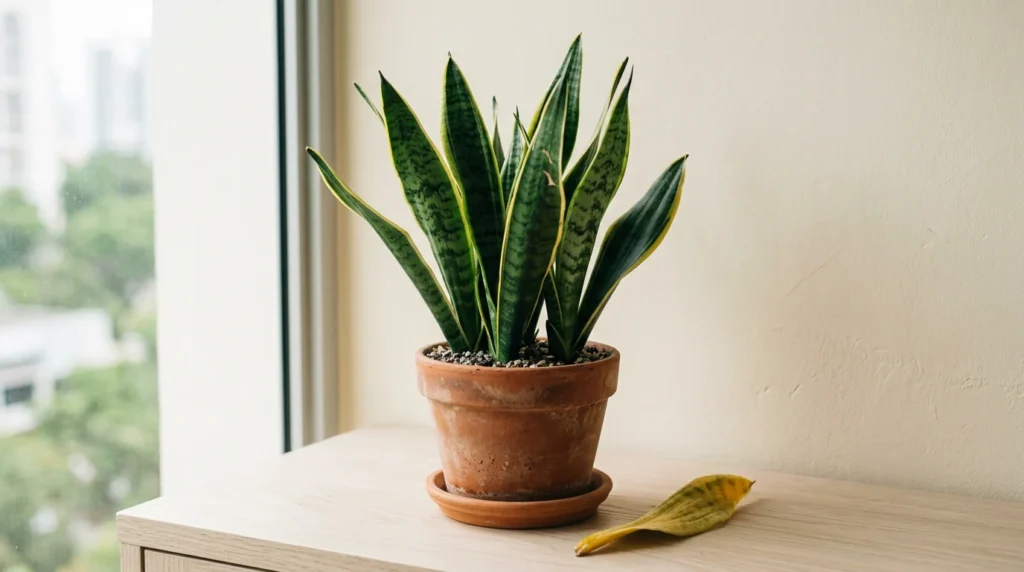
AI-generated plant image for this guide. Actual plants and growing conditions vary.
At a glance
• Check moisture deeper in the pot, not only the dry surface.
• Low light means slower growth and usually slower water use.
• A mushy leaf base is a warning sign; inspect before watering again.
Does snake plant care really mean very little light?
Snake plants, often labelled Sansevieria or Dracaena trifasciata, tolerate lower light but usually grow better in a bright position. Tolerance is not the same as thriving. A plant at the back of a room may survive while producing little new growth and taking much longer to dry out.
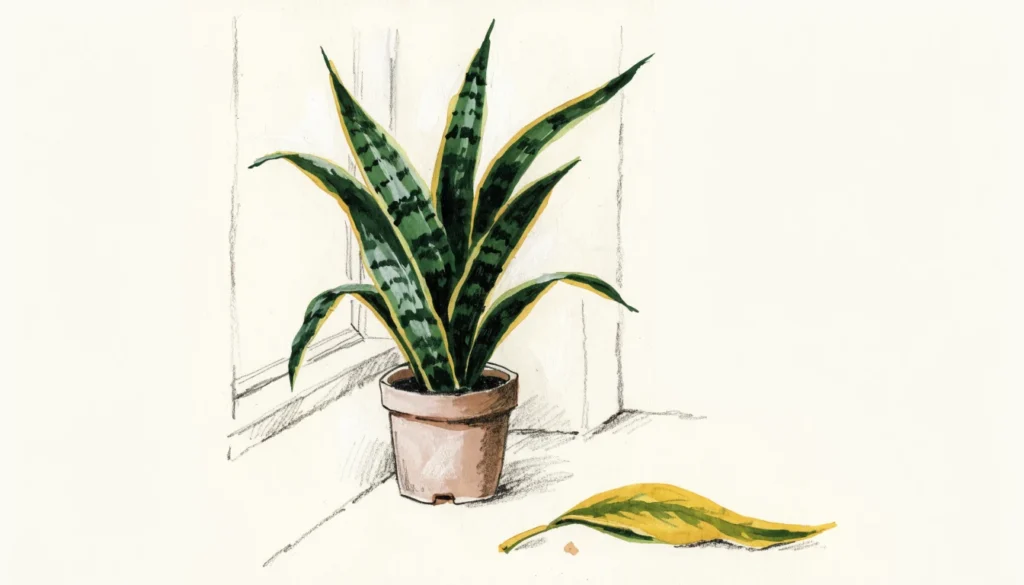
In a Singapore flat, choose a spot with a clear view of daylight rather than judging brightness from ceiling lights. Introduce stronger sun gradually. Pale dry patches on the exposed side after a sudden move can indicate scorch. If daylight is limited, read how to choose a grow light before buying one.
Snake plant care: how often should you water?
Water when the mix has dried, not because a fixed number of days has passed. Check deeper down with a clean wooden skewer or by comparing the pot's weight with its weight after watering. A dry top layer can hide a damp centre, especially in a large plastic pot.
When watering is needed, wet the root zone and allow the surplus to escape through drainage holes. Empty the saucer or outer pot. Frequent little sips can leave part of the root ball dry while keeping another area persistently damp; a thorough watering followed by drying is easier to assess.
Reassess after changing the plant's position. A sheltered, air-conditioned room, a breezy balcony and a pot receiving wind-driven rain do not share one routine. During wetter periods, check the pot before adding more. A calendar reminder can prompt inspection, but it should not automatically trigger watering.
Snake plant care problems: why are the leaves yellow, soft or falling over?
Yellowing with a soft, wet base can accompany root or rhizome decay. Stop adding water while you investigate. Remove the nursery pot from its decorative cover and check for trapped water, blocked holes and a sour-smelling or persistently wet mix. Carefully inspect roots if the plant continues to decline. A dry, wrinkled leaf in a very light pot suggests a different possibility: prolonged dryness. Check the root zone before deciding. A leaf that bends at a single damaged point may simply be mechanically injured. Compare several leaves and the base of the plant rather than diagnosing from colour alone.
If roots are soft or collapsing, follow the root-rot guide. Do not assume a recovery spray can rebuild rotten tissue. Remove only clearly damaged material with clean tools and avoid disturbing firm, healthy growth without reason.
Which potting mix and pot suit snake plant care?
Use a free-draining medium in a container with drainage holes. The right combination should let the root zone dry between waterings. A very large pot holds more wet medium than a small root system can use. Choose a modest size increase when roots genuinely need more room.
For a mix that stays wet too long, horticultural perlite can be an amendment when preparing a fresh medium. It is not useful simply sprinkled on top of an unchanged, compacted root ball. Compare options in the soil guide, and judge drainage alongside your light and watering conditions.
Keep leaf bases at their previous depth when repotting. Do not cover them with a deep layer of new mix. Our general repotting guide explains how to check roots, choose a pot and avoid overpotting.
Snake plant care: what should you do about slow growth or pests?
Start with light and root health before fertiliser.
Snake plants can grow slowly, particularly in shade, and extra feed will not compensate for a dark room. Use a suitable fertiliser only at the label rate when the plant is healthy and growing; avoid feeding a stressed, waterlogged plant.
Inspect where leaves overlap and near the base for cottony insects or attached bumps. If you find them, isolate the plant and use the pest identification guide. Keep a short photo record after making a change. Healthy new shoots and a stable base are better progress markers than expecting an old yellow leaf to turn green.
Snake plant care through the seasons in Singapore
Snake plant care in Singapore does not change much with the seasons, but rainy spells and air-conditioned rooms change how fast the pot dries. Good snake plant care means checking the pot instead of following a calendar.
On a covered balcony, snake plant care may involve watering a little more often in dry, breezy weather and less often during wet spells. Keep snake plant care consistent by checking moisture deeper in the pot each time.
Indoors, a snake plant near an air-conditioner can dry quickly while one in a shaded corner stays damp for weeks. Adjust snake plant care to each position, and move the plant gradually if you change its light.
Snake plant care for propagation and pups
Snake plant care sometimes includes propagation. Healthy plants can be divided at the rhizome or grown from leaf cuttings, but variegated types may lose their colour when grown from leaf cuttings, so division suits them better.
Let cuttings dry for a short time before placing them in a draining mix, and keep snake plant care gentle afterwards: bright light, little water and patience. New growth can take a while to appear.
When dividing, use clean tools, keep a healthy section of roots with each piece and give each division its own pot with drainage. Our repotting guide explains handling roots.
Common snake plant care mistakes
The most common snake plant care mistake is watering too often, especially in low light. A dry-looking surface does not mean the whole pot is dry, so check deeper before adding water.
Another snake plant care mistake is using a very large pot or a dense mix that stays wet. Choose a pot that fits the root ball and a free-draining medium.
Moving a snake plant suddenly from low light into strong afternoon sun can mark the leaves. Good snake plant care introduces stronger light gradually.
Snake plant care and pests
Snake plant care includes occasional pest checks. Look where leaves overlap and near the base for cottony insects or attached bumps, which can be mealybugs or scale.
Dust on the broad leaves can block light, so wipe leaves with a damp cloth as part of snake plant care.
Isolate the plant if you find pests, and see our houseplant pests guide for identification. Snake plant care for a pest problem starts with identification, not a spray.
Keep a short record of snake plant care so you can spot patterns, such as soft leaves after heavy watering.
Snake plant care and pot choice
Terracotta dries faster than plastic or glazed pots, so snake plant care in terracotta may need more frequent checks.
A tall snake plant can tip in a light pot, so choose a stable container with drainage holes. Snake plant care is simpler when the pot fits the root ball.
Avoid a pot much larger than the roots, because the extra medium stays wet longer and works against snake plant care.
Use a free-draining mix and empty any saucer so the roots are not left standing in water.
Products to consider
Perlite is an option when rebuilding a medium that dries too slowly. GROW may support routine nutrition once roots are healthy and the plant is actively growing. Neither product replaces a drainage check.
Common questions
Can I keep a snake plant in a pot without holes?
Use a draining nursery pot inside the decorative container, and lift it out to water. Empty collected water before replacing it. A sealed pot makes moisture harder to judge and leaves little margin for error if the plant is in a dim position.
Should yellow leaves be cut off?
First identify the cause. A badly damaged leaf will not recover its original colour, but removing it does not solve wet roots or poor light. If removal is needed, use a clean tool and avoid cutting into healthy neighbouring growth.
Is watering once a month always safe?
No fixed interval suits every pot. A bright, root-filled terracotta pot may dry much faster than a large plastic pot indoors. Use reminders to inspect the medium and pot weight, then water only when the root zone has dried.
What is the easiest snake plant care routine?
Check the pot, water thoroughly only when the medium has dried, give bright light and keep water from collecting around the roots. That simple routine covers most snake plant care.
Do snake plants need fertiliser?
Only lightly, and only when the plant is healthy and growing. Follow the label rate, and remember that extra feed will not make up for low light, which is a common limit in snake plant care.
Can snake plant care include growing it in a bathroom?
Only if the bathroom has enough daylight. Snake plant care depends on light first, so a dark windowless room is a poor long-term position even though the plant tolerates low light.
Quick answers about snake plants
Why is my snake plant leaning or falling over? Low light can make leaves stretch and flop, and a top-heavy plant in a small pot can tip. Check the light, the roots and the stability of the pot.
Can a snake plant live in a dark room? It tolerates low light but grows slowly and uses water slowly, so water far less often. A brighter position generally gives better growth.
How do I clean snake plant leaves? Wipe them with a soft damp cloth, supporting each leaf with your other hand, so dust does not block light.
When should I repot a snake plant? When roots fill the pot or push it apart, or the medium has broken down. Many snake plants are happy slightly root-bound, so do not rush to upsize.
Read next
Root Rot in Houseplants: A Singapore Recovery Guide
Succulent care in Singapore: stretching, rot and watering
Sources and further reading
RHS and NC State Extension both emphasise drying and drainage for snake plants. Editorial method: this guide draws on the horticultural references below and adapts their care principles to Singapore homes. It does not report a Sprout Lab product trial. Product suggestions are optional and should follow their labels. Learn about Sprout Lab or contact us with photos and growing conditions for help choosing a next step.
RHS: Sansevieria growing guide — accessed 10 October 2026.
NC State Extension: Dracaena trifasciata — accessed 10 October 2026.
Prepared by the Sprout Lab editorial team using the horticultural references above. Local examples adapt general guidance to Singapore homes; they are not results of product trials. Product suggestions use current Sprout Lab descriptions. Follow the label for application instructions.