Peace lily care starts with a moisture check: a drooping peace lily needs one before it needs water. If its medium is dry, a thorough watering may help; if the pot is already wet, investigate drainage and roots. Give it bright filtered light and fairly even moisture, without leaving the roots standing in water.
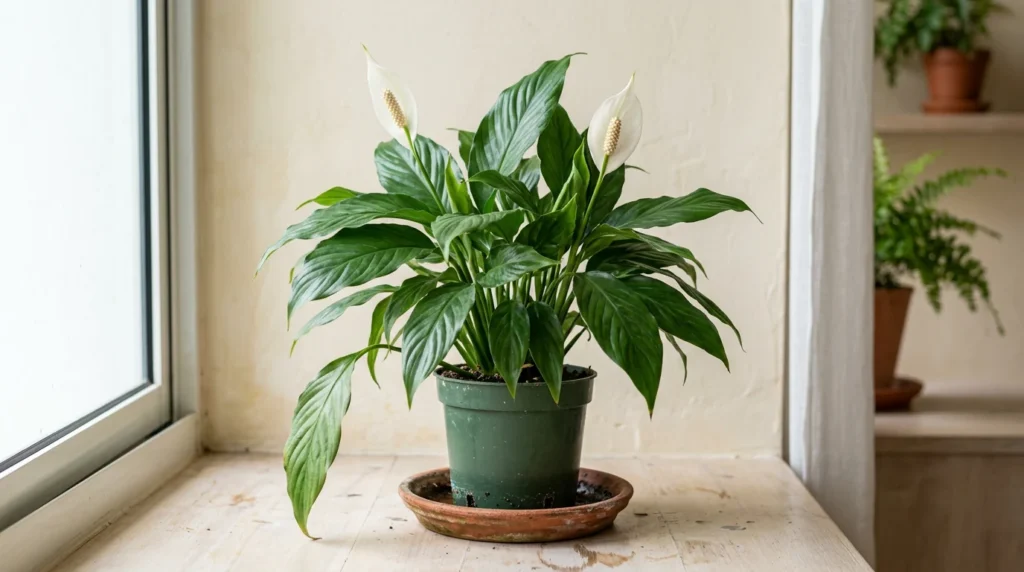
AI-generated plant image for this guide. Actual plants and growing conditions vary.
At a glance
• Do not use repeated wilting as your normal watering reminder.
• Brown tips can have several causes; check watering and fertiliser history together.
• A wet, drooping peace lily should not automatically receive another drink.
Peace lily care: where does it grow best indoors?
Place your Spathiphyllum in bright indirect light. It can tolerate shade, but a dim corner can reduce growth and flowering. Protect it from harsh sun, particularly after moving it from a sheltered indoor position. Check whether neighbouring buildings or deep balcony overhangs block the daylight reaching its leaves.
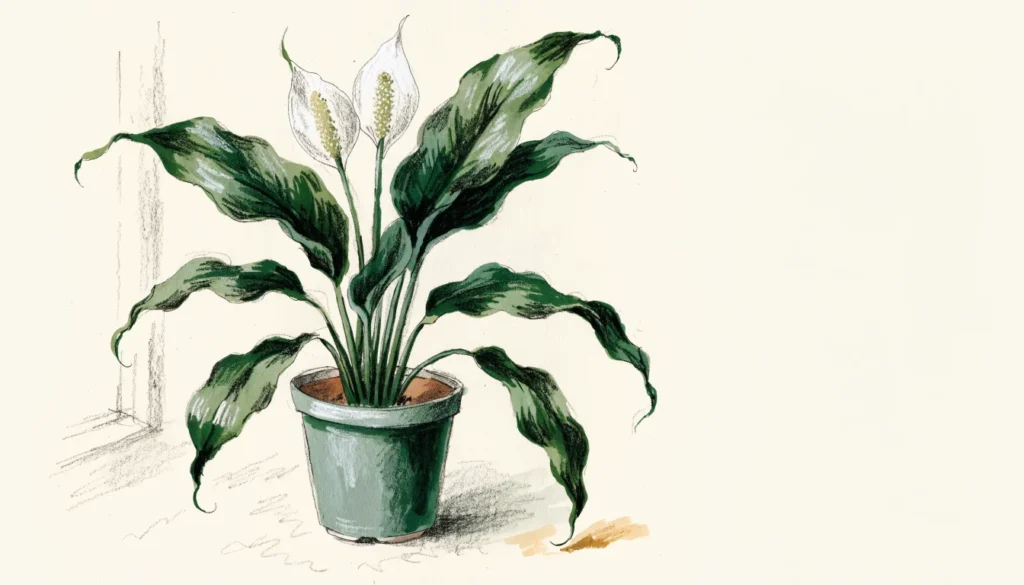
In an air-conditioned Singapore home, avoid placing it directly in cold, drying airflow. Choose a stable position and let the leaves have space around them. A humid room does not guarantee suitable root moisture, and a room that feels bright does not guarantee enough light for flowering.
How should peace lily care include watering?
Check the upper medium and the weight of the pot.
Water when the surface is beginning to dry while avoiding repeated, severe drying of the whole root ball. A peace lily generally needs more consistent moisture than a snake plant or jade plant.
Water the root zone evenly until excess water drains out, then empty the saucer. If a very dry root ball sheds water down the sides, wet it gradually and check that the centre has actually absorbed moisture. Do not leave it submerged indefinitely as a recovery method.
Keep a simple record of checks during a normal week, including whether the air conditioner was running or rain reached the pot. This helps you learn the plant's drying pattern. Use a reminder to inspect, rather than promising the plant water every Sunday regardless of its condition.
Peace lily care puzzle: why is it drooping even though the soil is wet?
Wet roots may be short of air or damaged, so drooping does not always mean thirst. Check whether the nursery pot is sitting in water inside its cover pot. Look for blocked drainage holes, compacted medium or a pot much larger than the plant's root system. If the plant continues to collapse, inspect the roots gently. Soft, decaying roots and a sour smell need attention; firm roots in a damp pot may point you towards heat, recent disturbance or another stress. Use the root-rot guide for the next checks instead of adding more fertiliser.
A dry, wilted peace lily may regain firmness after adequate watering, but the response depends on how badly it was stressed. Repeatedly letting it reach this stage can damage foliage. Aim for a steadier moisture routine once you have ruled out drainage problems.
What causes brown tips or yellow leaves in peace lily care?
Brown tips can follow uneven moisture, dry airflow, root stress or excessive fertiliser salts. Review recent changes before choosing a treatment. If you have been feeding more often than the label recommends, pause and reassess; stronger feeding is not a remedy for damaged tips.
One older yellowing leaf can be normal ageing. Several leaves yellowing together, especially with wet roots, need a wider check. Scorched patches on the sun-facing side suggest a different problem from crisp tips on many leaves. See leaf spots versus sun damage for a comparison.
Check undersides for pests if there are speckles, sticky deposits or visible insects. Brown tips alone do not prove an infestation. Damaged tips will not turn green again, so judge success by stable foliage and healthy new leaves, not by expecting old marks to disappear.
When does peace lily care include repotting or feeding?
Repot when roots crowd the container or the medium no longer works well, rather than automatically after purchase. Choose a draining pot only a little larger than the root system. Keep the crown at its original depth and use a medium that holds some moisture while allowing air around the roots.
Our mix guide helps you compare blends against your watering style. Potting Mix is an option for a soil-grown peace lily that needs moisture retention alongside drainage. Check how the fresh medium dries rather than copying the old pot’s schedule. Use GROW only according to its label once the plant is established and growing.
For a healthy plant that is not flowering, first assess light and maturity. More fertiliser cannot guarantee a flower. The white spathe also naturally ages and changes colour; an ageing bloom is not the same as a sudden decline in the leaves.
Peace lily care and light
Peace lily care works best with bright, filtered light. A peace lily tolerates lower light than many flowering plants but may flower less, so a brighter spot without harsh direct sun is a good starting point.
Leaves that scorch or bleach can suggest too much direct sun, while a plant that grows leaves but never flowers may need brighter light. Adjust peace lily care gradually rather than moving the plant often.
Keep the plant away from cold draughts and direct air-conditioner flow, which can stress the leaves and complicate peace lily care.
Peace lily care: watering and humidity
Peace lily care favours fairly even moisture. Water when the top of the mix has started to dry and the pot feels lighter, rather than waiting for the plant to collapse.
A peace lily that droops dramatically often recovers after watering if it was dry, which is why many growers treat it as a signal. Still, repeated collapse stresses the plant, so peace lily care should aim for steadier moisture.
Brown tips can relate to dry air, salts from tap water or fertiliser, or uneven watering. Peace lily care that avoids extremes tends to reduce brown tips, and you can trim brown tips for appearance.
Peace lily care for repotting and feeding
Repot a peace lily when roots fill the pot or water runs straight through. Peace lily care after repotting means keeping the medium evenly moist and the plant out of harsh sun.
Feed lightly during active growth, following the product label. Peace lily care does not need heavy feeding, and extra fertiliser can burn roots.
See our repotting guide and soil mixes page for medium choices suited to peace lily care.
Peace lily care and household safety
Peace lily leaves contain compounds that can irritate the mouth if chewed, so keep the plant out of reach of children and pets and check a reliable source if you are concerned. This belongs in any peace lily care routine at home.
Wash your hands after trimming a peace lily, and bag the trimmings so they are not left where pets can reach them.
Peace lily care also means watching for pests such as spider mites on leaf undersides. See our spider mite guide if you see fine webbing.
Dust the broad leaves occasionally as part of peace lily care so they can use light well.
Peace lily care and container choice
Peace lily care is easier in a pot with drainage holes. A decorative outer pot can hide trapped water, so lift the inner pot out to water.
Choose a container that fits the root ball. A pot much larger than the roots keeps the medium wet and complicates peace lily care.
Repot into a slightly larger container only when roots fill the pot or water runs straight through.
Empty collected water after watering so the roots do not sit in it.
Products to consider
Potting Mix is an option when a soil-grown peace lily needs repotting. GROW is for routine labelled nutrition in healthy growth, not an emergency treatment for a drooping plant with wet roots.
Common questions
Should I wait until the leaves collapse before watering?
No. Wilting is useful evidence, but it should not become the regular trigger. Learn the pot's moisture and weight before that point. A peace lily prefers a more consistent supply of moisture than dry-adapted houseplants, while still needing drainage.
Can I trim brown leaf tips?
You can tidy dry tissue with a clean tool, but trimming is cosmetic. First correct the underlying watering, root or feeding issue. Avoid removing large amounts of healthy green tissue merely to restore a perfectly shaped leaf.
Why is the white flower turning green?
The showy white structure is a spathe and can change colour as it matures. Consider the age of the bloom and overall plant health before treating it as a problem. Poor flowering and yellowing foliage require separate checks.
How often does peace lily care need watering?
There is no fixed schedule. Check the medium and the weight of the pot, and water when the top has begun to dry. That is the core of peace lily care.
Why is my peace lily not flowering?
Low light is a common reason. Move it somewhere brighter without harsh sun and keep peace lily care steady, because flowering can take time to return.
Can peace lily care include misting the leaves?
Misting gives only a brief rise in humidity. Peace lily care is better focused on even watering and a stable position, with misting as an optional extra.
Quick answers about peace lilies
Why are the tips of my peace lily brown? Dry air, mineral salts and uneven watering are common reasons. Water evenly, and flush the pot occasionally with clean water if you notice salt build-up.
How much light does a peace lily need to flower? Bright, filtered light gives the best chance of flowers, while very low light often means leaves but few blooms.
Should I mist a peace lily? Misting gives only a brief rise in humidity. Even watering and a stable position matter more.
Why does my peace lily have yellow leaves? Older leaves yellow naturally, but widespread yellowing can follow overwatering, underwatering or low light. Check the roots and the medium.
Read next
Root Rot in Houseplants: A Singapore Recovery Guide
How to repot plants: a practical Singapore home guide
Common Houseplant Pests in Singapore (And How to Get Rid of Them)
Sources and further reading
RHS and NParks describe bright filtered light and moist, draining root conditions for peace lilies. Editorial method: this guide draws on the horticultural references below and adapts their care principles to Singapore homes. It does not report a Sprout Lab product trial. Product suggestions are optional and should follow their labels. Learn about Sprout Lab or contact us with photos and growing conditions for help choosing a next step.
RHS: How to grow peace lilies — accessed 10 October 2026.
NParks: Spathiphyllum cannifolium — accessed 10 October 2026.
NC State Extension: Spathiphyllum — accessed 10 October 2026.
Prepared by the Sprout Lab editorial team using the horticultural references above. Local examples adapt general guidance to Singapore homes; they are not results of product trials. Product suggestions use current Sprout Lab descriptions. Follow the label for application instructions.