Orchids not flowering may simply be responding normally to their species, maturity or conditions. Insufficient light is one common possibility, but it is not the only one. Iowa State University Extension groups orchids by different temperature preferences, while NParks notes that bamboo orchids can flower less under indirect light than under their preferred direct exposure. Those examples show why 'orchid care' is too broad for a single universal recipe. Identify your plant before trying to force flowers. This guide focuses on practical decisions for Singapore homes, especially the common situation of a healthy-looking orchid kept indoors after its purchased flowers fade.
On this page
Which orchid do you have, and what counts as normal flowering?
Is light behind your orchids not flowering?
Do orchids not flowering have roots healthy enough to bloom?
Does the potting medium suit this orchid?
How should you think about temperature in Singapore?
When is a flowering feed or spray useful?
What should you avoid after the last flowers fade?
How do you build a realistic plan for orchids not flowering?
Which orchid do you have, and what counts as normal flowering?
Start with the plant label, nursery record or a reliable identification. Phalaenopsis, Dendrobium, Vanda and terrestrial orchids do not share one light or medium requirement. Even related hybrids can differ. A flowering timetable copied from an unknown orchid may create unrealistic expectations and lead you to alter a healthy plant unnecessarily.
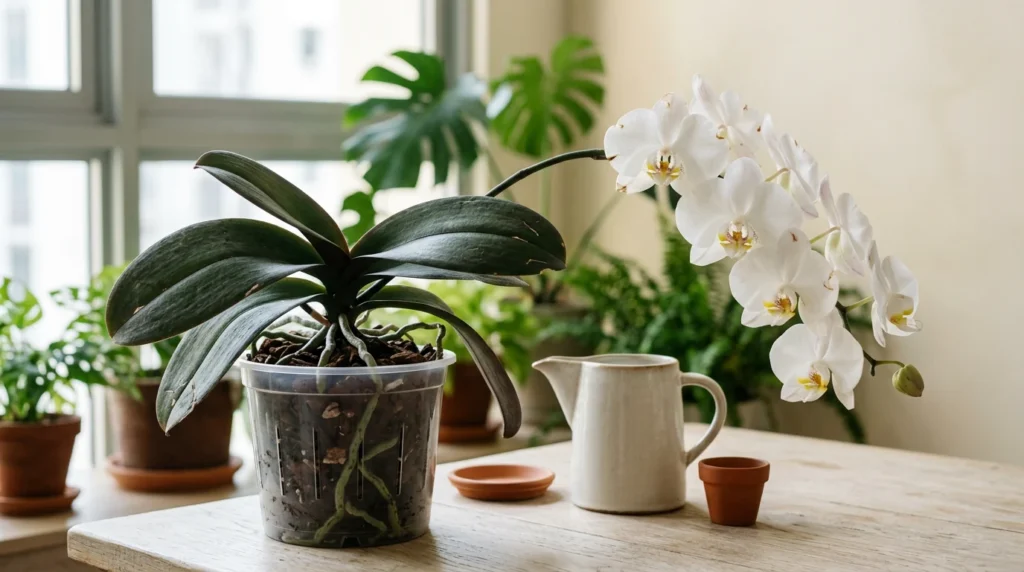
Record when the current flowers ended and whether the plant is producing roots, leaves or new growths. Purchased blooms reflect the conditions in which they developed before the plant reached your home. The next flowering cycle depends on the conditions available now. A new leaf can be healthy progress without promising an immediate spike.
Look for maturity and a stable growing cycle rather than judging only the calendar. A recently divided or stressed plant may first need to rebuild. If the label is missing, photograph flowers from earlier pictures along with the present leaves, roots and growth habit. Useful identification comes before a flowering-product decision.
Is light behind your orchids not flowering?
Light is a major factor to check before changing fertiliser. Iowa State University Extension identifies inadequate light as a common reason orchids fail to rebloom. However, do not move every orchid into full sun. NParks gives bamboo orchids a 4–8 hour direct-sun range, illustrating a requirement that should not be transferred automatically to a shade-adapted moth orchid.
Observe the light at leaf level across the day. A decorative position deep inside a bright room may receive less useful light than the window ledge. Curtains, tinted glass and nearby buildings can change the pattern. Moving a pot slightly can matter more than the room's general description as bright or airy.
If a brighter position is appropriate, transition carefully and inspect for scorch. Where natural light cannot meet the species' needs, consult the grow-light guide. A T5 fixture is an option to assess for coverage and output, not a universal guarantee of flowering.
Do orchids not flowering have roots healthy enough to bloom?
Inspect the root system before asking the plant to produce more flowers. Firm functioning roots are more useful than a large canopy above deteriorating medium. Root colour changes with species, moisture and age, so examine firmness and condition together. A shrivelled or collapsing root is different from a firm root with an ordinary surface stain.
Look through a clear or open pot where possible, and check drainage after watering. A decorative outer container can conceal stagnant water. Do not remove the plant repeatedly just to inspect progress. Unpot when there is a clear reason, such as persistent wetness, decomposed medium, instability or evidence of substantial root decline.
If roots are damaged, focus on recovery and suitable conditions. Read the root-rot guide for the broader diagnostic approach, while following orchid-specific handling requirements. A flowering spray cannot replace lost roots, and a plant struggling to maintain leaves may not be ready to support another flush of flowers.
Does the potting medium suit this orchid?
Many commonly grown epiphytic orchids need a coarse, airy medium rather than ordinary dense potting soil. Iowa State University Extension describes bark and sphagnum as common media for these orchids. Terrestrial species need separate consideration. Identify the orchid first, then match the medium, container and watering method as a complete system.
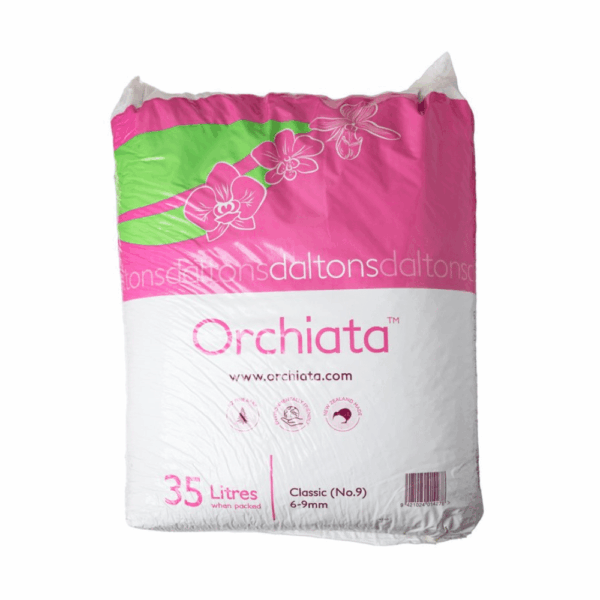
Orchiata bark is a relevant option when an appropriate bark-grown orchid needs fresh medium. Check the available grade against root size and container dimensions. A coarse grade in a small exposed pot behaves differently from a finer grade in a sheltered larger container, so follow the product and species guidance.
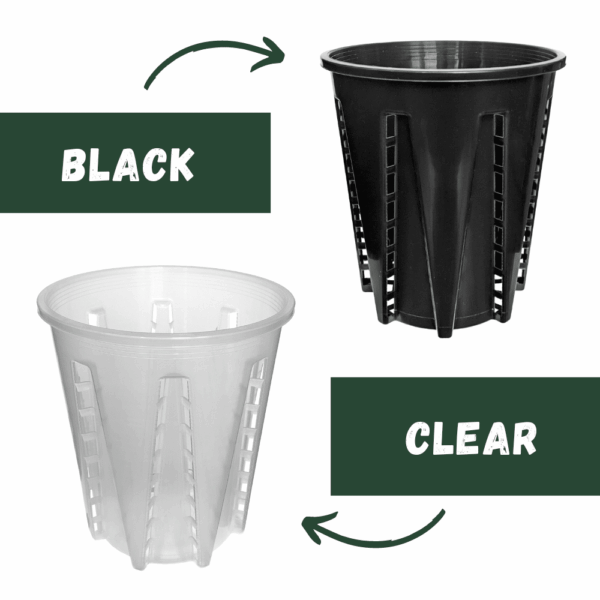
A ventilated orchid and aroid pot may help create an inspectable arrangement, but it also changes drying behaviour. Do not buy a pot solely because it looks specialised. Make sure it fits the root system and can be watered consistently in your actual growing position.
How should you think about temperature in Singapore?
Check the species or hybrid requirements before trying to create a flowering temperature signal. Iowa State University Extension distinguishes cool, intermediate and warm-growing orchids. Advice written for a temperate home with seasonal cooling cannot be copied directly to every Singapore apartment, especially for warm-adapted orchids grown locally.
An air-conditioned bedroom, a sheltered balcony and a warm kitchen window can differ considerably. Measure the plant's actual environment if temperature seems relevant. Do not put a tropical orchid against an air-conditioning vent, into a refrigerator or in contact with ice as a shortcut to a cooler period.
If the orchid's requirements are difficult to provide, choose a more suitable growing location or seek species-specific advice. A plant can remain alive without receiving the conditions needed to flower reliably. That is a matching problem between plant and environment, not necessarily a failure that can be solved by buying a stronger fertiliser.
When is a flowering feed or spray useful?
Review nutrition after light, roots and medium are suitable. A plant that has received no appropriate nutrition during active growth may need a label-directed feeding programme, but an already well-fed plant does not necessarily need more. Check what products are currently applied and whether their purposes overlap.
Plant BLOOM is listed for ornamental flowering plants including orchids. It can be considered as optional label-directed support within a suitable growing setup. This guide does not promise a flowering date, a guaranteed increase in buds or that a spray can override unsuitable light, damaged roots or species requirements.
Use the current bottle instructions rather than combining schedules from several online sources. Do not increase concentration because the plant has not flowered. Avoid layering different foliar products without compatibility information. If the orchid is recovering from rot or active pests, stabilise it before making flowering the immediate priority.
What should you avoid after the last flowers fade?
Do not assume that every old flower stem should be cut at the same point. Spike handling depends on orchid type, condition and the grower's objective. Identify the plant and seek appropriate instructions before cutting. Removing healthy growths or storage organs can reduce the plant's resources without creating a useful flowering response.
Avoid a cycle of repotting, moving and changing feed whenever no new spike appears. Each intervention alters conditions, and repeated disturbance makes the plant's response harder to interpret. Keep a stable suitable position and document growth. A healthy root tip or developing leaf can be a more meaningful short-term sign than the absence of flowers.
Do not judge old cosmetic leaf damage as a fresh problem unless it changes. Leaves scorched before conditions were corrected will retain marks. Use the leaf-spot comparison guide for new suspicious patches, and inspect for pests rather than covering every mark with another spray.
How do you build a realistic plan for orchids not flowering?
Write down the orchid identification, current position, medium, container and feeding history. Choose the clearest limiting condition and correct it thoughtfully. This original decision framework helps prevent unnecessary purchases while keeping the goal specific: a healthy plant in conditions suited to its own growth and flowering cycle.
For example, a healthy moth orchid kept far from a window may first need a suitable light improvement. An orchid in collapsed bark with soft roots needs root and medium attention. A vigorous plant with the right conditions may simply need time or more precise identification. These illustrative routes should not be merged into one universal treatment package.
Track roots, leaves and spikes in dated photographs. Reassess when the plant declines or when species-specific expectations are not met despite appropriate conditions. If help is needed, share the complete record. The next logical purchase should solve an observed gap, whether that is fresh bark, a suitable container or carefully selected supplemental light.
Orchids not flowering: what to check first
When orchids are not flowering, start with identification. Note the genus if you know it, because Phalaenopsis, Dendrobium, Vanda and others differ in how and when they bloom. Our orchid care guide covers everyday care.
Orchids not flowering after a recent repot or move often need time to settle. Avoid changing light, pot and feeding all at once, so you can tell which change helped.
Look for a flower spike, even a short one, before assuming nothing is happening. Orchids not flowering this season may still be building roots and leaves, and the orchid potting mix page explains bark options if the medium is the issue.
Orchids not flowering: light and temperature
Orchids not flowering are often getting less light than they need, but too much direct sun can also scorch leaves. Aim for bright, indirect light suited to the genus, and adjust gradually when orchids not flowering sit in a dim spot.
Temperature can influence orchids not flowering as well, since some orchids need a change in conditions before they produce flower spikes. Check what your orchid’s genus prefers rather than assuming one rule for all orchids not flowering.
Keep a simple record of light, position and any changes, so that when orchids not flowering finally bloom you know what worked.
Orchids not flowering: roots and medium
Roots matter for orchids not flowering. Firm, plump roots suggest a healthy plant, while shrivelled or mushy roots can explain orchids not flowering. Our orchid care guide explains how to check them.
An old, broken-down bark mix can contribute to orchids not flowering by holding too much water. Fresh orchid bark may help, and our orchid potting mix page compares the options.
Be patient with orchids not flowering. Even healthy orchids need time between blooms, and orchids not flowering this year may bloom next season once conditions are right.
Products to consider
Orchiata bark and an appropriate pot support suitable root conditions for relevant epiphytic orchids. BLOOM is optional ornamental flowering support without a flowering guarantee. The T5 light is conditional on an identified light shortage.
Common questions
Will a flowering booster make my orchid bloom immediately?
No flowering date can be guaranteed. Light, root health, maturity, species and environmental cues matter. Plant BLOOM is an optional label-directed product for ornamental flowering plants, not a substitute for suitable conditions. Correct the clearest growing limitation before adding more feed.
Can every orchid grow in bark?
No. Many common epiphytic orchids use bark-based media, but terrestrial orchids and particular species can need different arrangements. Identify the plant first. Then choose medium grade, container and watering together, rather than assuming that the word orchid describes one universal root environment.
Should I move my orchid into direct afternoon sun?
Only if that exposure suits the identified orchid and it is introduced appropriately. Many indoor-grown orchids can scorch after an abrupt change. NParks' direct-sun advice for bamboo orchids is not a rule for every orchid. Observe the actual light and follow species-specific guidance.
How long should I wait if my orchids are not flowering?
There is no universal timeline because species and conditions differ. Review light, roots, medium and nutrition, change one thing at a time and judge over several months.
Will a flowering spray fix orchids not flowering?
Not on its own. A spray cannot make up for weak roots, poor light or an unsuitable medium, so address those first.
Why are my orchids not flowering after repotting?
Orchids not flowering after repotting often need time to settle. Keep conditions steady and review light and roots.
Can I force orchids not flowering to bloom?
There is no reliable shortcut. Address light, roots and medium, and give orchids not flowering time to respond.