Yellow monstera leaves are a reason to inspect the plant, not an automatic instruction to water, feed or repot. Start with the pattern of damage and the condition of the root zone. Several different problems can produce similar yellowing, and more than one can occur together.
First, record what has changed
Take a photo of the whole plant and one affected leaf. Note whether yellowing is limited to an older leaf or spreading into several leaves and new growth. Record recent watering, feeding, repotting and moves between positions. This gives you something more reliable than memory when checking progress.
For a Singapore home, describe the actual position: sheltered indoors, beside a bright window, near air-conditioning or exposed to balcony rain. “Indoors” is not enough detail to understand the light and drying conditions.
Check moisture and drainage before adding water
Both an overly wet root zone and a dry root ball can contribute to wilting and discolouration. Check below the surface, lift the pot to judge its relative weight and inspect whether water is trapped in an outer container. A dry-looking surface does not tell you whether the centre is still wet.
If the root ball is dry, water appropriately and let excess drain. If it remains wet, investigate drainage, pot size and light before adding more. Avoid changing to a fixed weekly schedule: reassess the pot itself. University of Maryland Extension explains indoor watering symptoms.
Look for pests and light-related damage
Inspect leaf undersides, joints and new growth with good light. Visible pests, webbing or sticky deposits justify a closer pest identification check; yellow colour by itself does not. Use the houseplant pest identification guide to choose the next inspection.
A recent move can change light exposure sharply. Compare the timing and position of damage before moving or treating the plant again. The RHS guide to poorly houseplants offers a broader framework for checking growing conditions.
When roots need attention
Persistent wetness together with soft, deteriorating roots calls for root assessment. Follow our root-rot guide rather than treating every yellow leaf as a disease. A pest spray is not a substitute for correcting a failing root environment.
If repotting is appropriate, Aroid Mix supplies an open, soilless blend with Fine and Chunky options. It contains pine bark, coco chips, pumice, perlite, biochar and zeolite. It does not make overwatering impossible: drainage and observation still matter.
When feeding makes sense
Consider nutrition after checking light, water and roots. Aroid Mix contains no added fertiliser; Plant GROW is the routine liquid fertiliser option for an established plant. Use its current directions, not an assumed fortnightly dose or a stronger mixture to speed recovery.
Do not start several products together while diagnosing the problem. Record any application and monitor subsequent growth. An old damaged leaf is not a reliable measure of whether the underlying problem has been corrected.
Why monstera leaves turn yellow: the common causes
Monstera leaves turn yellow for several reasons, and the most common are watering problems, low light, root trouble and normal ageing. Working out which one applies means looking at where the yellow leaves are on the plant and what the potting mix is doing.
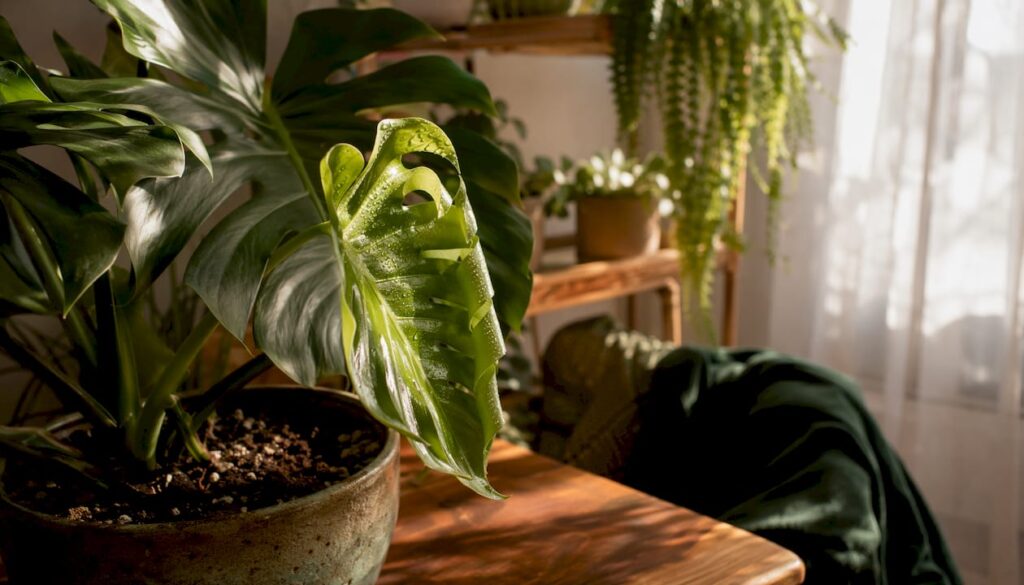
Older monstera leaves at the bottom of the plant sometimes yellow and drop as the plant sheds what it no longer needs. A single yellowing lower leaf with otherwise healthy growth is often part of this normal cycle, while yellowing on several leaves or on new growth deserves a closer look at roots, light and moisture.
Monstera leaves that yellow after a long period of wet soil often point toward root stress. Monstera leaves that yellow with crispy edges after dry spells suggest underwatering or low humidity. Compare the pattern with your watering notes before changing anything.
Reading yellow monstera leaves by pattern
A uniform pale yellow across a whole leaf can suggest low light or a nutrition issue, yellow patches between green veins can suggest a nutrient problem, and yellow monstera leaves with brown spots may indicate water stress or sun damage. These patterns are clues, not a diagnosis.
Monstera leaves that yellow from the edges inward after the plant moves into stronger sun may be reacting to the light change. Photograph the leaves in daylight so you can compare over several days.
If only one of the leaves is yellow and the plant is otherwise growing, observe it for a week or two before intervening.
Light and monstera leaves in a Singapore home
Monstera leaves need bright, indirect light to stay healthy. In a dim corner, monstera leaves can yellow slowly and new leaves may stay small, while direct afternoon sun through a window can scorch monstera leaves and leave pale or brown patches.
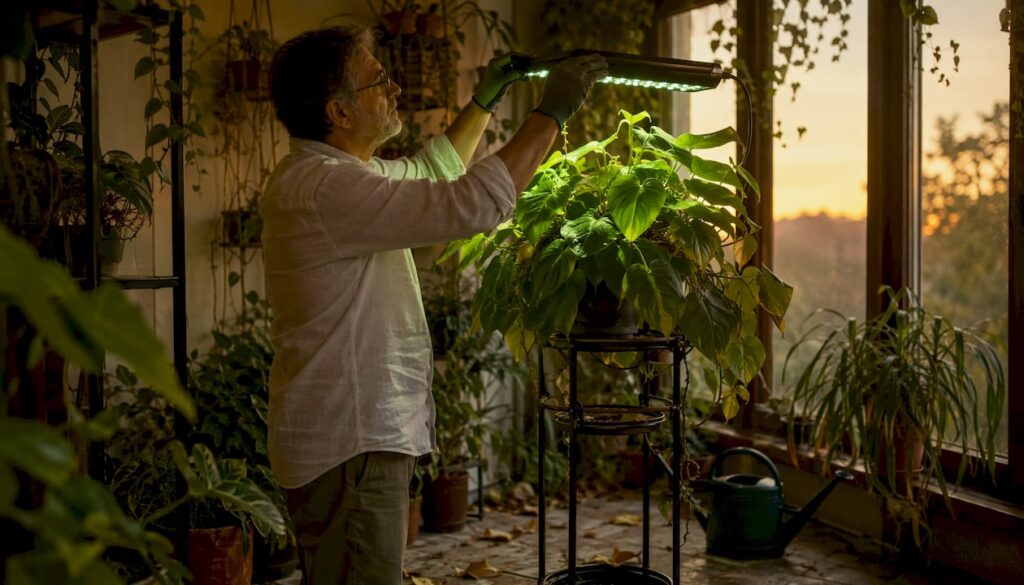
Judge the light at leaf level rather than by how bright the room looks to you. Our guide to choosing a grow light explains how to supplement a dim spot, and monstera leaves usually respond to better light with healthier new growth over weeks, not days.
Rotate the pot occasionally so the leaves grow evenly, and keep the plant away from direct air-conditioner airflow, which can dry and stress monstera leaves.
How to help yellow monstera leaves recover
Yellow monstera leaves will not turn green again, so judge recovery by new growth. Remove a fully yellow leaf only if it detaches easily or is clearly finished, using clean scissors.
While monstera leaves recover, keep care steady: consistent light, watering based on the root zone and no new products unless the plant needs them. Changing everything at once makes it hard to see what helped.
If monstera leaves keep yellowing after you have corrected light and watering, check the roots as described above and read our root rot guide.
Should I cut off yellow monstera leaves?
Only when the leaf is fully yellow or damaged enough that it will not recover, and use clean scissors. Cutting yellow monstera leaves does not fix the underlying cause, so keep investigating.
Why are my monstera leaves turning yellow after repotting?
A repot can stress the plant, so some yellowing of older monstera leaves can follow. Keep light and watering steady, and see our guide to repotting Monstera.
Can monstera leaves turn yellow from too much water?
Yes. Persistently wet roots can cause monstera leaves to yellow and the plant to wilt. Check below the surface and for trapped water in an outer pot before watering again.
Humidity, air-conditioning and monstera leaves
Singapore homes are humid, but air-conditioned rooms can be much drier near the vents. Monstera leaves with dry, brown edges alongside yellowing may reflect dry air or inconsistent watering, so compare the plant’s position with the airflow in the room.
Keep the plant away from direct cold air rather than relying on misting, which gives only a brief change in humidity. Steady care usually helps monstera leaves more than frequent adjustments.
Wipe dusty monstera leaves with a damp cloth so they can use light efficiently, and check leaf undersides for pests as you go. Our houseplant pests guide explains what to look for.
Support, pot size and monstera leaves
A climbing monstera usually grows better with a moss pole or sturdy support, and a leaning, unstable plant can stress its roots. Check that the support is secure and that the leaves are not crowded against a wall.
A pot that is too large keeps the medium wet for longer, while a pot that is too small can leave roots crowded. Both can show up in monstera leaves as yellowing, so match the pot to the root ball.
If the plant needs repotting, our guide to repotting Monstera and Philodendron in Aroid Mix covers the steps, and the soil mixes page compares media.
A simple monthly check for healthy monstera leaves
Once a month, photograph the whole plant and compare it with last month. Count new leaves, note any yellow monstera leaves and record changes in light or watering.
A monthly check keeps you from reacting to a single yellow leaf and helps you see real trends. Healthy monstera leaves are firm with even colour, and new leaves should unfurl steadily.
If the trend is worsening, send photos through Contact with your watering notes. The team can help you interpret what you see.
Quick answers about yellowing
Is it normal for the lowest leaf to turn yellow? A single older leaf at the base sometimes yellows and drops while the rest of the plant grows well. Watch it, and look closer only if more leaves follow.
Should I water more if the leaves are yellow? Not automatically. Check the root zone first, because both wet and dry roots can cause yellowing.
Does fertiliser fix yellowing? Only if the cause is nutrition, which is less common than light, water or root problems. Check those first.
How long until the plant recovers? Look for healthy new growth over several weeks rather than judging by the old yellow leaves.
Can a recent move cause yellowing? Yes. A change in light or position can stress the plant, so keep conditions steady and watch new growth.
Your next step
If yellowing is isolated and the rest of the plant remains stable, observe and record rather than rushing into several interventions. If damage spreads, share whole-plant, leaf-underside and pot photos through Contact. Include your watering notes and any products already applied.
For a planned repot, read Repotting Monstera and Philodendron. For blend selection, use Which Mix.