Repotting Monstera and Philodendron plants is worthwhile when the root system or growing medium needs attention, not because a new leaf has appeared. University of Minnesota Extension suggests increasing container diameter by no more than 2–3 inches for ordinary houseplant repotting, while acknowledging that some plants only need fresh medium. That is a ceiling to consider, not an instruction to upsize every plant. This guide focuses on the practical choices that determine whether a repot helps: root condition, pot dimensions, medium texture, climbing support and aftercare. Use the mix guide if you are still identifying the right medium family.
On this page
Does your aroid actually need repotting?
What should you prepare before removing the plant?
How do you choose the right pot size when repotting Monstera?
How much of the old medium should you remove?
How do you position the plant and climbing support?
What changes after moving into aroid mix?
Does your aroid actually need repotting?
Look for several clues together: a dense root mass, a container becoming unstable, water bypassing the root ball, or medium that has lost its useful structure. A single root appearing through a drainage hole does not explain the whole pot. Some roots explore available space before the container is fully occupied.
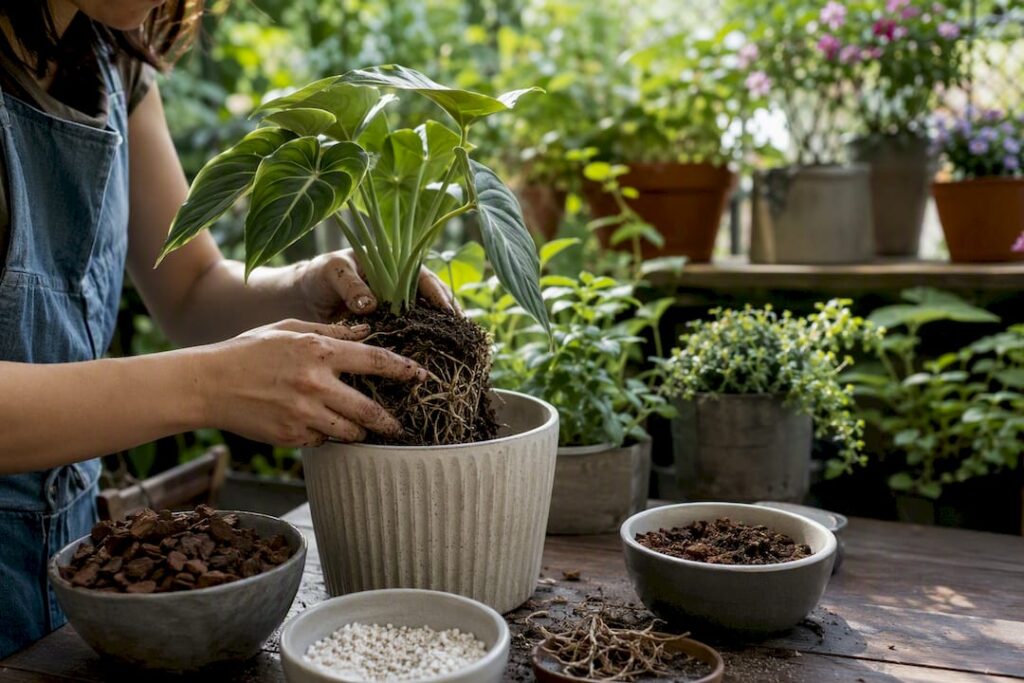
Compare present watering behaviour with earlier behaviour in the same location. If the plant suddenly dries much faster, inspect whether roots have displaced most of the medium. If it stays wet longer, first consider reduced light, rain exposure or root damage. Opposite problems can both produce a plant that looks tired.
A Monstera with aerial roots is not automatically pot-bound. Aerial roots and climbing growth are part of its growth habit. Directing appropriate roots towards a support is different from increasing soil volume. Check the root ball before committing to a larger pot, particularly when the current container already seems oversized.
What should you prepare before removing the plant?
Prepare the new arrangement before disturbing roots. Set out fresh Aroid Mix, a draining pot, a tray, clean tools and any support. Read the medium instructions and compare the proposed container with the actual root ball. Leave yourself space to work without bending large leaves against a wall.
A tall plant is easier to handle with help. Support the main stem and root ball rather than pulling on petioles. Protect furniture and floor surfaces, then photograph the original planting depth and orientation. That picture is useful when a sprawling plant looks surprisingly different outside its familiar pot.
If the plant arrived recently, first check for pests and unstable growing conditions. Routine repotting during an active infestation may spread insects across the work area. When rot or a failed container makes intervention urgent, handle it separately from healthy plants and clean the area before opening another bag of medium.
How do you choose the right pot size when repotting Monstera?
Choose around the root system rather than the width of the leaves. The 2–3 inch maximum diameter increase discussed by University of Minnesota Extension is general houseplant guidance, not a target for every aroid. A modest increase may be sufficient for a healthy, crowded plant; a plant that lost roots may need no increase at all.
Compare pot depth as well as diameter. Moving into a very deep vessel can add a large volume of unused wet medium below the roots. A decorative container may also conceal a narrow inner pot. Measure the growing container, not just the outside display pot, when calculating how much mix to buy.
Drainage holes need an unobstructed route to a tray you can empty. Do not select a sealed pot and plan to compensate with a handful of stones. If appearance matters, use a functional nursery pot inside the chosen cover. Make sure you can lift it out comfortably when the plant and support are wet.
How much of the old medium should you remove?
Remove what is loose or clearly unsuitable without stripping healthy roots unnecessarily. The goal is a stable transition into a useful growing medium. A compact inner plug deserves attention because it can remain wetter than the surrounding coarse mix. However, forcefully tearing apart every fine root can create avoidable stress.
Inspect the root ball as a structure. Is it evenly rooted, wrapped tightly around the edge, or mostly loose wet material? Firm roots can vary in colour. Soft, collapsing roots require the separate root-rot assessment. Do not treat ordinary repotting and disease salvage as the same procedure.
Gently ease accessible circling roots where necessary, using clean tools for damaged material. Avoid routine root pruning simply because you saw it in a dramatic video. If the root mass fits a sensible pot and is healthy, retaining more of it usually makes the physical transition simpler to manage.
How do you position the plant and climbing support?
Place the plant at a sensible depth and establish support before filling the final gaps. Keep the stem base visible rather than burying it deeply to make the plant stand upright. Use a support that carries the climbing stem without binding leaf stalks. A grow pole is an option when the plant needs a stable climbing structure.
Locate the support with the mature growth direction in mind. A Monstera's leaves and climbing side are not interchangeable, so rotating the plant randomly around a pole can leave awkward attachments. Tie loosely enough to allow growth and inspection. Avoid straps that trap a developing leaf or press sharply against soft tissue.
Fill around the roots gradually and settle the medium gently. Do not compress a chunky mix until it behaves like dense mud. Check that the root ball is supported and that no large empty cavities remain around it. Leave practical watering space below the rim so water does not immediately spill over the edge.
What changes after moving into aroid mix?
Your old watering rhythm may no longer fit. A coarser medium can feel dry near the surface while material inside the original root ball remains moist. Conversely, water may drain quickly without thoroughly wetting a dry central plug. Observe the whole container instead of assuming fast runoff proves ideal root-zone moisture.
Use pot weight, a gentle moisture check and plant condition together. Empty the outer pot after watering. If you added a moisture-retaining pole, note that watering the pole and watering the root zone are separate tasks. Water entering from the pole can change the pot's moisture even when you did not directly water its surface.
Keep light reasonably stable while the plant settles. Repotting is not the best moment to move a shade-grown specimen into harsh afternoon sun. In a Singapore flat, a brighter position behind a window may still behave differently from a windy balcony. Record the location so future watering decisions reflect the actual environment.
Which common repotting mistakes should you avoid?
Avoid treating a bigger pot as a reward for a bigger leaf. Extra volume changes water storage and is not automatically helpful. Avoid adding several amendments to a ready-made mix without a clear reason. More bark, perlite, coir and fertiliser can create an unfamiliar combination that is difficult to water consistently.
Do not remove every imperfect leaf during the same operation. A leaf with old cosmetic damage can still contribute to the plant. Remove material that is dead or genuinely problematic, and keep enough healthy foliage to observe its response. Damaged portions will not become pristine after repotting, so evaluate new growth separately.
Avoid burying aerial roots by forcing or snapping them. Where a flexible root can be guided without injury, do so gently. Where it cannot, leave it alone. Most importantly, do not use fertiliser to compensate for a plant that is still wilting in wet medium. Diagnose moisture and roots before adding nutrition.
How can you judge whether repotting Monstera worked?
Judge success by stability, predictable moisture and subsequent healthy growth. A successful repot does not need to produce an immediate leaf. Check that the stem stays secure, ties remain comfortable and water exits properly. If the plant repeatedly rocks in the pot, correct its support instead of continually tamping the mix harder.
Take a photograph after repotting and keep a note of the container dimensions, mix used and any root damage observed. When something changes later, that record is more useful than remembering that you used 'a bigger pot'. It also helps separate normal adjustment from a persistent issue that existed before the repot.
If yellowing progresses, refer to the yellow-leaf troubleshooting guide. If water no longer penetrates evenly, review compacted and slow-draining medium. Purchase another bag only after deciding what needs to change. The right medium supports good care; it cannot replace light, drainage or observation.
Repotting Monstera: a quick checklist
Repotting Monstera is easier when the steps are laid out before you start. Water the plant lightly the day before so the root ball slides out without tearing, lay out the new container, fresh mix and any support, and decide in advance how much of the old medium you will remove.
After repotting Monstera, expect a short adjustment period. Keep the plant in its usual light, judge watering by checking moisture below the surface rather than by the calendar, and hold off on fertiliser until you see healthy new growth. These are Sprout Lab’s own practical guidelines, not a fixed rule.
When repotting Monstera that has aerial roots, do not cut healthy aerial roots just for neatness. Guide them toward the support or tuck them into the mix, and see our aroid guides for more on how these roots behave.
Repotting Monstera: choosing the right medium
When repotting Monstera, the medium matters as much as the pot. Monstera roots like air as well as moisture, so a chunky, free-draining mix usually suits repotting Monstera better than a dense, fine one. Our soil mixes page compares the options.
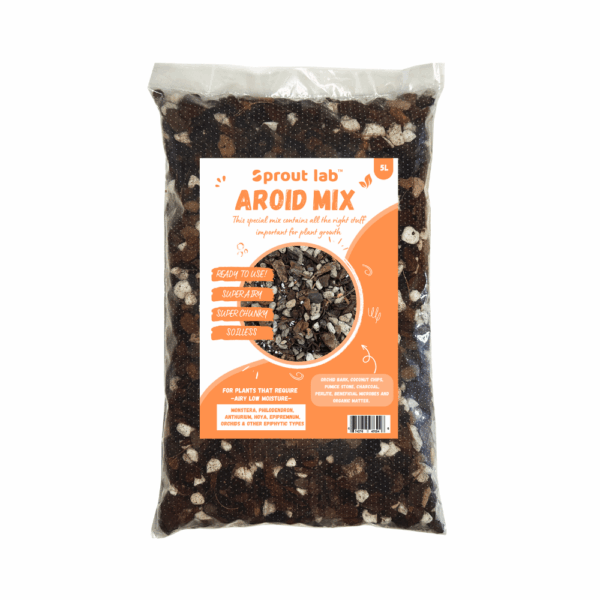
Many growers choose an aroid-style mix when repotting Monstera, which is why this guide focuses on Aroid Mix; the product page lists its ingredients. This is Sprout Lab’s own guidance, and the right choice for repotting Monstera still depends on your light and watering.
Before repotting Monstera, decide whether the plant needs a bigger pot at all. A plant that is only slightly root-bound may do well with fresh medium in the same container, so repotting Monstera does not always mean upsizing.
Repotting Monstera in a Singapore home
Repotting Monstera on a humid balcony or in an air-conditioned room can differ because the medium dries at a different pace. After repotting Monstera, watch how fast the pot dries before settling on a routine.
Keep a short note of the date you finished repotting Monstera, the mix you used and how you watered afterwards. That record makes the next round of repotting Monstera much easier, and repotting Monstera is also a good moment to check the support pole.
If repotting Monstera reveals soft or dark roots, trim only the clearly damaged material and read our root rot guide before watering again. Repotting Monstera in poor condition calls for patience, not extra feeding.
Products to consider
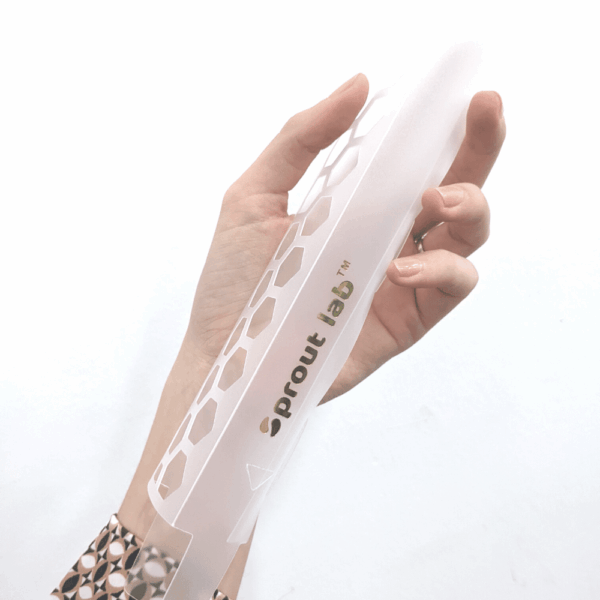
Aroid Mix provides a relevant repotting option for these plants. A grow pole supports climbing growth, while a suitable ventilated pot offers an alternative container. Buy the support or pot only if the existing equipment needs changing.
Common questions
Should I always add extra perlite to Aroid Mix?
No. Start with the supplied mix and its instructions. Add an amendment only when the plant, pot or growing position creates a specific need. Otherwise you change the texture without knowing whether the original mix was suitable. A small trial is easier to interpret than changing every plant at once.
Can I repot a Monstera while it is producing a leaf?
If drainage has failed or roots are deteriorating, address the urgent problem carefully. For an optional size increase, choose a time when the plant is stable and you can provide consistent aftercare. Protect the emerging leaf from bending and avoid adding several other environmental changes at the same time.
Do I need a new pole at every repot?
Only if the current support is unsuitable, unstable or too small for the next stage. Check its attachment and condition first. Reusing an appropriate clean support can reduce disruption. Plan any extension before the plant becomes difficult to handle, and keep ties away from leaf stalks and developing growth.
Can I use the same pot when repotting Monstera?
Yes, if the roots and the container are in good condition. Refresh the medium and clean the pot. As noted above, some plants only need fresh medium rather than a bigger container, so repotting Monstera does not always mean upsizing.
How often should I be repotting Monstera?
There is no fixed schedule. Repot when roots circle the pot, water bypasses the root ball or the medium has lost its structure, as described earlier in this guide.
What mix should I use when repotting Monstera?
Many growers choose a chunky, free-draining aroid-style mix for repotting Monstera, such as Aroid Mix. See the medium section above for how to compare options.
When is the best time for repotting Monstera in Singapore?
There is no fixed best month. Repotting Monstera is better timed to the plant’s condition, such as active growth and crowded roots, than to the calendar.