Hydroponics for beginners means growing plants without a soil-based root medium, using a nutrient solution and a system that supports roots, water and oxygen. A small Singapore setup can be practical, but it still needs suitable light, monitoring and cleaning. Choose a manageable first project rather than filling every planting position immediately.
Hydroponics for beginners: choose the crop and location first
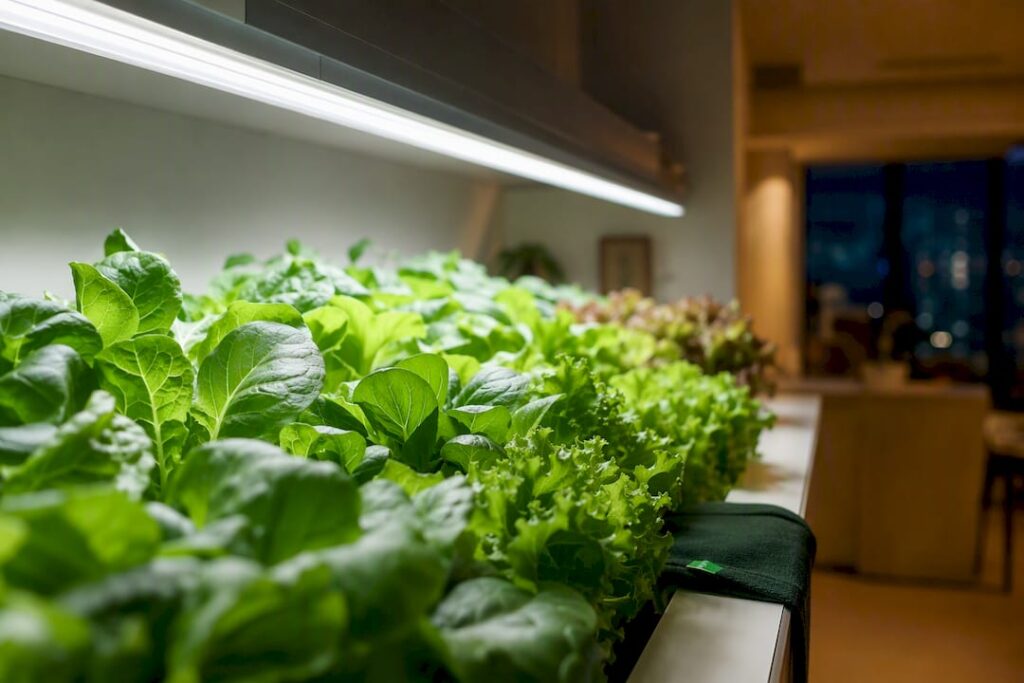
Begin with the crop you intend to grow and check its light and space needs. Measure the growing area and allow access to inspect roots, refill the reservoir and clean equipment. A system that fits into a corner may still be difficult to maintain there.
For a balcony, consider rain exposure and the stability of the filled system. Indoors, assess the light at plant level and keep electrical connections away from water. Record these constraints before comparing equipment.
Which crops suit hydroponics for beginners in Singapore?
Leafy greens and herbs are the usual starting point for hydroponics for beginners because they are small, harvested while young, and do not need support structures. Lettuce, basil and similar crops are common first choices, and our guide to plants for your hydroponic system compares leafy greens with fruiting crops in more detail.
Fruiting crops such as tomatoes and peppers can be grown hydroponically, but they usually need more light, more space and more careful feeding. Treat them as a second project once you have a routine that works. This is general guidance rather than a rule, so check what the seed supplier recommends for each variety.
Singapore’s warm, humid conditions affect crop choice and reservoir temperature, especially on a balcony. Warm solution holds less dissolved oxygen, so shade and airflow matter. Our balcony hydroponics setup guide covers the practical differences between indoor and outdoor placement.
Herbs are forgiving partners for a first reservoir because you can harvest a few leaves at a time. Cutting regularly keeps plants compact, and it gives you a regular reason to inspect roots and solution while the routine is still new.
Hydroponics for beginners: understand the system you are buying
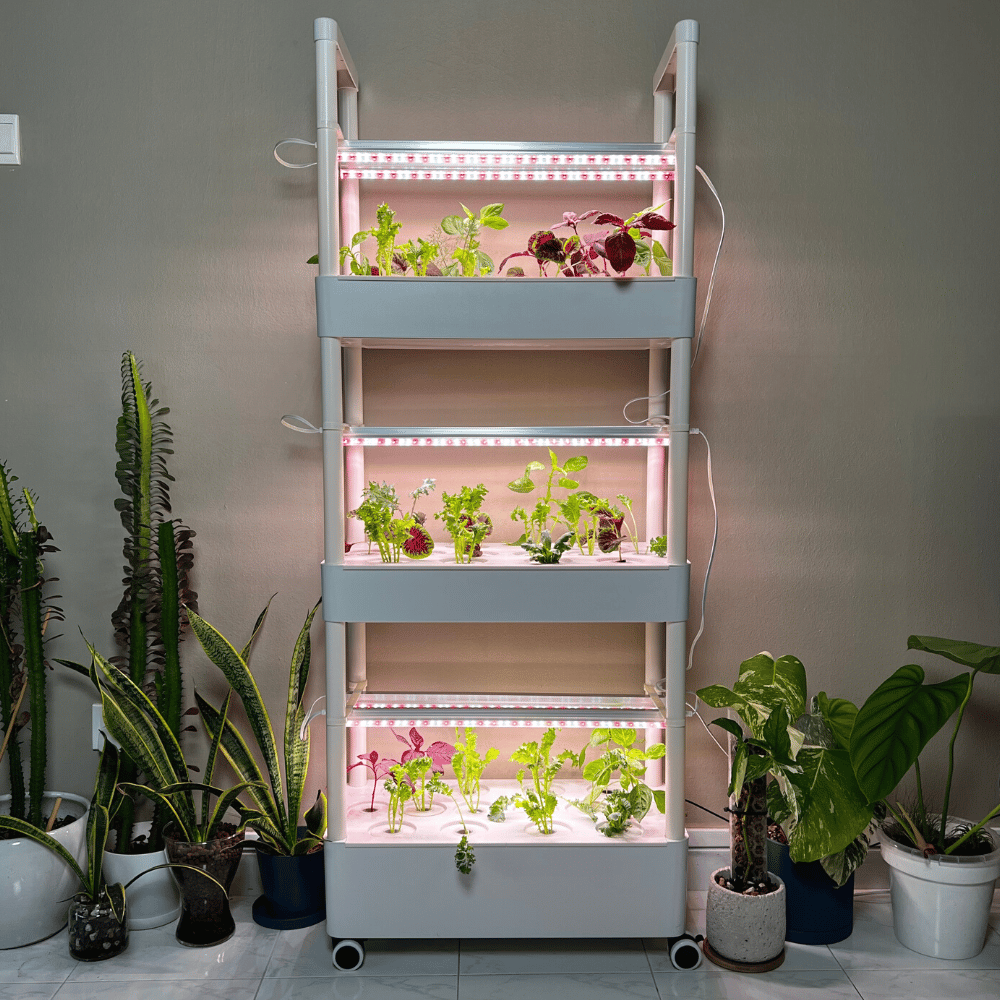
Different systems supply nutrient solution and oxygen differently. A circulating tower is not operated in the same way as a passive container. Use the manual for the system you have; do not transfer water-level or pump instructions from another design.
Sprout Lab’s Hydroponic Tower System Set uses vertical planting positions and a circulating nutrient system. Check its current contents, dimensions and operating requirements with the team before deciding where it will sit.
What does hydroponics for beginners involve day to day?
A typical week of hydroponics for beginners is mostly short checks rather than hard work. Look at the water level, confirm the pump or air supply is running, inspect leaves and roots for changes, and record anything unusual in your log. Once the system is set up the routine is usually brief.
Reservoirs need topping up as plants drink and water evaporates. Topping up with plain water and replacing the whole solution are different tasks, and the right timing depends on your system and crop. Our hydroponic water change guide explains how to decide between them using a simple log.
Set realistic expectations for the first month. Seedlings establish slowly, small mistakes are easy to correct early, and one healthy tray teaches more than an overcrowded system. Build up gradually, and keep the checklist above beside the system until the routine feels automatic.
What equipment does hydroponics for beginners need?
The basic equipment for hydroponics for beginners is a reservoir, a way to hold plants above the solution, a light source if natural light is limited, and a pump or air supply where the system calls for one. Different designs need different parts, so list what your chosen system includes before buying anything extra.
Add simple measuring tools early. A pH test and an EC meter let you check the solution instead of guessing, and a notebook or phone note is enough for your log. Browse the hydroponics category to compare what is currently in stock.
Avoid improvised electrical connections near water. Keep plugs, timers and transformers above the reservoir and away from splashes, and follow the manufacturer’s instructions for each part.
Hydroponics for beginners: prepare a checklist before planting
Check which reservoir, plant supports, pump components and growing plugs are included and which must be bought separately. Choose seeds or transplants suitable for your intended method. Do not assume an attractive product photograph shows everything included in the pack.
Plan how you will measure and record the reservoir conditions. An EC meter measures conductivity; it does not identify every nutrient or diagnose every growth problem. pH and nutrient concentration are separate checks. University of Minnesota Extension’s hydroponics guide explains the underlying system choices and monitoring.
Mix nutrients using the correct instructions
Use a nutrient product formulated for hydroponics, such as the Hydroponic Nutrient Concentrate, and follow its current directions for the crop, water volume and growth stage. Measure the actual reservoir volume instead of guessing from the container’s outside dimensions.
Do not substitute GROW’s soil-feeding directions for hydroponic dosing. Where pH adjustment is needed, use the instructions for the specific adjustment product and system. Do not mix concentrates together or improvise a recipe from unrelated products.
Keep a simple growing log
Record the crop, sowing or transplant date, reservoir volume, nutrient additions, measurements and visible changes. Check the level, plant condition and equipment operation routinely. In hydroponics for beginners, a log helps distinguish a sudden equipment problem from a gradual change in growing conditions.
Keep the reservoir protected from contamination and follow the system’s cleaning and solution-change instructions. Check new transplants before introducing them; hydroponic growing does not eliminate plant pests. Use our pest identification guide if you find suspicious insects or leaf damage.
How to tell hydroponics for beginners is going well
Healthy early growth usually shows as steady new leaves, firm stems and pale, clean roots. Colour and growth rate vary by crop, so compare each plant with its own earlier photos rather than with a picture from another system.
Two measurements are worth learning early: pH and electrical conductivity. Our guides to the hydroponic pH range and a hydroponic nutrient schedule explain what each reading means and why both should be checked before adding anything to the reservoir.
If readings or plants look wrong, change one thing at a time and note the result. Several simultaneous changes make it impossible to tell which one helped, and they can push a small reservoir further off target. Ask for help early if roots look brown, slimy or smell unpleasant.
Troubleshoot one issue at a time
If growth is weak, review the light, equipment operation and recorded solution conditions before adding more concentrate. For stretched seedlings, start with light and spacing checks. For unexplained root decline, ask for help with photos of both roots and the system.
If hydroponics for beginners feels too complex for a first project, compare a microgreen kit or a container of herbs in Vege Mix. These are different growing approaches; choose the maintenance routine you can realistically follow. Contact us with your space, crop and equipment list before purchasing.
Hydroponics for beginners compared with growing in soil
Hydroponics does not remove the need to learn plant care; it changes which checks matter. Instead of judging soil moisture, you watch the reservoir level, solution conditions and equipment. Roots are easier to inspect, but problems can also spread faster through a shared solution.
Soil growing suits some people better, especially for slow-growing or large plants, and it needs fewer measuring tools. If you decide soil is the right fit for now, our soil and potting mixes page helps you choose a suitable mix for your crop.
Neither approach is automatically better. Choose the method whose routine you can keep up, and try hydroponics for beginners with a small, low-cost trial before committing to a larger system.
Where to place your first hydroponics for beginners setup at home
Place the system where you can see and reach it easily, because out of sight quickly becomes out of mind. A spot near a window or a power outlet is convenient, but check that the plants will really receive the light they need rather than assuming a bright room is enough.
Protect floors and furniture from spills. A tray or mat under the system catches drips during refilling and cleaning, and a stable, level surface prevents a full reservoir from tipping. Keep the setup away from places where children or pets could knock into it.
Allow airflow around the plants and the reservoir, especially in warm, humid rooms. Good ventilation helps leaves dry, and keeping the solution out of direct sun reduces algae. If you are unsure about a location, send us a photo of the space and ask before you buy.
Think about how you will move the system for cleaning. A setup that needs to be dismantled every few weeks is easier to look after when there is working space beside it. Hydroponics for beginners goes more smoothly when the routine is convenient enough to keep.
Common hydroponics for beginners mistakes to avoid
The most common mistake in hydroponics for beginners is buying a large system before testing a small one. A compact setup shows how much time, light and attention your space actually allows, and it is easier to move or clean if the first location turns out to be wrong.
Another frequent error is treating the nutrient label as a minimum to exceed. Concentrations that are too strong can stress roots just as weak ones slow growth, so follow the product directions and adjust only after observing the plants.
Finally, do not skip cleaning. Algae and slime build up wherever light reaches the solution or wet surfaces, and they compete with roots for oxygen. Keep reservoirs covered, rinse equipment between crops, and visit our hydroponics in Singapore page to compare systems and supplies before you buy.
If a system proves too much at first, scale down rather than abandon the project. Planting fewer positions makes the routine easier to follow and still teaches the same checks.