Pest control is usually the first thing gardeners reach for once leaves start looking chewed, sticky, or speckled — but the fastest route to lasting pest control isn’t always a spray. It’s correctly identifying what you’re dealing with, understanding why it showed up, and choosing the lightest-touch method that actually works. This guide walks through practical, low-toxicity pest control for the pests most home gardeners in Singapore and similar humid climates actually run into, when a targeted product makes sense, and when to leave a plant alone entirely.
TL;DR: Identify the pest before treating anything — many “pests” are actually harmless or even beneficial. Start with the least invasive option (a strong water spray, pruning, or hand removal) before reaching for any spray. Organic options like neem or insecticidal soap handle most common infestations; save stronger chemical pest control for confirmed, persistent problems. Prevention — airflow, correct watering, and regular inspection — stops most infestations before they start.
Table of contents
What counts as a garden pest?
Not everything crawling on your plants needs pest control. Many insects found in a garden are neutral or actively helpful — ladybugs, lacewings, and various predatory mites all feed on the species that do cause damage. Before starting any pest control routine, confirm the insect is actually feeding on the plant (look for chewed leaf edges, sticky residue, or visible colonies) rather than just passing through.
A genuine pest problem usually shows one or more of: a visible colony of insects, sticky “honeydew” residue on leaves, webbing, distorted new growth, or a pattern of damage that spreads from plant to plant. If you only see one or two insects and no damage, that’s not yet a pest control situation — it’s worth a few more days of watching first.
Identify the pest before you treat anything
Effective pest control depends entirely on correct identification — the fix for aphids is not the fix for spider mites, and treating the wrong pest wastes time while the real problem keeps spreading. Here are the garden pests home growers run into most often.
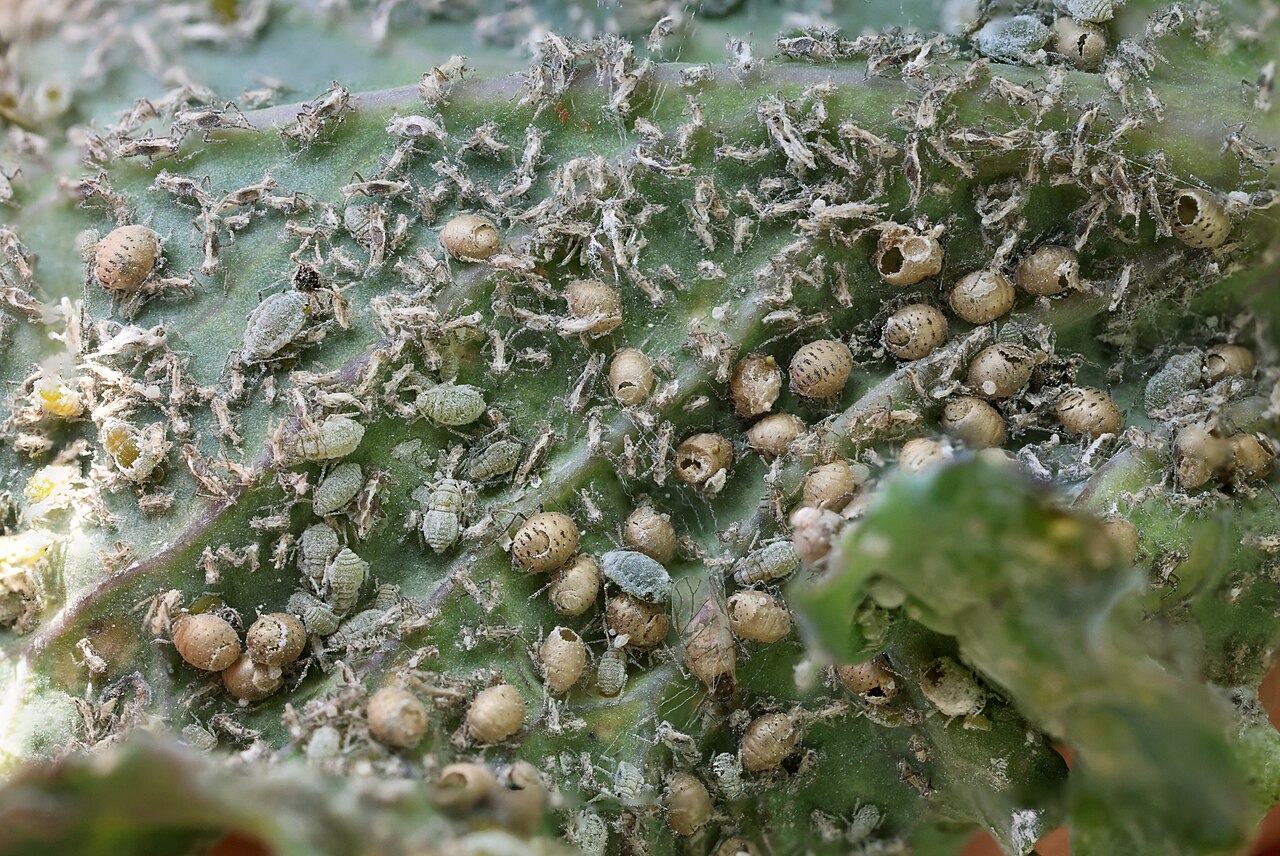
Aphids cluster in soft-bodied colonies on new growth and the underside of leaves, often leaving a sticky honeydew residue behind. They’re one of the most common early-season pest control targets because they reproduce quickly once they find a host plant.
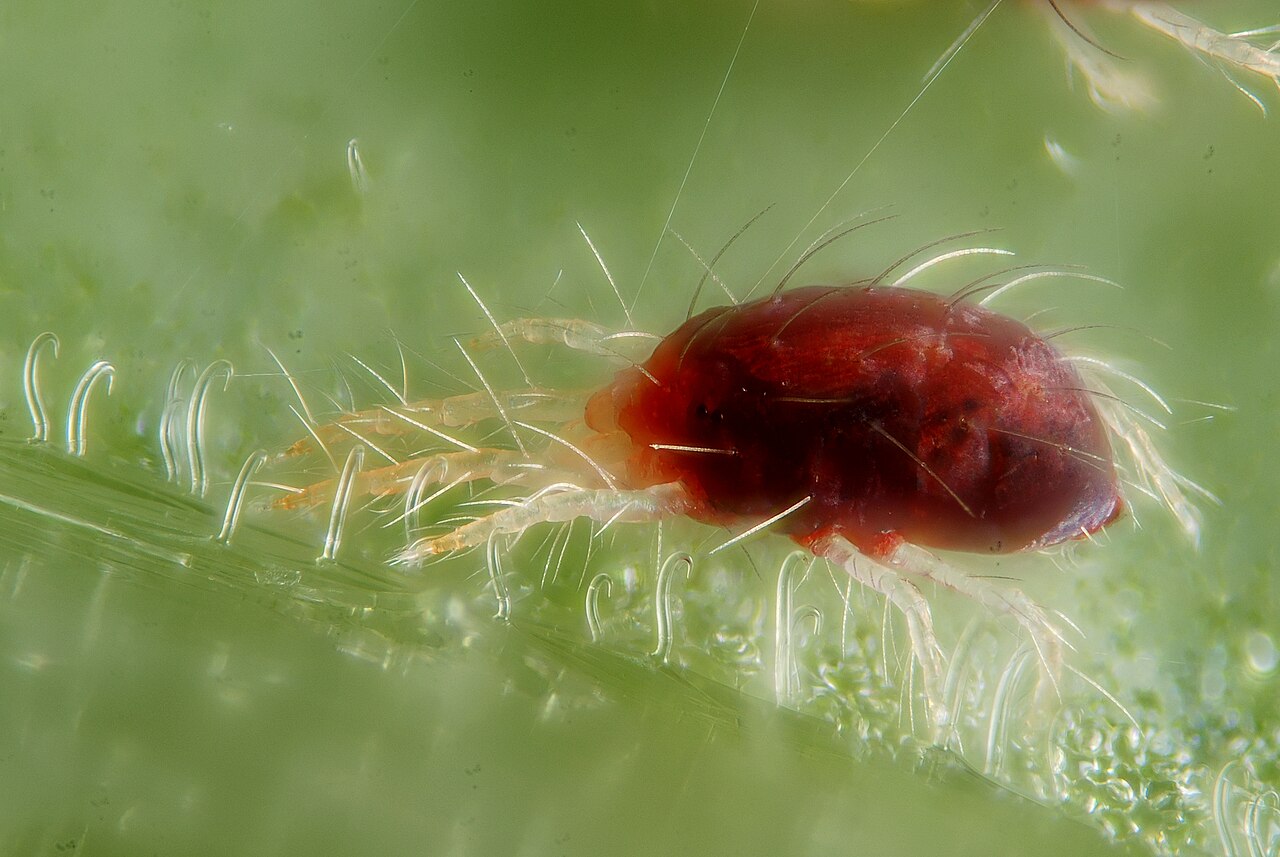
Spider mites are tiny enough to miss until you notice fine webbing between leaves and stems, paired with a stippled, speckled look on the leaf surface. They thrive in dry conditions, so plants near air-con vents or in low humidity are especially at risk.
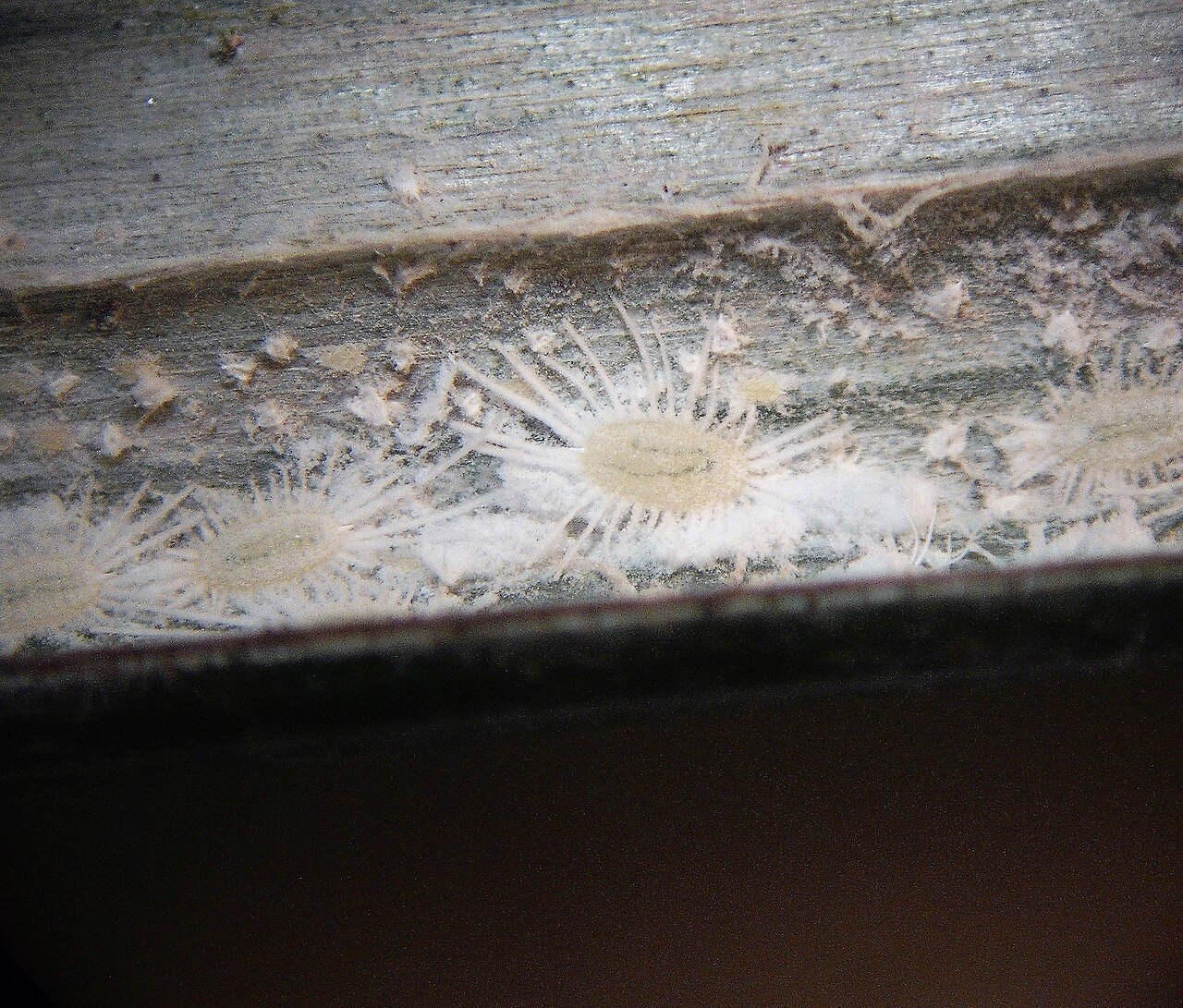
Mealybugs show up as small, white, cottony clusters tucked into leaf joints and stem nodes. Like aphids, they feed on sap and leave behind a sticky residue that can lead to sooty mould if left untreated.
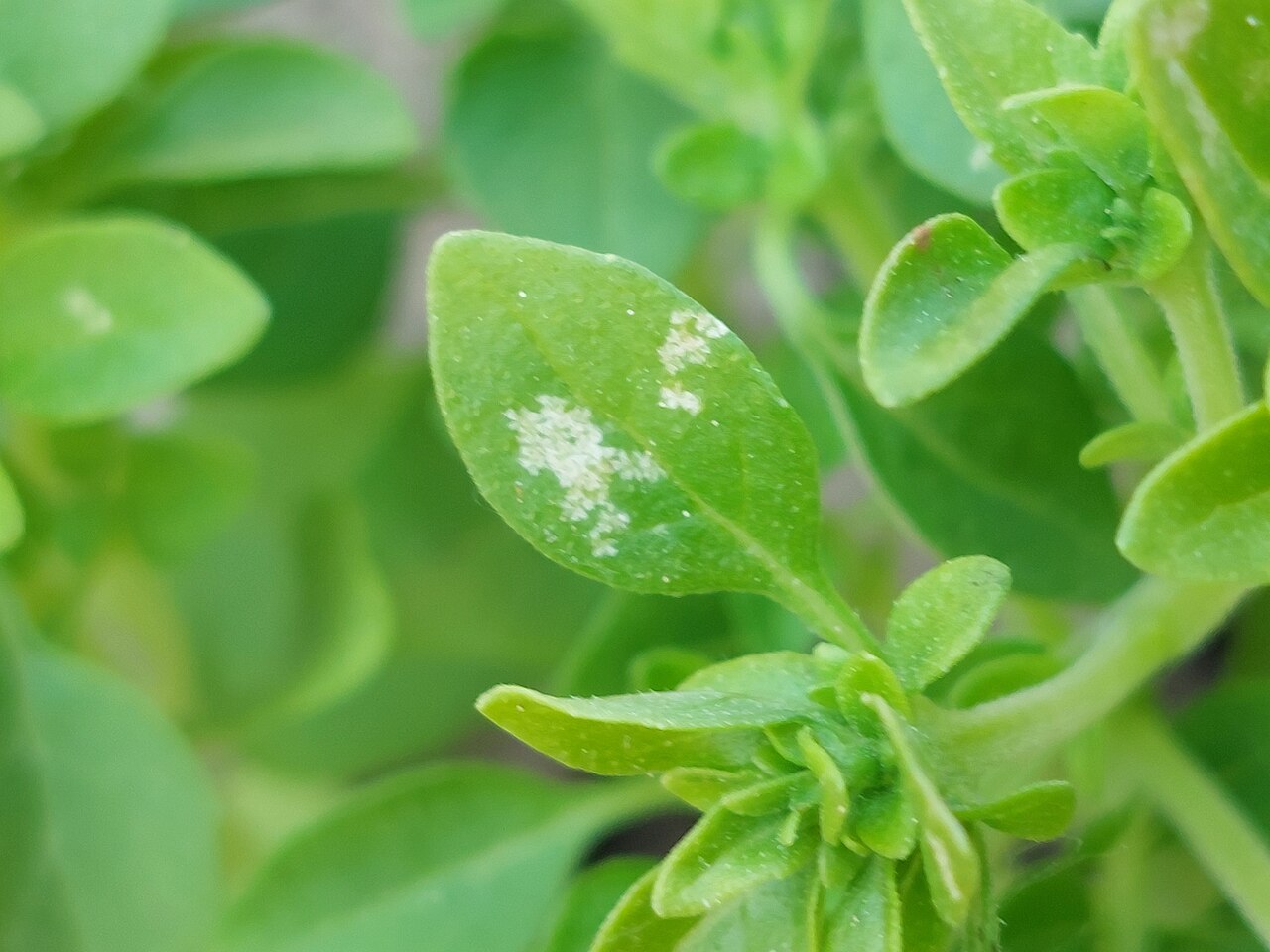
Thrips leave behind silvery, papery patches on leaves and dark flecks of droppings, rather than a visible colony. Damaged new growth and distorted flower buds are common signs alongside the leaf scarring.
Treating each pest: step-by-step pest control
Once you’ve identified the pest, the pest control steps below are the ones to work through in order — starting with the least invasive option and escalating only if it doesn’t resolve the problem within a week or two.
Aphid pest control
Start with a firm spray of water aimed at the underside of affected leaves, where aphid colonies cluster. This physically dislodges most of the colony without any product at all, and is safe to repeat every two to three days. If aphids return after a week of water spraying, move to insecticidal soap or a neem-based spray, applied directly to the colony rather than the whole plant.
Aphids also attract ants, which “farm” them for their sweet honeydew secretion and will actively defend the colony from predators. If you notice ants travelling up and down a stem, treating the aphids alone without also disrupting the ant trail often means the colony rebuilds within days.
Spider mite pest control
Because spider mites thrive in dry air, the first pest control step is often environmental rather than chemical: raising humidity around the plant and wiping down leaves with a damp cloth removes both mites and the fine webbing they leave behind. For a more established infestation, insecticidal soap applied thoroughly to leaf undersides — where mites feed and lay eggs — is the standard next step.
Spider mites reproduce fast in warm, dry conditions, so a single treatment is rarely enough. Plan on repeating every five to seven days for two to three rounds to catch newly hatched mites that the first application missed.
Mealybug pest control
Mealybugs’ waxy, cottony coating protects them from sprays that work well on softer-bodied pests, which is why direct contact matters more here. Dab each visible cluster with a cotton swab dipped in isopropyl alcohol — this breaks down their protective coating on contact — then follow up with a neem oil spray a few days later for any mealybugs hiding in leaf joints you missed.
Thrips pest control
Thrips are harder to catch in the act than other common pests, since they tend to feed at night and hide in leaf folds during the day. Blue or yellow sticky traps placed near affected plants help confirm an active infestation before you commit to a spray. Once confirmed, insecticidal soap applied to new growth and flower buds — where thrips concentrate — is the standard organic pest control approach.
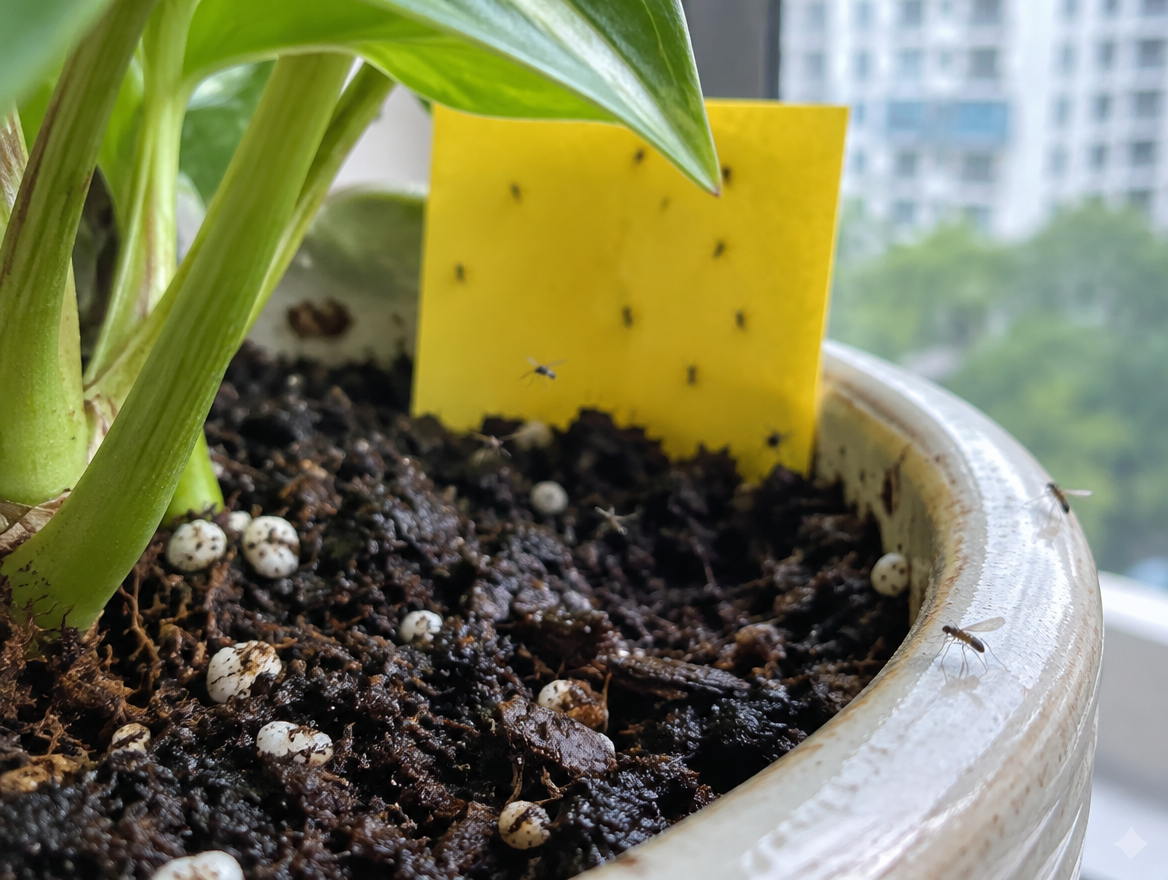
Fungus gnat pest control
Small flies hovering around the soil surface are usually fungus gnats, whose larvae live in the top layer of damp soil and feed on organic matter and fine roots. Unlike the pests above, fungus gnat pest control starts with the growing medium rather than the plant itself: letting the top inch of soil dry out between waterings interrupts the larvae’s life cycle, since they need consistently moist soil to survive.
Yellow sticky traps placed at soil level catch the adult flies, reducing how many eggs get laid in the meantime. If gnats persist after adjusting your watering routine, a thin layer of sand or fine gravel on top of the soil makes it harder for adults to lay eggs there at all.
General organic and least-toxic pest control principles
Most home garden infestations don’t need a harsh chemical response. The University of California’s Integrated Pest Management Program describes IPM as “an ecosystem-based strategy that focuses on long-term prevention of pests or their damage,” built on a combination of methods rather than reaching straight for a single product. Their guidance is specific that “pesticides are used only after monitoring indicates they are needed,” with treatments aimed at the target pest rather than blanket spraying.
In practice, that means working through pest control options in order of how targeted and low-impact they are, only escalating if the lighter option doesn’t resolve the problem within a week or two:
- Water spray: A firm jet of water knocks aphids and spider mites off a plant physically — no product needed, and safe to repeat every few days.
- Hand removal: For mealybugs and scale, a cotton swab dipped in diluted alcohol wipes out visible colonies directly.
- Pruning: Removing a heavily infested leaf or stem is often faster than trying to save it, and stops the pest spreading to the rest of the plant.
- Insecticidal soap or neem oil: Effective against soft-bodied pests like aphids, mealybugs, and spider mites, with a shorter environmental persistence than synthetic insecticides.
Our own Plant SHIELD spray follows the same logic — a plant-derived, ready-to-use formula for pest control against common houseplant and garden pests, without needing a separate product for each insect type.
Common pest control mistakes that make things worse
A few habits show up repeatedly in failed pest control attempts, and fixing them often matters more than switching products.
- Spraying once and assuming it’s done: Most organic pest control treatments kill visible adults but not eggs, which is why a single application rarely finishes the job. Plan on two to three treatments spaced several days apart.
- Treating only the obviously affected leaves: Pests move. A spider mite colony that looks confined to one leaf has usually already spread eggs to neighbouring foliage, so thorough coverage matters more than spot-treating.
- Spraying in full sun: Oil-based and soap-based pest control products can scorch leaves when applied in direct, hot sunlight. Early morning or evening application avoids this.
- Ignoring the root cause: If a plant is consistently overwatered, underlit, or stressed, pests will keep returning no matter how often you treat them. Pest control without fixing the underlying growing conditions is a losing cycle.
- Not isolating a new infestation: A newly infested plant left next to others on the same shelf or balcony railing gives pests like aphids and spider mites an easy path to spread before you’ve even finished treating the first plant.
Pest control for balconies and small outdoor spaces
Pest control on a balcony or small HDB corridor garden comes with its own constraints — limited airflow between tightly packed pots, shared structures with neighbouring units, and less room to isolate an infested plant than a full garden bed would allow. A few adjustments help:
- Space pots apart: Even a few extra centimetres between pots reduces how easily aphids, mealybugs, and spider mites move from plant to plant.
- Watch humidity pockets: Corners with poor airflow trap humidity that fungus gnats and some fungal issues favour, even on an otherwise breezy balcony.
- Consider neighbours: If you spray, do it on a still day and avoid overspray drifting onto a neighbour’s drying laundry or their own plants.
- Use trays for hand removal: A shallow tray under the plant while treating it catches dislodged pests and residue, making cleanup on a shared corridor floor simpler.
When stronger pest control makes sense
Organic pest control methods resolve most home garden problems, but a persistent infestation that keeps returning after repeated treatment, or one that’s visibly spreading across several plants, is a sign it’s time to escalate. At that point, a targeted insecticide labelled for the specific pest you’ve identified is more effective than repeating a method that clearly isn’t working.
We don’t carry or recommend specific restricted-use chemical pesticides on this site, and we haven’t independently verified Singapore’s current licensing rules for any particular product — if you’re considering a stronger chemical option, check the product’s own label and, where relevant, confirm requirements directly with Singapore’s National Parks Board or NEA rather than relying on a general guide like this one.
A few signs suggest it’s genuinely time to escalate rather than keep repeating an organic pest control routine that isn’t holding: the same colony rebuilding within days of treatment across three or more rounds, damage spreading to previously unaffected plants nearby, or visible decline in the plant’s overall health despite treatment. Any one of these is a reasonable point to read a labelled product’s instructions carefully and follow them exactly, rather than improvising dosage or frequency.
Whatever product you choose, patch-test it on one or two leaves first and wait 24 hours before treating the whole plant — this catches a sensitivity reaction before it damages the entire plant rather than one leaf. Keep pets and children away from treated foliage until the label’s stated re-entry period has passed, and always store any pest control product in its original, labelled container.
Building a basic pest control toolkit
Most home gardeners don’t need a large collection of products to handle pest control for the plants they actually grow. A small, well-chosen kit covers the vast majority of cases:
- A spray bottle for plain water: The first response to almost any newly spotted pest, and the only tool needed for many aphid and spider mite cases.
- Cotton swabs and isopropyl alcohol: For spot-treating mealybugs and scale directly.
- An organic multi-pest spray: Something like Plant SHIELD covers aphids, mites, mealybugs, and several other common pests in one bottle, which is more practical for most home gardens than buying a separate product per pest.
- Sticky traps: Useful diagnostically for thrips and fungus gnats, confirming an infestation before you commit to a spray.
- A hand lens or phone camera macro mode: Many pests are easiest to tell apart up close; a cheap magnifier or a phone’s macro setting helps confirm identification before you choose a treatment.
Keeping this kit on hand means pest control starts the moment you notice a problem rather than days later while waiting on an order, which matters because most infestations are far easier to manage small than established.
Prevention habits that reduce pest control work overall
The least effort you’ll ever spend on pest control is the infestation that never gets established in the first place. A few habits make a disproportionate difference:
- Inspect regularly: Checking the underside of leaves weekly catches aphids and spider mites while the colony is still small enough to remove by hand.
- Water at the base: Wetting foliage repeatedly encourages fungal issues and some pests; watering the soil directly keeps leaves drier.
- Improve airflow: Crowded plants with poor air circulation hold humidity that spider mites and fungus gnats both favour.
- Check new plants before bringing them in: A surprising share of indoor infestations start with a new plant that already had a hidden colony on it.
- Keep soil healthy: A well-draining mix like Sprout Lab’s Potting Mix supports stronger roots, and stronger plants recover from pest pressure faster than stressed ones.
For plant-specific pest control guidance, our mealybug, aphid, and spider mite guides go deeper on each pest individually, and our plant care range covers the sprays and boosters mentioned above.
The short version
Good pest control isn’t really about finding the one perfect spray — it’s a habit of looking closely, identifying correctly, and reaching for the smallest effective response first. A garden checked weekly and treated promptly with simple, organic pest control methods will spend far less time fighting infestations than one left alone until the damage is obvious.
If you’re building out a fuller plant care routine alongside your pest control habits, our plant care and pest guides cover soil, watering, and light alongside pest-specific advice, and the shop carries the sprays, soil mixes, and tools mentioned throughout this guide.
Frequently asked questions
How do I know if I need pest control or if my plant is just fine?
Look for actual damage or a visible colony rather than a single insect. One ladybug or a passing fly isn’t a pest control situation; sticky residue, webbing, or a cluster of insects on new growth is.
What’s the fastest organic pest control method for aphids?
A firm spray of water dislodges most aphid colonies within a few treatments, with no product needed. Follow up with insecticidal soap if the colony returns.
Can I use the same pest control method for every pest?
No. Spider mites, mealybugs, and aphids respond to overlapping but not identical treatments; correctly identifying the pest first makes any method you choose more effective.
How often should I check my garden for pests?
A weekly check of leaf undersides and new growth is enough to catch most infestations while they’re still small and easy to manage by hand.
Is neem oil safe for all plants?
Neem oil is generally considered low-toxicity, but it can affect some sensitive plants and beneficial insects if applied in direct sun or high heat. Test on a small area first and apply in the early morning or evening.
Do I need a licensed professional for garden pest control in Singapore?
For most home garden pests, no — organic methods and consumer-labelled products cover the large majority of cases. We haven\u2019t verified Singapore\u2019s specific licensing requirements for restricted-use pesticides, so check with NParks or NEA directly if you\u2019re considering a stronger product.
Why do pests keep coming back after I treat them?
Often because the underlying condition \u2014 overwatering, poor airflow, or a nearby infested plant \u2014 was never addressed, so new pests simply recolonise the same weakened plant.