Choosing a potting mix for indoor plants is one of the biggest decisions in houseplant care. Choosing the right potting mix for your indoor plants might seem like a simple task, but it plays a key role in the health and happiness of your greenery. When you bring plants indoors, you’re essentially creating a small ecosystem, and the potting mix acts as its foundation. It provides not only support but also the necessary nutrients, air, and moisture that plants require. In urban settings like Singapore, where space is often at a premium, caring for indoor plants becomes even more important as many people strive to bring nature into their concrete surroundings.
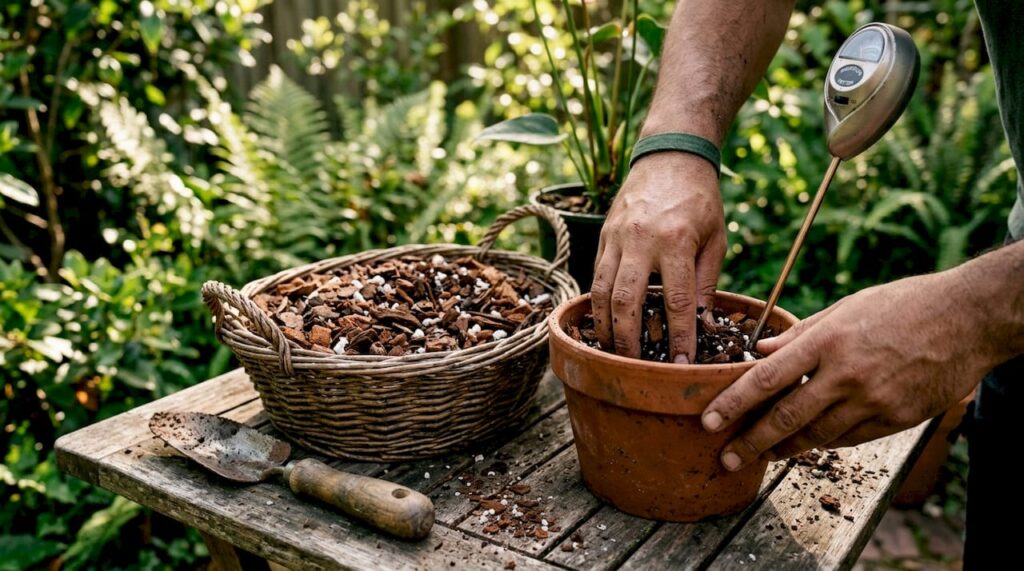
The bustling city life demands indoor plants that are not just alive but flourishing, and the potting mix is a big part of making this possible. Different plants have specific needs, and your choice of potting mix can influence their growth, resilience, and ability to thrive indoors. The right mix helps plants absorb water efficiently, encourages healthy root development, and prevents common issues like root rot. By choosing the best potting mix tailored to your particular plants, you can make the most of your indoor gardening efforts and create a vibrant green space, no matter how compact your living situation might be.
Understanding Potting Mix for Indoor Plants: Components
When delving into the world of potting mixes, it’s essential to understand what makes them up. Each component serves a unique purpose, and knowing a little about them can help you choose the best mix for your indoor plants. Let’s break down some common elements you’ll encounter:
– Peat Moss: This is a popular choice for moisture retention. It holds water well, helping plants stay hydrated, but it can become compacted over time.
– Perlite: Lightweight and porous, perlite improves aeration and drainage. It prevents the soil from becoming too dense, allowing roots to breathe.
– Vermiculite: Similar to perlite, but it has a greater capacity to hold water and some nutrients, making it a good option for moisture-loving plants.
– Coconut Coir: A more sustainable option than peat moss, this is used for water retention and improved soil structure.
Each of these components affects how your mix behaves. While peat moss and coconut coir retain moisture, perlite and vermiculite ensure good airflow around plant roots. When selecting your mix, consider what your specific plants need in terms of water and air. Some plants, like succulents, require a fast-draining mix with more perlite or sand, while others might thrive in a moisture-rich environment provided by more peat moss or coco coir. Understanding these components helps you cater to the natural preferences of your plants, leading to healthier growth.
Types of Potting Mix for Indoor Plants
Different indoor plants have varying requirements, and this is prominently reflected in the type of potting mix they need. Here are some types to consider:
1. Succulent and Cacti Mix: This is typically sandy and fast-draining, creating a comfortable environment for water-storing plants. The mix usually contains more perlite or sand, ensuring that water doesn’t linger and cause root rot.
2. Tropical Plant Mix: With lush greenery in mind, this mix often incorporates sphagnum moss or coconut coir alongside vermiculite to retain moisture while still providing good drainage.
3. Herb Potting Mix: Herbs need nutrient-rich, well-draining soil to flourish indoors. These mixes often blend compost with sand and perlite to support healthy growth.
4. Flower Mix: For plants with blossoms, a balanced mix that retains enough moisture to support flowering without waterlogging is essential.
Selecting the correct potting mix for your plants is like choosing the right clothing; it needs to suit the plant’s nature and living conditions. By aligning the mix with the plant’s natural habitat needs, you encourage them to thrive in their indoor environment. Through thoughtful selection, you ensure that your plants receive the right combination of air, moisture, and nutrients they depend on for vitality and growth.
Factors to Consider When Choosing a Potting Mix for Indoor Plants
Selecting the appropriate potting mix involves more than just picking a bag from the shelf. Various factors influence which mix will best support your indoor plants. Begin by considering the type of plants you are growing. Different species have distinct needs. For instance, succulents prefer fast-draining mixes to prevent their roots from rotting, whereas tropical plants thrive in a mix that retains more moisture.
Watering habits also play a significant role. If you’re someone who frequently waters your plants, opt for a well-draining mix to avoid waterlogged roots. On the other hand, a moisture-retentive mix might suit those who don’t water regularly, helping the soil stay moist for longer. The lighting in your home is another important aspect. Bright light can cause the soil to dry out faster, so you might need a mix that holds more moisture. Conversely, low-light conditions may require a mix that enhances drainage to prevent sogginess.
Lastly, take climate conditions into account, especially in a warm and humid city like Singapore. The constant humidity may mean selecting a mix that has excellent aeration to allow roots to breathe. Balancing these factors will help you choose a potting mix that supports your plants’ growth and keeps them healthy and vibrant.
How to Mix Your Own Potting Mix for Indoor Plants
For those who enjoy a hands-on approach, creating your own potting mix can be both satisfying and beneficial. Customising your mix allows you to tailor it to the specific needs of your plants. Start with a few basic ingredients that you can adjust depending on what you’re growing.
Here’s a simple guide:
– Base: Begin with two parts of peat moss or coconut coir for moisture retention. This forms the main body of your mix.
– Aeration: Add one part of perlite or vermiculite to introduce air pockets and improve drainage. This is particularly crucial for preventing root rot.
– Nutrients: Incorporate one part of compost to enrich the mix with organic nutrients, essential for plant growth.
You’ll also need a container for mixing, a trowel, and gloves to keep your hands clean. Adjust these proportions according to your plant’s preferences. For instance, if you’re preparing a mix for cacti, decrease the amount of peat moss and increase the perlite for better drainage. Experimenting with different ratios will help you achieve the ideal mix for your indoor garden.
Healthy Growth With the Right Potting Mix for Indoor Plants
Once you’ve nailed down the right potting mix, maintaining it becomes the next step to ensure your plants grow healthily. Over time, the quality of any potting mix diminishes as it becomes compacted and nutrients deplete. It’s essential to keep an eye on your plants and their growth patterns.
Repotting is a crucial part of this maintenance, allowing you to refresh the mix. Typically, it’s recommended every year or two, depending on how fast your plant grows and the current state of the mix. When repotting, gently remove the plant and shake off as much old soil as possible. Replace it with fresh mix to provide a renewed source of nutrients and improved drainage.
Additionally, consider top-dressing, which involves adding a layer of fresh potting mix on top of the existing soil. This can boost surface nutrients without the need for repotting. Consistently checking moisture levels, controlling pests, and adjusting water needs based on seasonal changes will all contribute to the ongoing health of your indoor plants.
Cultivate a Thriving Indoor Garden With the Right Potting Mix for Indoor Plants
The importance of selecting the right potting mix for your indoor plants cannot be underestimated. With the correct foundation, your plants will not only grow but flourish, enhancing your living space with lush greenery. By understanding the needs of your plants and the role of the potting mix, you’re well on your way to nurturing a successful indoor garden.
This process isn’t just about picking up a bag of soil. It’s about engaging with the needs of your indoor jungle and observing how they respond to the environment you’ve created. So why not take this as an opportunity to experiment and find out what mix works the best for your cherished plants? There’s a world of growth waiting just beneath the surface, and with a bit of care, you can create a thriving indoor haven.
Creating the best environment for your indoor plants can be simple with the right care and supplies. To support healthy growth across a variety of plant types, explore Sprout Lab’s range of potting mix options designed to suit different needs and indoor spaces.
Choosing a potting mix for indoor plants
Choosing a potting mix for indoor plants starts with the plant. A potting mix for indoor plants that suits a fern may stay too wet for a succulent, so match the mix to the roots.
A good potting mix for indoor plants drains freely but holds enough moisture. Look at the ingredient list and the texture of the potting mix for indoor plants before you buy.
Pot size and watering habits change how a potting mix for indoor plants behaves. A potting mix for indoor plants in a large pot stays wet longer than the same mix in a small one.
Compare our soil mixes and the Which Mix finder to choose a potting mix for indoor plants, and read compacted potting soil if your current mix drains slowly.
Quick answers about potting mix
Can I reuse old potting mix? Old mix may have lost structure, so fresh mix is usually the better choice, especially after root problems.
Is cactus mix different? Yes. Mixes for cacti and succulents are usually more free-draining than general mixes.
Do I need perlite? Perlite improves drainage and aeration in many mixes, but the right amount depends on the plant.
Why does my mix stay wet? Pot size, light and mix structure all matter. Check drainage and consider a more open mix.
How often should I replace it? Replace it when it has broken down, drains poorly or the plant needs repotting.
Common potting mix mistakes
Using a dense mix for plants that like to dry out is a common mistake.
Pressing the mix down hard in the pot reduces air space.
Choosing a pot much larger than the roots keeps the mix wet for too long.
Potting mix for indoor plants in Singapore
A potting mix for indoor plants in Singapore faces humid air and sometimes air-conditioned rooms. Choose a potting mix for indoor plants that drains well so roots do not stay wet in humid conditions.
Check how fast your potting mix for indoor plants dries between waterings. If a potting mix for indoor plants stays wet for days, consider a more open mix or a smaller pot.
Refresh the potting mix for indoor plants when it breaks down, and note what mix each plant is in.
Further reading
For background on soilless potting media, see the University of Connecticut’s guide to potting media, which explains that soilless mixes contain no soil mineral particles and that perlite improves drainage and aeration.