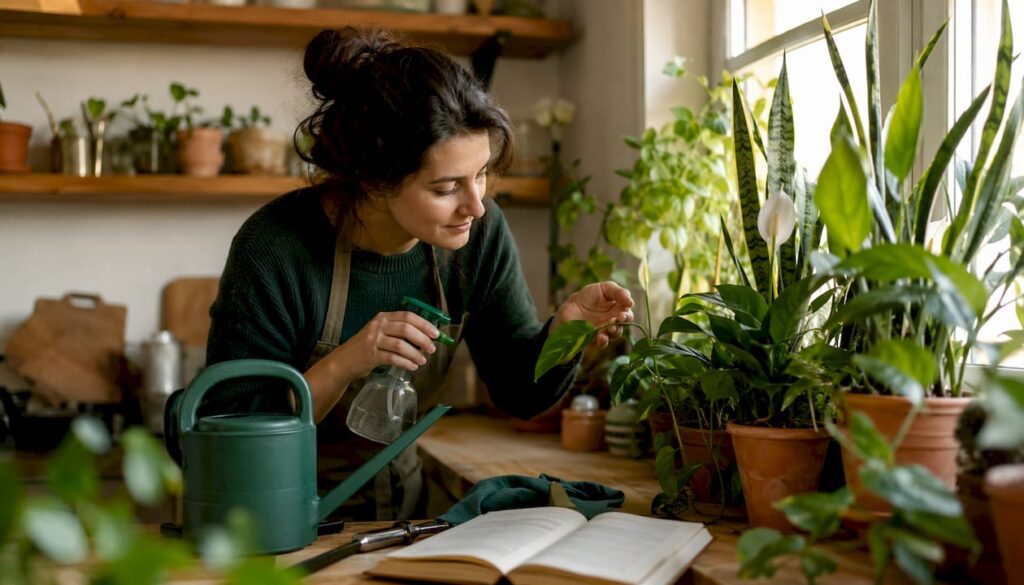
The best fast growing plants for newcomers fall into two clear groups: indoor houseplants that thrive with minimal fuss, and outdoor garden plants that deliver visible results within weeks. For indoors, start with Pothos, Spider Plant, Philodendron, Monstera, Rubber Plant, Chinese Evergreen, Prayer Plant, or Begonia. For the garden, Radishes, Spinach, Fenugreek, Basil, Mint, Sunflowers, Marigolds, Zucchinis, Tomatoes, Potatoes, Pansies, and Morning Glory are all forgiving choices that reward new gardeners fast.
Here’s a quick snapshot of what you’re working with:
- Pothos — trails and roots in water within two weeks; tolerates almost any light
- Spider Plant — produces baby plantlets you can pot; pet-safe
- Philodendron — heart-shaped leaves, shade-tolerant, grows steadily
- Monstera — bold tropical leaves; new leaf every few weeks in good light
- Rubber Plant — upright, glossy; slow to medium growth indoors
- Chinese Evergreen — colorful foliage, handles low light and irregular watering
- Prayer Plant — distinctive patterned leaves; moderate grower
- Begonia — blooms quickly; great for bright windowsills
- Radishes — harvest in as little as 25 days from seed
- Spinach and Fenugreek — ready in about three weeks under the right conditions
- Basil & Mint — fast, useful, and nearly impossible to kill
- Sunflowers & Marigolds — germinate in days; bloom within weeks
- Zucchinis & Tomatoes — high-reward crops for first-time food gardeners
- Potatoes & Pansies — low-fuss, high-output for cool-season growing
- Morning Glory — climbs 6 to 12 feet in a single season
Pro Tip: Pick just one or two plants to start. Pothos is a great first choice because you can snip a stem, drop it in a glass of water, and have a backup plant rooting within two weeks. That safety net does wonders for your confidence.
Table of Contents
Which fast growing plants work best indoors for beginners?
The right indoor plant for a newcomer isn’t just the one labeled “easy” at the garden center. It’s the one that matches your actual home: how much light your windows get, how often you remember to water, and whether you have pets.
| Plant | Growth Speed | Ease of Care | Light Needs | Watering | Indoor Placement |
|---|---|---|---|---|---|
| Pothos | Fast | Very easy | Low to bright indirect | Every 10 days | Shelf, hanging basket |
| Spider Plant | Fast | Very easy | Medium to bright indirect | Every 10 days | Hanging basket |
| Heartleaf Philodendron | Moderate–fast | Easy | Medium to low | Every 10 days | Shelf, trellis |
| Monstera | Moderate | Easy | Bright indirect | Every 2 weeks | Floor, corner |
| Rubber Plant | Moderate | Easy | Bright indirect | Every 2 weeks | Floor, corner |
| Chinese Evergreen | Slow–moderate | Very easy | Low to medium | Every 10 days | Tabletop, shelf |
| Prayer Plant | Moderate | Moderate | Medium indirect | Every 2 weeks | Tabletop |
| Begonia | Moderate–fast | Moderate | Bright indirect | Every 5 days | Windowsill |
Pothos is the single best first plant for most beginners. Leaves droop when it’s thirsty, then perk back up within hours of watering — that feedback loop is genuinely useful when you’re still learning. It roots easily from stem cuttings in water, so you can always have a backup growing.
Spider Plant is the top pick if you have cats or dogs. It’s listed as non-toxic by the ASPCA, produces cascading baby plantlets you can pot separately, and bounces back from both overwatering and underwatering. Hard to beat.
Heartleaf Philodendron gives you the same trailing-vine look as Pothos but handles lower light even better. It’s a natural second plant once you’ve got Pothos dialed in.
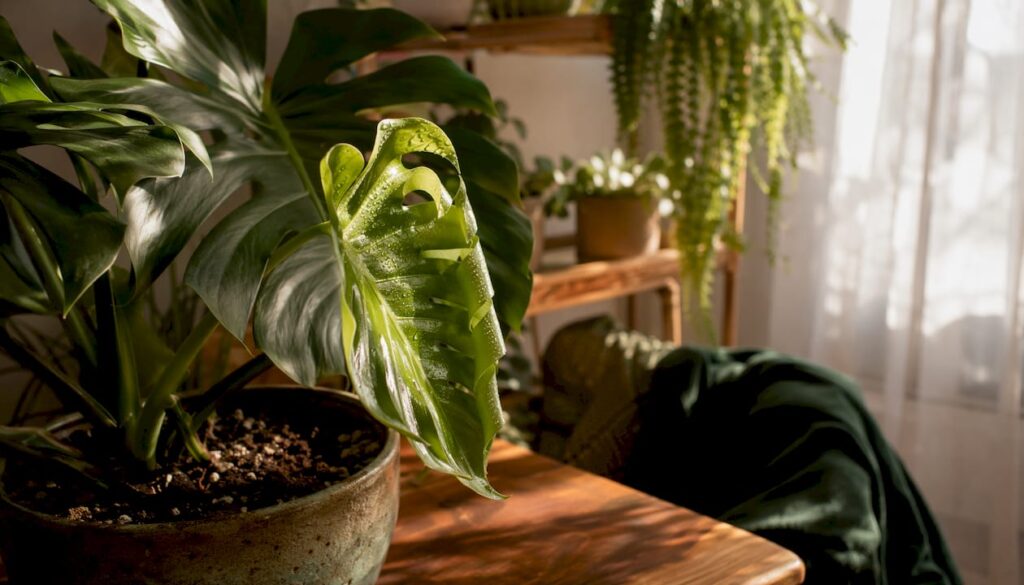
Monstera grows a new leaf every few weeks in bright indirect light, which makes progress feel real and satisfying. Keep it away from direct afternoon sun, which scorches the leaves.
Rubber Plant stays upright and architectural. Water when the top inch or two of soil dries out, give it a bright spot, and it largely takes care of itself.
Chinese Evergreen is the one to reach for if your apartment is genuinely dim. Green varieties handle lower light better than the pink or red ones, which need more brightness to hold their color.
Prayer Plant moves its leaves up at night and lowers them in the morning, which is oddly entertaining. It prefers medium indirect light and consistent moisture — not the most forgiving, but manageable.
Begonia blooms fast and reliably on a bright windowsill. Water when the top inch dries, and deadhead spent flowers to keep new ones coming.
A few care principles that apply across all of these:
- Use a pot with drainage holes. Sitting water at the bottom is the fastest way to kill a houseplant.
- Standard indoor potting mix works for Pothos, Philodendron, Monstera, Prayer Plant, and Begonia. Rubber Plant and Chinese Evergreen do fine in the same mix.
- Low-light environments slow growth for every plant on this list. That’s normal — don’t panic if your Monstera takes longer between leaves in winter.
- Wipe dusty leaves with a damp cloth every month or so. Dust blocks light absorption.
Which fast growing plants suit outdoor first-time gardeners?
Outdoor growing adds one variable indoor gardening doesn’t: the season. Most fast-growing garden plants need soil temperatures above 50°F and no frost risk. In most of the US, that means planting after your last frost date, which varies from late February in the South to late May in northern states.
| Plant | Growth Speed | Care Level | Light | Water Needs | Best Environment |
|---|---|---|---|---|---|
| Radishes | Very fast (25 days) | Very easy | Full sun | Moderate | Garden bed, container |
| Spinach | Fast (3 weeks+) | Easy | Partial to full sun | Moderate | Garden bed, container |
| Fenugreek | Fast (3 weeks+) | Easy | Full sun | Moderate | Garden bed, container |
| Basil | Fast | Easy | Full sun | Moderate | Container, garden bed |
| Mint | Very fast | Very easy | Partial to full sun | Moderate | Container (keep contained) |
| Sunflowers | Fast | Easy | Full sun | Low–moderate | Garden bed |
| Marigolds | Fast | Very easy | Full sun | Low–moderate | Garden bed, container |
| Zucchini | Fast | Easy | Full sun | Moderate–high | Garden bed |
| Tomatoes | Moderate–fast | Moderate | Full sun | Moderate–high | Container, garden bed |
| Potatoes | Moderate | Easy | Full sun | Moderate | Garden bed, grow bag |
| Pansies | Fast | Easy | Partial to full sun | Moderate | Container, garden bed |
| Morning Glory | Very fast | Easy | Full sun | Moderate | Trellis, fence |
Radishes are the fastest edible crop you can grow. Sow seeds directly into loose, well-drained soil, keep them moist, and you’re harvesting in about 25 days. They’re nearly impossible to mess up.
Spinach and Fenugreek are similarly quick, both ready to harvest in roughly three weeks. Fenugreek doubles as a culinary herb — the leaves and seeds both have uses in the kitchen, which makes it worth growing herbs at home even in a small space.
Basil loves heat and full sun. Start seeds indoors four to six weeks before your last frost, or buy transplants. Pinch off flower buds as they appear to keep the plant producing leaves. Once you’ve got a surplus, freeze-drying vegetables and herbs is a practical way to preserve the harvest.
Mint grows so aggressively that most gardeners keep it in a container to stop it from taking over the garden. That’s actually ideal for beginners — a pot on the porch gives you a steady supply of fresh mint with zero effort.
Sunflowers germinate in five to ten days and grow visibly fast. Direct sow after your last frost, give them full sun, and they’ll reward you with blooms in 70–90 days depending on the variety.
Marigolds are the workhorse companion plant. They deter pests, bloom prolifically, and ask for almost nothing. Plant them around tomatoes and zucchinis to keep aphids and whiteflies at bay.
Zucchini produces fruit so fast it can feel overwhelming by midsummer. One or two plants is plenty for most households.
Tomatoes take more attention than the others — consistent watering, staking, and occasional fertilizing — but the payoff is hard to match. Cherry varieties like ‘Sweet 100’ or ‘Tiny Tim’ are the most forgiving for beginners.
Morning Glory is the fastest-climbing vine on this list. Scarify and soak the seeds in warm water for 12–24 hours before planting to speed germination dramatically. Plant at the base of a trellis or fence after your last frost, and the vine will take care of the rest.
Outdoor care tips worth knowing:
- Amend garden beds with compost before planting. Most fast-growing vegetables and flowers prefer loose, well-draining soil rich in organic matter.
- Water deeply and less frequently rather than a little every day. This encourages roots to grow deeper and makes plants more drought-tolerant.
- Fertilize tomatoes, zucchinis, and potatoes with a balanced fertilizer (10-10-10) every two to three weeks once they’re established. Herbs and flowers generally need less.
- Check plants for pests weekly. Catching aphids or caterpillars early is far easier than dealing with a full infestation.
How to choose and care for fast growing plants as a beginner
The most common beginner mistake isn’t bad watering technique or the wrong soil. It’s buying too many plants at once. Starting with five or ten plants means you’re splitting your attention before you’ve learned the basics on any single one. Start with one or two, get comfortable with their rhythms, then expand.
The second mistake is choosing plants based on a generic “easy” label rather than your actual conditions. Before buying anything, look at the spot where the plant will live at 11 AM and 3 PM on a sunny day. Bright indirect light means most things on this list will work. A dim north-facing corner narrows your options to Chinese Evergreen, Philodendron, or a ZZ Plant. Matching the plant to the spot matters more than any care tip.
Here’s what actually moves the needle for beginners:
- Soil: Use a quality potting mix with good drainage for houseplants. For outdoor edibles, mix compost into your garden bed before planting.
- Watering: Check soil moisture with your finger before watering. The top inch dry means it’s time; still moist means wait.
- Light: Place plants as close to a window as your space allows. Low-maintenance plants tolerate fluctuations, but more light almost always means faster growth.
- Fertilizing: Skip fertilizer for the first three months indoors. Outdoors, start a light feeding schedule once plants are established and actively growing.
- Pests: Inspect leaves weekly, especially the undersides. Wipe off aphids with a damp cloth; treat spider mites with neem oil.
Pro Tip: Snip a Pothos stem with two or three leaves and place it in a glass of water on your windowsill. Roots appear in about two weeks, and you have a second plant ready to go. It’s a low-stakes way to practice propagation and build a backup.
Starting with one plant and learning its signals — when it droops, when it perks up, how fast it grows in your specific light — teaches you more in three months than owning ten plants ever could. Confidence in gardening comes from visible success, and visible success comes from focused attention.
Sprout-lab makes fast indoor growing genuinely accessible
If you want results faster than soil and seasons allow, Sprout-lab’s hydroponic systems and premium soil mixes are built for exactly this situation. The modular setup fits up to 56 plants in a compact footprint, which means you can grow herbs, greens, and edibles indoors year-round without a yard, a greenhouse, or any prior experience.
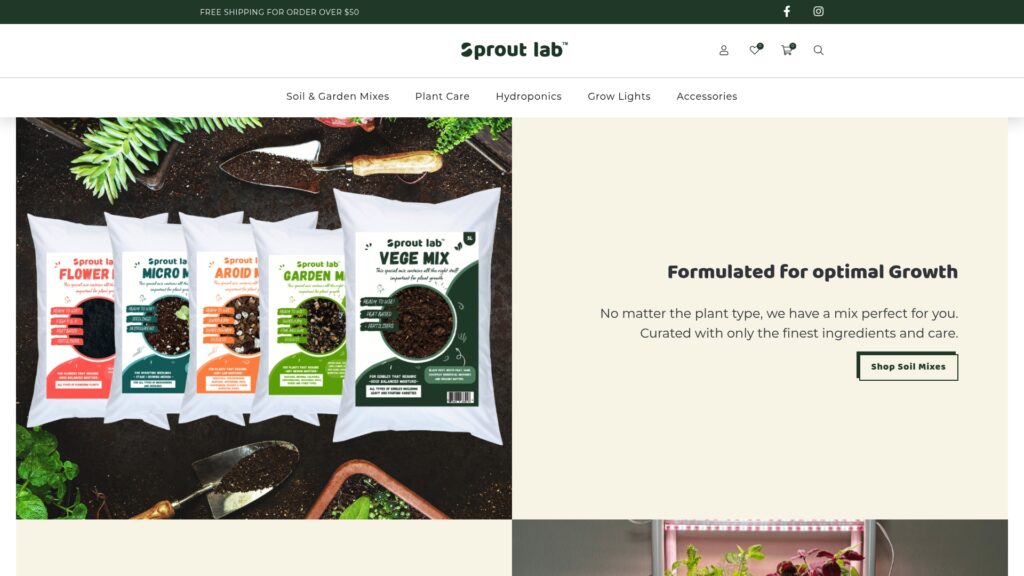
Sprout-lab’s indoor gardening setups remove the two biggest friction points for newcomers: inconsistent soil quality and guessing at watering schedules. The systems are designed so that even a first-time grower sees rapid germination and healthy plants from day one. Over 25,000 completed orders and a 4.9/5 star rating back that up. If you’re ready to skip the trial-and-error phase, explore Sprout-lab’s hydroponic vegetable growing guide to see which setup fits your space and goals.
FAQ
Which of the fast growing plants is best for a complete beginner?
Radishes go from seed to harvest in about 25 days outdoors, making them the fastest edible option. Indoors, Pothos roots from a cutting in roughly two weeks and grows visibly fast in almost any light.
What are the top five fast growing plants overall?
Radishes, Fenugreek, Spinach, Pothos, and Morning Glory consistently top the list for speed. Radishes are the fastest edible crop, ready to harvest in about 25 days; Fenugreek and Spinach are typically ready in about three weeks; Morning Glory climbs 6 to 10 feet in a single season, with some varieties like ‘Scarlett O’Hara’ reaching up to 15 feet.
Which of the fast growing plants can show visible growth within one week?
Sunflowers and Radishes typically germinate and show sprouts within five to seven days of sowing. Pothos cuttings placed in water also begin rooting visibly within the first week.
What is the best of the fast growing plants to grow for the first time?
Pothos is the best first plant for most beginners. It tolerates a wide range of light conditions, tells you when it needs water by drooping, and propagates easily in a glass of water — giving you an immediate backup plant and an early win.
Key Takeaways
Fast growing plants for newcomers succeed when you match the plant to your actual light and watering habits, start small, and choose varieties proven to deliver visible results quickly.
| Point | Details |
|---|---|
| Start with one or two plants | Over-collecting is the top beginner mistake; one plant mastered beats five neglected. |
| Match plant to your light | Dim rooms suit Chinese Evergreen or Philodendron; bright spots open up almost every option. |
| Fastest outdoor crops | Radishes are ready to harvest in about 25 days from seed, while Spinach and Fenugreek are typically ready in about three weeks under the right conditions. |
| Propagate for confidence | A Pothos cutting roots in water within two weeks, giving beginners a low-stakes backup plant. |
| Sprout-lab for faster results | Sprout-lab’s hydroponic systems and soil mixes help newcomers skip soil guesswork and grow up to 56 plants in a compact space. |
Recommended
Choosing fast growing plants
Fast growing plants give quick feedback, which helps new growers learn. Choose fast growing plants that suit your light, because even the fastest plants stall in a dark spot.
Fast growing plants often need more water and nutrients than slow ones, so check moisture regularly and follow the label of any fertiliser.
Pair fast growing plants with a space they can fill. Some fast growing plants outgrow small pots quickly, so plan for repotting or pruning.
For forgiving options, see our plants that survive neglect indoors guide alongside these fast growing plants.